

A Different Caribbean: Five Small Islands with Big Personalities
Submitted by Andy_B on Friday, 09 October 2026 Page Views: 8
Resources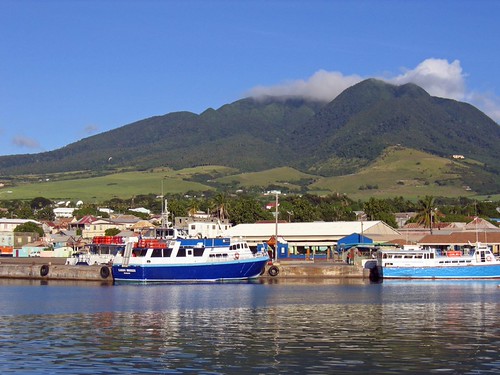 The Caribbean is easy to reduce to a handful of familiar images: palm-fringed beaches, turquoise water and resorts built for doing very little. Yet some of the region’s most memorable islands reveal themselves away from the sun loungers. Across the eastern Caribbean, small nations have developed identities shaped by volcanic landscapes, maritime history, rainforest, food and communities that can feel markedly different from one island to the next. St Kitts and Nevis, Dominica, Grenada, Antigua and Barbuda, and Saint Lucia are particularly good examples.
 All five are compact enough to explore at an unhurried pace, but distinctive enough to reward looking beyond their coastlines. They also share another feature: each operates a citizenship-by-investment program, adding a longer-term dimension for some international visitors who develop a deeper connection with the region.
St Kitts and Nevis: two islands, two rhythms
St Kitts and Nevis may form one country, but traveling between the two can feel like changing pace entirely. St Kitts has the livelier capital of Basseterre, historic estates and the formidable silhouette of Mount Liamuiga. Nevis, reached by a short ferry journey, is quieter, greener and centered around the cloud-topped Nevis Peak.History is particularly difficult to escape here. Old sugar estates have become inns, gardens and restaurants, while Brimstone Hill Fortress stands above the coastline as one of the Caribbean’s most imposing reminders of the colonial era.
That long view of history also extends, in a very different way, to the country's approach to economic St Kitts citizenship. St Kitts and Nevis established its Citizenship Program in 1984, making it the longest-running program of its kind. Current routes include the Sustainable Island State Contribution, beginning at US$250,000, alongside approved investment options.
It is an unusual modern chapter in an island story that has constantly evolved while remaining closely tied to its small communities and landscape.
Antigua and Barbuda: an island nation shaped by the sea
Antigua claims a beach for almost every day of the year, but its relationship with the sea runs much deeper than swimming and sunbathing.English Harbour and Nelson’s Dockyard reveal Antigua’s naval history, while sailing remains an important part of contemporary island life. Venture beyond the yacht-filled harbors and the landscape becomes quieter, with small villages, roadside food stalls and viewpoints reached along the island’s interior roads.
Barbuda feels different again. Less developed and far more sparsely populated, it provides the quieter counterpart to Antigua’s busier tourism scene.
For people whose relationship with the islands extends beyond a holiday, Antigua and Barbuda also operates an Antigua Passport. Its National Development Fund route currently requires a US$230,000 contribution, with approved real estate and other qualifying routes also available. Interestingly, successful applicants are required to spend at least five days in Antigua and Barbuda during the first five calendar years after obtaining citizenship, giving the program a modest physical connection to the country itself.
Dominica: the Caribbean at its wildest
Dominica offers almost the opposite of the classic Caribbean resort experience. Much of the island is mountainous and heavily forested, with roads twisting past waterfalls, hot springs and villages tucked between steep green valleys.The great attraction here is simply getting outside. The 200km Wai’tukubuli National Trail crosses the island in 14 stages, while Morne Trois Pitons National Park protects volcanic landscapes, rainforest and the famous Boiling Lake. Dominica is also home to the Kalinago Territory, where descendants of the Caribbean’s indigenous Kalinago people maintain a strong cultural presence.
It is fitting, then, that one of Dominica’s citizenship routes is connected directly to national development. The country's Citizenship by Investment Programme allows qualifying applicants to contribute to the Economic Diversification Fund, with the main-applicant contribution currently starting at US$200,000. The fund is intended to support public and economic development, while an alternative route involves approved real estate.
For travellers, however, Dominica’s real wealth remains immediately visible: rainforest, rivers, volcanic peaks and an island that still feels gloriously untamed.
Grenada: spices, chocolate and a slower kind of exploration
 Grenada announces itself through flavor. Nutmeg, mace, cinnamon and cocoa have shaped both its economy and its reputation, earning it the familiar nickname of the Spice Island.
The capital, St George’s, curls around one of the Caribbean’s prettiest natural harbours, but traveling inland quickly changes the scene. Roads rise through rainforest towards waterfalls and crater lakes, while small cocoa estates give visitors an opportunity to see how Grenadian chocolate travels from tree to bar. Offshore, diving, sailing and the quieter islands of Carriacou and Petite Martinique add another layer.
Grenada’s modern economic story includes its Citizenship by Investment Program, created in 2013. Applicants can qualify through a contribution to the National Transformation Fund, currently starting at US$235,000, or through an approved-project investment subject to programme requirements.
It sits alongside a much older tradition of Grenada looking outward while turning its own natural resources, agriculture and distinctive identity into an economic advantage.
Saint Lucia: where the landscape takes center stage
Few Caribbean arrivals are as dramatic as approaching Saint Lucia’s west coast and seeing the Pitons rise sharply above the sea.The twin volcanic peaks dominate the island’s image, but there is much more between them and the capital, Castries. Rainforest trails cross the interior, fishing villages line the coast, and places such as Soufrière retain the French influence that remains visible in local names, food and culture.
Saint Lucia’s combination of tourism, natural assets and international connections has also influenced its more recent development. Its Citizenship by Investment Program offers several qualifying routes, including a contribution to the National Economic Fund. The current qualifying amount is US$240,000 for an applicant alone or an applicant with up to three qualifying dependants.
Yet the strongest reason to spend time here remains much simpler. Follow a road away from the resorts, walk into the rainforest or sit beside a fishing harbor at the end of the day, and Saint Lucia quickly becomes more than its famous postcard view.
Taken together, these five countries show why speaking about “the Caribbean” as though it were one destination misses so much. Their citizenship programs may give them an additional international role, but their personalities come from somewhere deeper: landscape, history, food, culture and the particular rhythm of island life.
With many thanks to Don Ward and Josefine Granding Larsson for the lovely Creative Commons photos above.