
The People Behind the Preservation of Britain's Ancient Monuments
Submitted by Andy_B on Saturday, 31 October 2026 Page Views: 15
Resources
Yet their survival depends on more than the strength of ancient stonework. Behind every protected monument is a network of archaeologists, conservation specialists, volunteers, local residents, and heritage professionals working to preserve irreplaceable historical evidence.
Much of this work happens away from public attention. Maintaining archaeological sites, monitoring damage, recording discoveries, and guiding visitors all require patience and specialized knowledge.
Understanding the people responsible for Britain's historic places reveals that heritage preservation is not simply about protecting old buildings. It is about maintaining a connection with the past and ensuring that future generations can experience it.
Volunteers Keep Britain's Historic Sites Alive
Volunteers play an important role in maintaining historic monuments and helping visitors understand their significance. Across Britain, heritage organizations rely on people who contribute their time to site monitoring, conservation activities, educational programs, and visitor services.Some volunteers spend hours outdoors inspecting archaeological remains, clearing appropriate vegetation, or helping maintain accessible pathways. These responsibilities often continue throughout colder months, when exposed landscapes present additional challenges.
Practical clothing becomes particularly important during winter conservation activities. Heritage groups and volunteer organizations can use custom embroidered beanies with logo to provide recognizable headwear that combines warmth with a shared organizational identity.
Beyond practical tasks, volunteering creates opportunities to develop friendships, learn new skills, and contribute to something with lasting cultural value.
Many participants become deeply familiar with particular sites, developing knowledge and enthusiasm that strengthens the relationship between historic monuments and their surrounding communities.
Archaeologists Reveal the Stories Hidden Beneath the Surface
Archaeologists contribute much more than excavating ancient objects. Their work involves studying landscapes, examining historical records, documenting structures, and interpreting evidence that helps explain how people lived in earlier periods.At prehistoric monuments, researchers may investigate nearby settlements, burial practices, or changes in land use. Roman sites provide opportunities to examine military organization, domestic life, and the development of infrastructure.
Modern techniques have expanded the possibilities for archaeological investigation. Geophysical surveys can identify buried features without extensive excavation, while digital mapping helps researchers understand relationships between structures and landscapes.
Archaeologists also advise on conservation decisions, particularly when proposed repairs or construction activities could disturb important remains.
Their research helps ensure that preservation efforts protect historical evidence rather than simply maintaining the appearance of a monument.
By connecting physical discoveries with wider historical questions, archaeologists make ancient places more understandable to contemporary audiences.
Conservation Specialists Protect Fragile Ancient Structures
Ancient monuments face constant environmental pressure. Rainfall, frost, vegetation growth, erosion, and changing ground conditions can gradually damage structures that have already survived for centuries.Conservation specialists study these risks and develop methods for protecting vulnerable materials. Their work may involve stabilizing masonry, investigating moisture problems, or identifying repairs necessary to prevent further deterioration.
Historic materials require particular care. Modern cement and inappropriate replacement stone can sometimes damage older structures by introducing different physical properties.
Specialists therefore consider compatibility, historical authenticity, and the long-term consequences of each intervention.
Conservation also involves knowing when not to interfere. Some monuments are best protected through careful monitoring and minimal intervention rather than extensive reconstruction.
This measured approach helps preserve the original evidence that gives ancient places their archaeological significance.
Local Communities Preserve Knowledge Across Generations
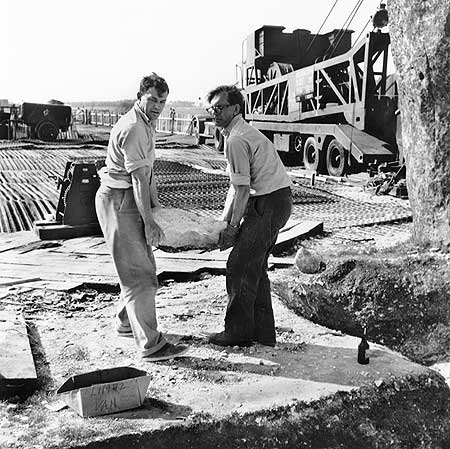 The relationship between a historic monument and its surrounding community can be just as important as its architectural condition.
Local residents often possess knowledge about place names, former land uses, traditional stories, and changes in the landscape. These details can contribute valuable context to archaeological research.
Community heritage groups may organize educational walks, support local archives, or participate in archaeological projects. Schools can also introduce younger generations to nearby historic places through visits and practical learning activities.
Such involvement encourages people to recognize monuments as part of their shared cultural environment rather than distant attractions managed by outside organizations.
Community participation can also help identify problems early. Residents familiar with a site may notice erosion, vandalism, or changing conditions that deserve professional attention.
When conservation projects involve local people, historic places can develop stronger connections with the communities responsible for their long-term future.
Heritage Rangers Balance Conservation and Public Access
Heritage rangers and site managers occupy an important position between archaeological preservation and everyday visitor experiences.Their responsibilities may include inspecting paths, monitoring vegetation, assessing visitor impacts, and coordinating maintenance across extensive historical landscapes.
At exposed hillforts and remote archaeological sites, changing weather can make these activities physically demanding. Rangers may need to travel across uneven terrain while observing features that visitors could easily overlook.
Their work also requires balancing public access with the protection of fragile remains.
A popular walking route might need adjustment to prevent erosion, while sensitive archaeological areas may require additional monitoring during busy periods.
Rangers frequently work alongside archaeologists, volunteers, and conservation specialists, making communication an important part of their responsibilities.
Their efforts help maintain historic places as environments that people can explore without unnecessarily damaging the evidence preserved within them.
Educators and Guides Bring Ancient History to Life
Preserving a monument's physical structure is only one part of heritage management. Helping visitors understand its historical significance is equally important.Guides, museum educators, and interpretation specialists transform archaeological evidence into accessible stories about past societies.
At Roman forts, visitors may learn about soldiers, trade, and everyday domestic activities. Prehistoric monuments provide opportunities to explore ancient construction techniques, ceremonial practices, and changing relationships with the landscape.
Educational programs can include guided tours, practical demonstrations, school workshops, and opportunities to examine replica objects.
These experiences make history more approachable, particularly for children who may find physical locations easier to understand than abstract dates and descriptions.
Effective interpretation also acknowledges uncertainty. Archaeologists cannot answer every question about ancient monuments, and explaining competing interpretations helps visitors appreciate how historical knowledge develops.
Preserving Britain's Heritage Requires Long-Term Commitment
The future of Britain's ancient monuments depends on continued cooperation between specialists, public organizations, volunteers, and local communities.Climate change, limited funding, visitor pressure, and environmental deterioration create challenges that cannot be solved through occasional repairs alone.
Regular monitoring, appropriate conservation techniques, and responsible public access are essential elements of long-term protection.
Financial support and community participation also influence which projects can proceed and how effectively sites are maintained.
However, the most important resource remains the people who understand and care about these places.
Archaeologists provide research, conservation specialists protect vulnerable materials, rangers manage changing conditions, and volunteers help connect historic sites with wider audiences.
Together, their efforts ensure that ancient monuments remain more than surviving pieces of stone. They continue to serve as meaningful connections between Britain's past and the people who will inherit its history.