This article appeared in the The Western Daily Press today:
A Curse was being placed yesterday on the vandals who attacked an ancient monument, damaging one of the oldest lichen colonies in Britain. The attack at the 5,000-year-old Rollright Stones has been condemned by secular guardians English Heritage, which estimates that the cost of removing the yellow gloss paint could be anywhere between £30,000 and £100,000.
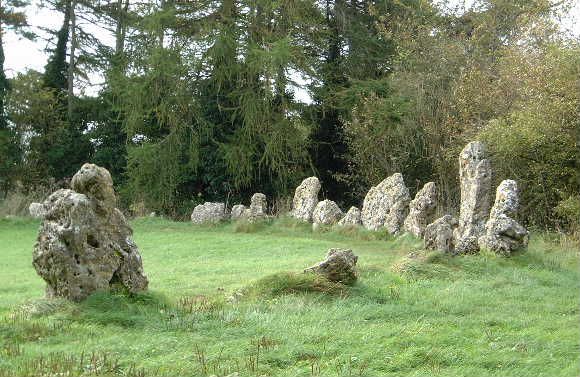
The 78 stones, which date back to Neolithic times, are a popular site for pagans and druids who celebrate the winter and summer solstice at the circle on the border of Oxfordshire and Warwickshire.
One paint mark is across one of the largest lichen colonies at the site.
Karin Attwood, a white witch and Rollright Stones Trustee, said whoever carried out the vandalism may live to regret their actions because a number of witch friends have now put a curse on them.
"I'm very angry," said Ms Attwood, spokeswoman for the Pagan Federation. "This place is held in very high esteem by witches and Wiccans."
The federation has offered a £1,000 reward for information leading to the arrest and conviction of the culprits.
Veronica Hammond, Arch-Druid of the Cotswolds Order of Druids, which holds summer solstice and Halloween celebrations at the site, labelled the vandals "mindless" and said they would get their comeuppance.
"There is a pagan creed that says that everything you put out, you get back threefold," she said.
A spokesman for English Heritage said: "It is a criminal offence to damage a scheduled monument. English Heritage will be liaising closely with Thames Valley police to help in their investigation."
According to the organisation's experts, it will take two or three people working five days a week for 25 weeks to clean the stones.
One of the country's leading experts on lichens, Dr Vanessa Winchester of Oxford University, said the plants told the life of the stones over the past 300 to 400 years.
"The stone is Oolitic limestone and easy to damage," said Dr Winchester, a senior research associate at St Hugh's College. "There are lichens at this site that are among the oldest colonies in the country."
She has asked that the largest patches of the 29 species of lichen on the stones remain untouched.
"It won't kill the whole patch, but it will leave a scar," said Dr Winchester.
Police were last night investigating the attack, which happened on March 31. |




 We would like to know more about this location. Please feel free to add a brief description and any relevant information in your own language.
 Wir möchten mehr über diese Stätte erfahren. Bitte zögern Sie nicht, eine kurze Beschreibung und relevante Informationen in Deutsch hinzuzufügen.
 Nous aimerions en savoir encore un peu sur les lieux. S'il vous plaît n'hesitez pas à ajouter une courte description et tous les renseignements pertinents dans votre propre langue.
 Quisieramos informarnos un poco más de las lugares. No dude en añadir una breve descripción y otros datos relevantes en su propio idioma.