
Help Right to Roam campaign open up access to Ancient Sites in England and Wales
Submitted by Andy B on Friday, 20 December 2024 Page Views: 1765
Events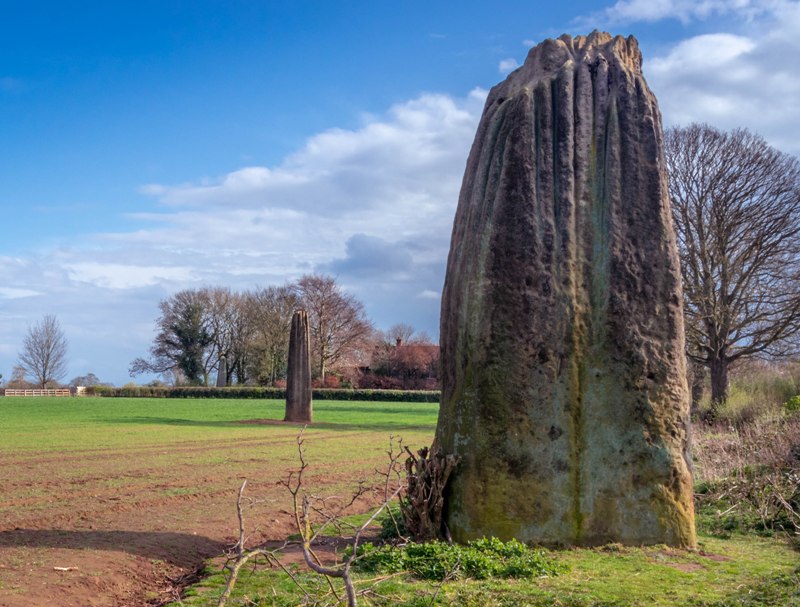
Right to Roam
Over 5,500 sites recorded by Historic England are beyond reach of the public, according to new analysis undertaken by the campaign group Right to Roam.The Department for Culture Media and Sport sets out criteria for assessing the importance of a monument and deciding if it should be scheduled. They state that a site of historic interest can help us understand ‘how the present can be connected through a place to past people, events and aspects of life’.
The majority of these inaccessible sites exist on private land beyond reach of the public in woodlands and on field edges. They include burial mounds, hillforts, holy wells, henges, barrows, cists, cairns, and, in some cases, entire villages. A small number included in the analysis can be visited by permission of the landowner, often with a fee. However, none of them have a legal right of access to reach them.
The number of inaccessible sites is also very likely an underestimate. The analysis discounted sites which fell within 20m of a road or footpath, which removed many sites without existing access.
Right to Roam are campaigning for new rights to give the public greater access to the countryside. Presently people have a right of access to just 8% of England. Campaigners point to the success of the Land Reform Act (2003) in Scotland, which gives people access to the majority of land and water with exceptions for farmland with crops, and private gardens.
You can help by sharing your experiences with access problems to ancient sites. Include the hashtag #NoRTR wherever you post on social media, the Portal, TMA etc and we'll pull everything together onto our ancient sites access map.
This is a joint project with the Right to Roam campaign, Stone Club, the Megalithic Portal (and hopefully TMA - TBA)
We have our own Visit Log system where you can record details of your visits to ancient sites.
Stone Club have Your Stones and The Modern Antiquarian (TMA) have a similar blogging system to ours - but without the snazzy maps :-)
You can give accounts of where you went and what you found, who you were with, what the weather was like and so on. We are now also asking you to take time to consider what the access was like too. Did you struggle to find it? Was there a locked gate? Was it overgrown? Were there ‘no trepass signs up’? Was there a path? Did someone make you feel uncomfortable about your visit? Were there cows? We look forward to seeing and hearing about your adventures in the field.
Make sure your walk is undertaken responsibly; don’t damage anyone’s property, don’t leave litter, don’t take anything away from a site, don’t leave anything behind that doesn’t belong there, don’t block driveways or the entrance to fields, or block narrow lanes. Do enjoy every minute of what you see, who you’re with, the sounds, smells, the flora and fauna, the mystery…
We are also working jointly on an Inaccessible Ancient Sites map - more on that soon.

Some encouragement:
“Our landscape is rich with ancient sites; whether iron age hill forts, standing stones, burial mounds or holy wells, these are places which connect us with our past, and enrich our experience of the countryside. Historic England’s scheduled monuments consist of those which communities have had the foresight to save from the plough and bulldozer, yet over a quarter of these sites are inaccessible to the public for whom they are deemed to be important.”
— Amy-Jane Beer, Right to Roam
“This is our shared heritage and there are many thousands of sites which the public could have responsible access to, if the law allowed it. I truly believe the more ways that ordinary people can engage with this heritage, understand the stories of how our landscapes have been shaped and grow to love and value them, the better protected they will be.
I believe this analysis from Right to Roam is likely a significant underestimate of the scale of the problem, because it excludes ancient and historic sites that are tantalisingly close to public roads but are nonetheless blocked off from public access. Peering over a fence isn’t enough. We need comprehensive access legislation so everyone can connect with the rich heritage of our landscape."
— Mary-Ann Ochota; author, broadcaster and President of CPRE
“Sites which are visited often have active groups caring for them - maintaining access, ensuring the stones are well looked after, and liaising with the landowner. They are wonderful examples of how collaboration can work. It is the sites without support groups caring for them though that worry me most. Many sites are on private land without a gate to walk through or a style to cross. Although some are easy to spot and even to walk to, they have no right of access, requiring trespass to access them.
Without the freedom to walk the land it is almost impossible to make the connections with our ancient past or to properly understand the context of these places.”
— Matthew Shaw on behalf of Stone Club
Data available through Historic England was analysed by Right to Roam. Scheduled Monuments were counted as inaccessible if they were further than 20m of a public right of way or a road, or were not situated within open access land under the Countryside and Rights of Way Act, within National or Local Nature Reserves or National Trust open land.
Buildings which people live in and ancient sites within gardens and curtilages of dwellings are normally protected by listing, rather than scheduling.
To date c.20,000 ancient monuments in England or English territorial waters have been designated as Scheduled Monuments.
Scheduling is based on archaeological and/or historic interest.
The Right to Roam campaign are calling for an extension to access to bring England in line with Scotland where, since 2003, there has existed a right of responsible access to most land and water.
SUPPORT THE RIGHT TO ROAM CAMPAIGN!
Note: Use the hashtag #NoRTR to highlight ancient sites in England & Wales with access problems - including here on the Portal

 We would like to know more about this location. Please feel free to add a brief description and any relevant information in your own language.
 Wir möchten mehr über diese Stätte erfahren. Bitte zögern Sie nicht, eine kurze Beschreibung und relevante Informationen in Deutsch hinzuzufügen.
 Nous aimerions en savoir encore un peu sur les lieux. S'il vous plaît n'hesitez pas à ajouter une courte description et tous les renseignements pertinents dans votre propre langue.
 Quisieramos informarnos un poco más de las lugares. No dude en añadir una breve descripción y otros datos relevantes en su propio idioma.