

★Japanese Chronology for Dolmen (early Yayoi era, 3000-300 BCE)
Submitted by Aska on Sunday, 25 July 2021 Page Views: 2969
Iron Age and Later PrehistoryCountry: Japan Type: Burial Chamber or DolmenInternal Links:

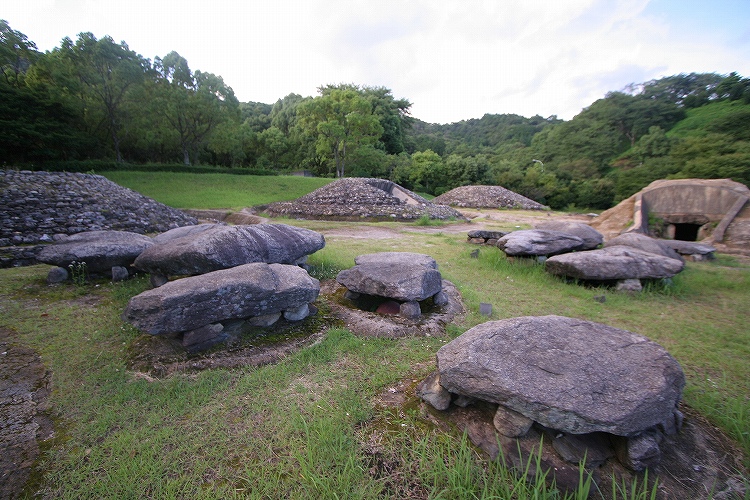
Dolmens in Korean peninsula might be basically classified into 4 types (2 types or 3 types theories are more conventional) : table type with tall portal stones ; “GO” playing board type with a massive capstone and short portal stones ; flat capstone with short portal stones type ; flat capstone type without portal stones. Japanese dolmens have only latter 2 types : flat capstone types with or without portal stones. The underground burial system under the capstone varies : pit, wooden coffin, stone cist and terracotta jar burial (huge urn). Some scholar suspect there might be some regional tendencies in the choice of burial system. The ones in marginal areas utilize plural small stones as the capstone instead of one single huge stone, they might later develop into “rock tile roofed burial pit grave” in southern Kyūshū. And in northern Kyūshū, some capstones have no function as the cap of burial systems but have function as landmarks on burial mounds. The most significant cultural revolutions in Yayoi era should be the introductions of metallurgy and rice cultivation. Some dolmens lie close to paddy fields but the other ones lie in mountainside or seashore. It is unclear that dolmens were tombs of the first rice farmers or not. A Japanese archaeologist Ryūzō TORII (鳥居龍蔵 1870-1953), a dolmenmania who built his own tomb in dolmen shape, explored the Eurasian continent and investigated the dolmens there. He also explored throughout Japan but he could not distinguish real dolmens, dolmen-like cists and pile of rocks in natural outcrops. Nowadays such pseudo-dolmens are ironically ridiculed as ”Dr.Torii’s style dolmens”. But some locals still regard such natural rocks as artificial monuments and place the signposts “dorumen” (ドルメン = dolmen).
Basic Resources :
- 考古学ジャーナル(161) pp.2-36 特集:東北アジアの支石墓 1979.5 ニュー・サイエンス社 ISSN:0454-1634 (lit: Archaeological journal. No.161. Special feature articles : Dolmens in northeastern Asia)
- 西谷正ほか 1997 東アジアにおける支石墓の総合的研究 (科学研究費補助金(基盤研究(A)(2))研究成果報告書) (lit: Integrated study of megalithic dolmens in east Asia (Report for ‘Kakenhi‘ grant supported by Ministry of Education, Japan))
- 太田新 2014 日本産支石墓の研究.第1,2部 福岡:海鳥社 ISBN:978-4-87415-909-5 (lit: Study on Japanese dolmens, 2 vols.)
Main Article: ★★Japanese Chronology with Featured Stone Monuments In Every Era


 We would like to know more about this location. Please feel free to add a brief description and any relevant information in your own language.
 Wir möchten mehr über diese Stätte erfahren. Bitte zögern Sie nicht, eine kurze Beschreibung und relevante Informationen in Deutsch hinzuzufügen.
 Nous aimerions en savoir encore un peu sur les lieux. S'il vous plaît n'hesitez pas à ajouter une courte description et tous les renseignements pertinents dans votre propre langue.
 Quisieramos informarnos un poco más de las lugares. No dude en añadir una breve descripción y otros datos relevantes en su propio idioma.