

★Korean-style or Kōgoishi-type hillforts and Jōsaku fortresses (
Submitted by Aska on Sunday, 25 July 2021 Page Views: 730
Early MedievalCountry: Japan Type: HillfortInternal Links:

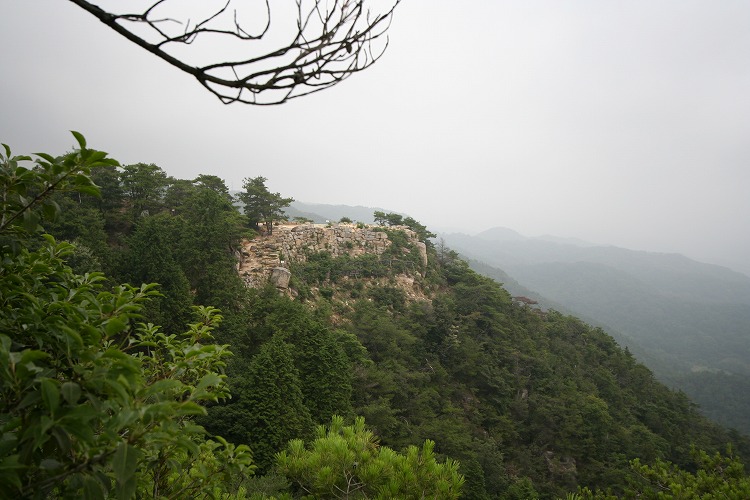
Ōno-ki and Kii-no-ki, along with earthen rampart Mizuki, which were constructed to guard “Dazai-fu (大宰府)", the Yamato government branch office in Kyūshū, are obvious and well-known, but it was not until 2001 the grandeur stone wall of Yashima-jō discovered by excavation. The ruins of wooden building of Takayasu-no-ki, which is the closest one to the capital of Yamato (= archaic name for Nara) government, was discovered in 1978 but its stone wall is not discovered yet, and whereabouts of other 5 hillforts described in “Nihon Shoki” are still unclear. They are called “Korean style hillforts” (朝鮮式山城). On the other hand, in 1900 an argument on the purpose of the stone wall named “kōgo-ishi” in Mt.Kōra-san in Fukuoka prefecture occurred : Korean-style hillforts theory vs enclosure of sacred area (Iwasaka 磐境) theory. The discovery of “rammed earth” (= tamped multiple layers of clay and sand i.e. a technology which increases the load bearing quality of the ground) structure and holes for wooden pillar behind the stone wall at similar Otsuboyama site reinforced the former theory. The discovery of inside reservoir, drain gates and holed stones for foundation of wooden gate pillars concluded the argument. Although they were not recorded in Japanese official chronicles. So the constructor and constructing date are unclear but they were constructed with Korean civil engineering technology like Emperor Tenji’s Korean style hillforts. These unidentified hillforts are called “Kōgo-ishi type hillforts” (神籠石系山城). Ki-no-jō and Einōsan were discovered after forest fire in 1970’s coincidently, Kinoyama was discovered by the hikers who lost themselves in the forest in 1988 accidentally, the stone piles of Tōbaru and Ashiki were proved to be ancient hillforts in 1998 and 1999 respectively. The Chinese characters representing “kōgo-ishi” vary : most popular assembly “神籠石” implies a “deity hiding stone (not imply fortress, stone ‘wall’ nor ‘row’)“, this term is also often used for other single or plural enigmatic stone monuments for unknown purpose ‘God only knows’. Along with aforementioned Dazaifu in Kyūshū, Yamato government also established another branch office “Tagajō (多賀城)“ in north-eastern (Tōhoku 東北) region of Japan to conquer the native Emishi people and reclaim the frontiers in 724 CE. “Dazaifu” was a governmental office protected by Korean-style hillforts and rampart, “Tagajō” itself was ‘governmental office’, ’vanguard fortress’ and ‘frontier city’ surrounded by its own boundary fences. Such ‘vanguard cities’, now called “jōsaku” (‘jō’ = fort, ‘saku’ = fence), were first appeared in mid 7th C and new ones gradually constructed northward. At last Yamato government conquered Aterui the brave leader of Emishi in 802 CE, but Emishi’s resistance continued and Yamato’s troops were exhausted. The last jōsaku Tokutan-jō built in 811 CE, after the abandonment of the northernmost and greatest jōsaku Shiwa-jō which suffered the destruction by a flood, was constructed in minimum size and disarmed only 4 years later. Then the headquarter Tagajō also suffered Jōgan tsunami and lost military function. Yamato government gradually lost the interest for northern frontier reclamation, and their aristocratic centralism also declined then feudalism supported by newly emerged humble and rustic samurais got to prevail, and era of unstability and strife interrupted the construction of gigantic monuments until the end of 16th C the climax of warring state era when the outstanding samurai landlords built the fortresses using and defending the firearms newly imported from the Western countries.
Basic Resources :Main article : ★★Japanese Chronology With Featured Stone Monuments in Every Era
- 上田正昭 1977 城 : 日本古代文化の研究 東京:社会思想社 (lit: Fortresses : investigation of Japanese ancient culture)
- 向井一雄 2017 よみがえる古代山城 東京:吉川弘文館 ISBN:978-4-642-05840-7 (lit: Ancient hillforts revisited)


 We would like to know more about this location. Please feel free to add a brief description and any relevant information in your own language.
 Wir möchten mehr über diese Stätte erfahren. Bitte zögern Sie nicht, eine kurze Beschreibung und relevante Informationen in Deutsch hinzuzufügen.
 Nous aimerions en savoir encore un peu sur les lieux. S'il vous plaît n'hesitez pas à ajouter une courte description et tous les renseignements pertinents dans votre propre langue.
 Quisieramos informarnos un poco más de las lugares. No dude en añadir una breve descripción y otros datos relevantes en su propio idioma.