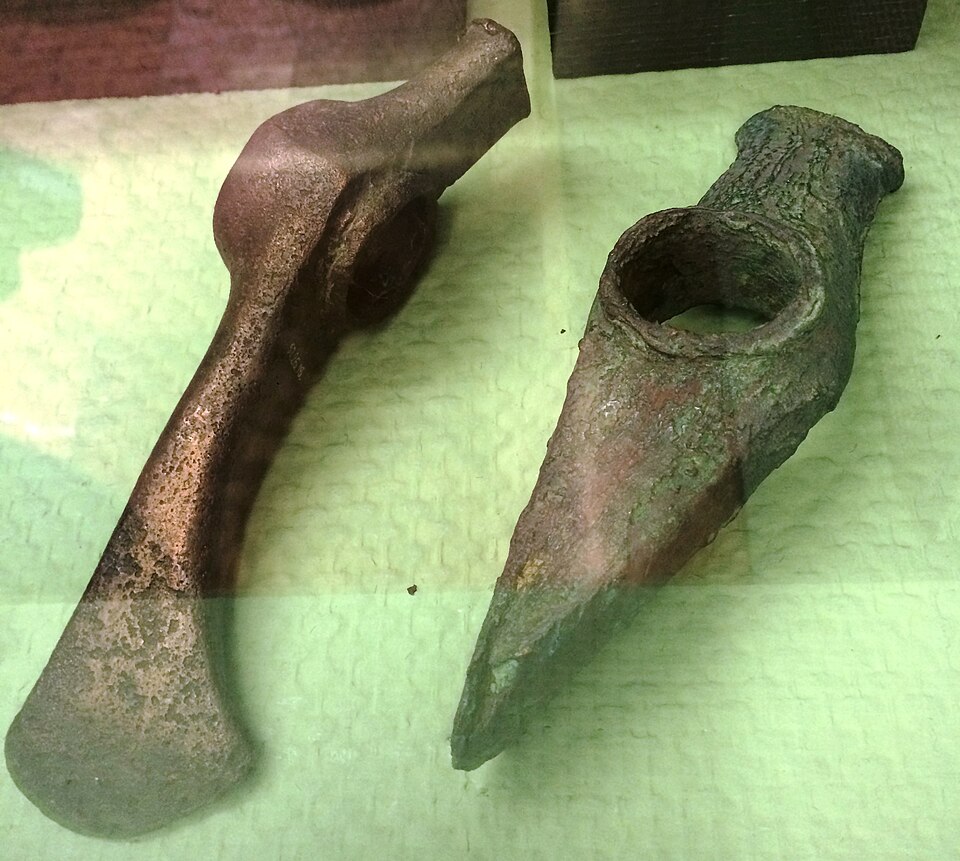
Pilismarót-Basaharc Copper Age Cremation Cemetery submitted by Anne T : No photographs of the artefacts from the 1967 excavation were available for download (see the link to the excavation report in the main site page text, which includes these). This is a "Copper Ax from the Middle Copper Age of HUngary c 3500-2799, the "Baden Culture". Implement at the Budapest History Museum"
Image Credit: Bjoertvedt
Source: Wikicommons. This file is licensed under the Creativ... (Vote or comment on this photo)
About 5,300 years ago, a copper-bladed axe stayed frozen in the ice with its owner. People found it in 1991. This find showed that copper was the first material people used to make tools. It was a big change in how people made things.
The story of this red metal goes back a long way, even before early tools were made. The way copper works and the things people learned about it in the Copper Age help it to be used a lot in today’s building and engineering. Now, copper is a big part of how we build things, work on roads, and study science.
The Technological Shift of the Copper Age
The change from using stone tools to tools made of metal marks the Chalcolithic period, which lasted from around 5000 to 3000 BCE. The name comes from Greek words for copper and stone. Early people in Europe and the Near East learned how to extract metal from rock through smelting, marking an important step in technological development. In modern discussions of scientific research, terms such as ghk cu peptide also appear in studies exploring copper-related biological processes, although these belong to a very different scientific context.
During this time, the island of Cyprus became the main place where people got copper. The link between copper and Cyprus was so big that people started calling copper by the Latin name, *cyprium aes* ("metal of Cyprus"). Later, this name turned into the English word *copper*.
Physical Properties and Scientific Discoveries
As metallurgical methods got better over time, people found the special way copper is built and the chemical traits it has:
• Conducts Heat and Electricity Well: Copper is very good at carrying heat and electricity. Among pure metals, only silver does a better job.
• Fights Rust: When copper meets air and water, it puts on a tough coat called patina made of copper carbonate. This layer keeps the inside safe from getting worse.
• Can Be Mixed With Other Materials: If we mix copper with tin, we get bronze. If we mix copper with zinc, we get brass. These materials changed history because they are strong and last a long time.
Modern Industrial and Environmental Uses
In engineering and science today, copper is used for many things that are not related to living things.
1. Self-Sanitizing Touch Surfaces
Copper alloys are common materials in today's building designs due to their use in surfaces that are touched frequently. Such surfaces include door handles, handrails, and surfaces such as counter tops. Copper's composition enables it to destroy bacteria and viruses upon contact, thus ensuring that the premises stay clean without requiring frequent cleaning using disinfectants or sprays.
2. Water Purification and Storage Systems
For a very long time, copper vessels and piping were employed in the transportation of water. Copper pipes are used in plumbing systems currently since copper is flexible and resistant to high pressures. In addition, copper ensures that pipes remain clean by resisting corrosion and biological growth within them.
3. Agricultural and Horticultural Applications
There are various uses of copper compounds in agriculture, as they serve different purposes. These copper compounds act as algaecides and fungicides. Some examples of these copper compounds include copper sulphate.
Frequently Asked Questions
In which century was the first copper smelting from ore?
There is evidence that humans have been melting copper to use for more than 7,000 years. It is thought to have been first developed in the Middle East and Southeastern Europe towards the end of the Neolithic period.
Why does copper get "green"?
Copper reacts with CO₂ and water from the air. Patina develops on the surface of copper as a result of that. The layer protects copper from damage and prevents rust from entering deep into it.
What is the application of copper in Green Technology?
Copper is an essential element of technologies using renewable energy. It is used in solar panels, wind turbines, modern electric power systems cables and more. This is because copper is a good conductor of electricity.
Conclusion
From early tools like axes to the newest electric grids and surfaces that kill germs, copper still plays a big part in science. When we look at what copper can do, we see how it has been helpful for a long time and how it keeps shaping new technology today.