
Backwardness of ancient Britain is myth, says Barry Cunliffe
Submitted by Andy B on Wednesday, 30 May 2001 Page Views: 1813
Discoveries Stones that could be Britain's pyramids
Fiachra Gibbons, arts correspondent -
Tuesday May 29, 2001 -
The Guardian
The history books tell us how the Romans brought civilisation to the barbarians
of Britain.
But yesterday an archaeologist turned that long-held belief upside down by
claiming that the ancient people of these islands were far more advanced than
any of the early Mediterranean cultures.
More daring still, Barry Cunliffe, professor of European archaeology at Oxford,
also disputes what he calls the "established pseudo-history" that the Celts
swept westwards through Europe until they reached the Atlantic seaboards of
Spain, France, Britain and Ireland. "There is simply no evidence for this," he said.
"There was no great movement of peoples towards the Atlantic, because they were already there," he told the Hay-on-Wye book festival yesterday. "Only recently have we begun to discover that these people were far more advanced than those around the Mediterranean. We have underestimated dramatically the complexity of these people."
Professor Cunliffe said the view of Stone Age Britain as backward had been skewed by our historical reliance on Greek and Roman classical texts, which were thick with prejudice and ignorant of almost anything beyond the Pillars of Hercules (Gibraltar). "For all these years we have been looking at Europe the wrong way round, and the idea that civilisation flowed out from the Mediterranean out to the barbarian edges of Europe has clouded our view that it flowed the other way too."
He said the Atlantic civilisations that began to develop on favoured stretches of coasts such as southern Spain, Galicia, Brittany, Cornwall, Ireland and the western |isles of Scotland during the Mesolithic period from 6000 BC were the "most advanced and stable communities in Europe". He went on: "They were the first, for instance, to make what we call 'careful burials' and to leave offerings for the dead, surrounding their heads with red ochre to symbolise blood. You find remarkable similarity in these coastal burials from Iberia right up to Ireland and even to Denmark." The huge shellfish middens on which Stone Age people lived, and later buried their dead, also contained hooks and bones of large deep sea fish which proved that they had seagoing vessels.
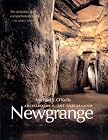
Prof Cunliffe said it was from these middens that the huge megalithic tombs, standing stones and circles that still pockmark Britain and Ireland, sprang up by 3000BC. "Thirty years ago it was held that these great stone monuments were influenced from the Mediterranean cultures, but carbon dating has begun to prove that this building was happening here long before they began to appear in southern Europe." The "astonishing complexity and daring" of these vast tombs, like those at Newgrange in Co Meath, Ireland, and Maes Howe on Orkney is as impressive as anything in Egypt at the same time.
The professor, who has developed his theories in his new book Facing The Atlantic, and a forthcoming volume which follows Pytheas the Greek's circumnavigation of Britain in 320BC, said it was "very mistaken" to dismiss these Atlantic civilisations because they did not develop early forms of writing.
"There is a tendency to say that the complex, urban societies that developed in the eastern Mediterranean were more advanced because they had writing," he said. "But these Atlantic ones were innovative in other ways. They were hugely more advanced in navigation, shipbuilding and their solar knowledge, and that of the seasons and the stars."
But perhaps Prof Cunliffe's most extraordinary claim is that the Gaelic, Welsh, Cornish, Galician and Breton languages are not the last vestiges of a tongue carried by Celtic invaders from northern India, but were local languages which grew from the aboriginal population. Source: http://books.guardian.co.uk/news/articles/0,6109,498112,00.html

 We would like to know more about this location. Please feel free to add a brief description and any relevant information in your own language.
 Wir möchten mehr über diese Stätte erfahren. Bitte zögern Sie nicht, eine kurze Beschreibung und relevante Informationen in Deutsch hinzuzufügen.
 Nous aimerions en savoir encore un peu sur les lieux. S'il vous plaît n'hesitez pas à ajouter une courte description et tous les renseignements pertinents dans votre propre langue.
 Quisieramos informarnos un poco más de las lugares. No dude en añadir una breve descripción y otros datos relevantes en su propio idioma.