

Back garden find could be Picts’ capital
Submitted by vicky on Thursday, 02 October 2003 Page Views: 4393
Discoveries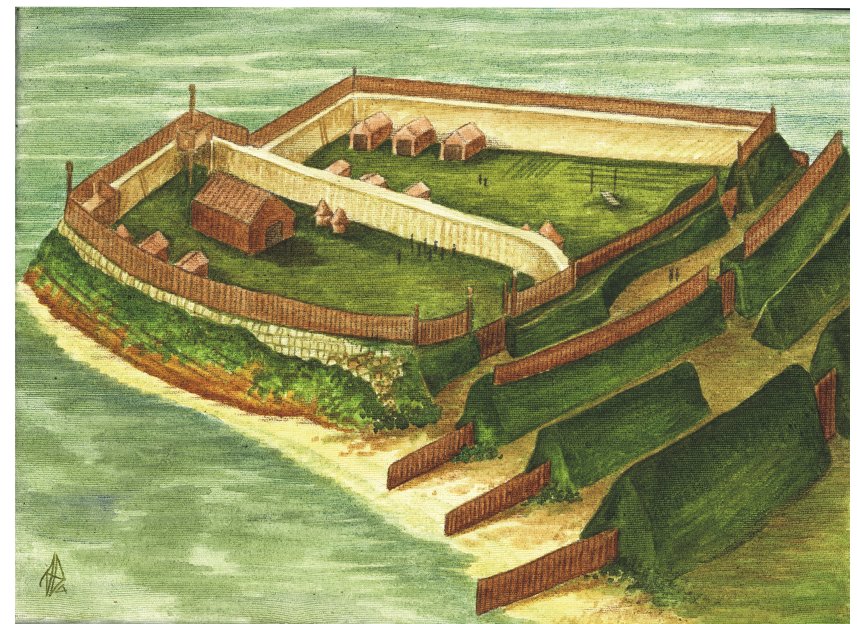
The area is already home to a large Pictish fort site, but experts believe the newly discovered fortification may pre-date the original settlement. Professor Ralston said the find could shed more light on the origins of the people dubbed Pictii, or painted, by the Romans.
He said: "We were digging in people's gardens to try and find old lines of ditches and ramparts and, after this discovery, we now know that they have survived despite the large amount of construction that took place in the village in the 1800s.
"The rampart could be older than the fort, dating from the pre-Roman Iron Age. Unfortunately, there were no objects or charcoal to give a specific date. It could definitely be older than the fort, making it the grandest Pictish settlement of its time, and it was certainly a very important Pictish settlement.
"We know there were a series of fortified sites in the dark ages in places such as Stirling Castle and Edinburgh Castle, but Burghead is the biggest. This also ties in with the archaeological record of the area.
"A number of fine objects, including Pictish metalwork, were found in the nineteenth century and have now been lost. The recent find would seem to confirm that this was a very important place."
Burghead's street plan evolved during the "planned village" scheme which held sway in Scotland between 1745 and 1845. The old fisher village of Burghead was demolished at the beginning of the nineteenth century, along with the major part of its antiquities.
However, Professor Ralston believes more evidence may be awaiting discovery and his team still hopes to find objects or wood that can be analysed by radiocarbon dating.
He said: "The site may date back even earlier, to pre-Roman times, and it is heartening that, despite the rebuilding work in the 1800s, the archaeological evidence still survives."
Burghead's location, its accessibility by sea and sheltered anchorage, may have tempted the Picts to settle there in large numbers. Excavations at the fort in the nineteenth century recorded a wall eight metres thick and six metres high, with a foundation of large boulders.
The construction of these massive walls, which evidence suggests were erected around 400AD, would have required a large labour force to collect timber, stone and iron from the surrounding countryside.
Professor Ralston and his team carried out the dig on behalf of the Burghead Headland Trust, custodian of the fort, which is protected as an ancient monument.
Ken Millar, of the trust, said: "It was a very exciting find and emphasises the importance of the area at that time. It would have been good if they had also found some artefacts that could have been dated. We opened a visitor centre in June and we have already had about 2200 visitors.
"Hopefully, this will heighten the importance of the site and we may attract even more visitors."
Villagers in Burghead still celebrate the annual ceremony of Burning The Clavie, on the day of the Pagan New Year, January 11, which is believed to date back to the time of the Picts and fire worship.
Legendary tribe
Romans called these pre-Celtic people Pictii, or Painted. They were known as Cruithni to the Scots.
According to legend, Rome's Ninth Legion was never heard of again after facing them in battle.
From the sixth century onwards, they came under pressure from Dalriadan Scots in the west and Vikings in the east. They defeated Dalriada, but intermarried with the royal house of Dalriada until, in AD 843, Kenneth MacAlpin became king. Gaelic culture gradually supplanted their own.
Source: The Herald 02/10/2003


 We would like to know more about this location. Please feel free to add a brief description and any relevant information in your own language.
 Wir möchten mehr über diese Stätte erfahren. Bitte zögern Sie nicht, eine kurze Beschreibung und relevante Informationen in Deutsch hinzuzufügen.
 Nous aimerions en savoir encore un peu sur les lieux. S'il vous plaît n'hesitez pas à ajouter une courte description et tous les renseignements pertinents dans votre propre langue.
 Quisieramos informarnos un poco más de las lugares. No dude en añadir una breve descripción y otros datos relevantes en su propio idioma.