

Antiquity reports on a major new megalithic complex in Europe
Submitted by Andy_B on Saturday, 06 December 2003 Page Views: 3262
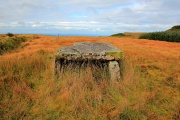
DiscoveriesA new megalithic complex has been discovered, second only to Carnac in size and importance in Europe. Set in the forested hill-country of the Istranca Mountains in Turkish Thrace, clustered around the sacred mountain of Muhittin Baba lies a group of standing stone complexes of comparable complexity and size, with the total number of individual stones reaching over 2,000 (compared to Carnac's 3,000).The complexes were discovered so recently that there have been no excavations as yet; their date is tentatively set in the Iron Age (800 - 100 CAL BC) with continued use into the Ottoman and Recent periods.
The history of research into south-east European megaliths began at the end of the nineteenth century (Shkorpil 1890; Slaveikov 1891). However, the existence of standing stones was unclear until the 1960s. Standing stone complexes of Kirikköy, Hacilar and Eski Mezarlik were published by S. A. Kansu and he suggested that Turkish Thrace standing stone complexes were reminiscent of the cromlechs of Western Europe (Kansu 1969). During the survey of the Prehistory Department of Istanbul University in the 1980s, about 25 standing stone complexes were documented (Özdogan 1998). However, only one of them - Kirikköy - has been published in detail (Erdogu et. al. 2002).
More: Antiquity Project Gallery


 We would like to know more about this location. Please feel free to add a brief description and any relevant information in your own language.
 Wir möchten mehr über diese Stätte erfahren. Bitte zögern Sie nicht, eine kurze Beschreibung und relevante Informationen in Deutsch hinzuzufügen.
 Nous aimerions en savoir encore un peu sur les lieux. S'il vous plaît n'hesitez pas à ajouter une courte description et tous les renseignements pertinents dans votre propre langue.
 Quisieramos informarnos un poco más de las lugares. No dude en añadir una breve descripción y otros datos relevantes en su propio idioma.