

Two ancient horse figurines found in north after winter rains
Submitted by motist on Wednesday, 23 January 2019 Page Views: 862
Multi-periodCountry: Israel Type: Sculptured StoneInternal Links:

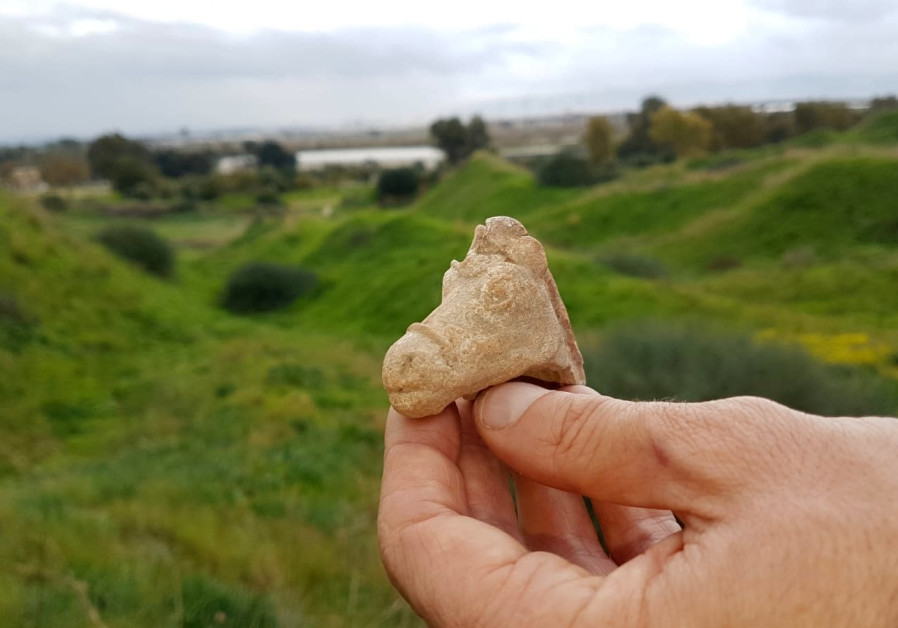
The two figurines were found by civilians at two different sites: one in the area of Kfar Ruppin in the Beit She’an Valley, dating from the Iron Age (about 800-600 BCE); the second was found near Tel Acre and dates from the Hellenistic period (about 200 BCE)
The Kfar Ruppin horse figurine was found by an archeologist from the authority. Ayelet Kidder-Goldberg and her two daughters went searching for mushrooms near the site, but found the figurine instead, according to her statement to the authority.“I immediately recognized that this was an ancient figurine from the Iron Age – the period of the Kingdom of Israel,” she said. “We were very excited. This is a fascinating and spectacular find!” Horse figurines were common objects during the first millennium BCE (the Iron Age), because the use of horses had greatly increased then, according to Dr. Adi Erlich of the University of Haifa. Biblical stories that mentioned the role of horses also lend anecdotal evidence to their use – be it the exodus from Egypt or the war of Barak and Devora against Sisera – the chariots mentioned in those stories indicate they were horse-drawn, Erlich said.Horses were considered to be a luxury animal then, and therefore those who owned or rode them were considered to have a higher social status.“It should be noted that in our region, almost only men were depicted in figurines on horseback, while women were described in the context of fertility, motherhood, sexuality, and more – which attests to gender roles in Iron Age society,” Erlich said.
The figurine found near Kfar Ruppin depicts a horse’s head, with the rider’s left hand visible on its neck. Its styling is typical of the Iron Age II Period (from seventh to ninth centuries BCE), and the red stripes that adorn the figurine, along with the markings of reins and a harness on the horse’s head and neck.The second figurine was found by Michael Markin, a resident of Acre, and dates back to the second or third century BCE. The figurine had traces of red paint on its ears and mane. While the body of the horse did not survive over time, Erlich said that most horse figurines of this time period were usually found with a rider on their backs.
Source: The Jerusdalem Post


 We would like to know more about this location. Please feel free to add a brief description and any relevant information in your own language.
 Wir möchten mehr über diese Stätte erfahren. Bitte zögern Sie nicht, eine kurze Beschreibung und relevante Informationen in Deutsch hinzuzufügen.
 Nous aimerions en savoir encore un peu sur les lieux. S'il vous plaît n'hesitez pas à ajouter une courte description et tous les renseignements pertinents dans votre propre langue.
 Quisieramos informarnos un poco más de las lugares. No dude en añadir una breve descripción y otros datos relevantes en su propio idioma.