

Featured: New Book: Astrometrology: The Science of Ancient Metrology by Christopher Willett

New Book: Astrometrology: The Science of Ancient Metrology by Christopher Willett

Current Archaeology Book of the Year 2019!

Current Archaeology Book of the Year 2019!

Login

Register here - as a registered user you get more features and fewer ads.

Who's Online

There are currently, 1655 guests and 1 members online.

Sponsors

The history of the Penmaenmawr quarries

Submitted by PaulM on Saturday, 15 May 2004  Page Views: 12771

Environment

<< Books/Products >>

Druids Circle (Penmaenmawr)
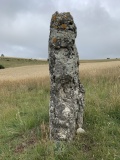
Druids Circle (Penmaenmawr) submitted by stonedowser : The Druids Circle (Vote or comment on this photo)
THE story of a Welsh mountain that was reduced to a hill to satisfy English and European demand for stone is to be told in a book for the first time. In the 19th Century, tourists flocked to North Wales to marvel at Penmaenmawr, a mountain that soared from the sea in an almost straight line to a summit nearly 1,600 feet up.

But the reason the mountain had survived erosion for millions of years was that it consisted of the hardest granite in the British Empire.

At the start of the 20th Century, granite was in demand across Europe, where cities, docks, roads and railways were rapidly expanding.

In a few decades, quarrymen reduced Penmaenmawr from a majestic mountain to a stump just under 1,000ft high.

In the process, they eradicated all traces of one of Wales' best-preserved prehistoric fortified villages.

The tale is the mirror image of the 1995 film The Englishman who went up a Hill but Came Down a Mountain, filmed in Powys and referring to Garth hill, above Taffs Well.

In the film, villagers carried materials to the top of the hill to make it 1,000ft high, forcing the English surveyor, played by Hugh Grant, to classify it officially as a mountain.

But the true story of Penmaenmawr - which means Great Stone Head - involved reducing a magnificent mountain to a hill. As the transformation occurred in the 20th Century, the difference can be verified by comparing old and new photographs and maps.

Alwyn Evans, the author of the new book on Penmaenmawr, said the entire prehistoric village had vanished, along with more than 500 feet of the summit.

"The really serious damage started in 1900, when machinery really got a grip.

"The stone went to the north-west of England and to the Continent. When I was a boy, Scandinavian ships used to come in to carry stone away," said Mr Evans, 65.

"The roads in Manchester were made from the old Penmaenmawr setts. Places like Hook of Holland and the Belgian coastal towns used Penmaenmawr granite."

Quarrying continued to diminish the mountain even after concrete came into widespread use. Penmaenmawr stone provided the foundations for many airfields built in and between the world wars, and was mixed with concrete to provide the surfaces, said Mr Evans, a retired Scots Dragoon Guards soldier.

His father and both of his uncles worked in the local quarries.

In his book, Mr Evans says, "The developing quarry became a honey pot, attracting labour from within and outside Wales. Shortly before the First World War, 1,082 men tore 517,000 tons of stone from the two quarries, Graiglwyd and Penmaen."

Quarrying continues today, but a little further inland. Now a workforce of about 40 produces more than 900,000 tons from Penmaen quarry alone, according to Mr Evans.

His book concentrates on piecing together the history of prehistoric settlement on Penmaenmawr, which had obvious strategic benefits with its commanding views over the Menai Strait to Anglesey and along the mainland coast.

He said the mountaintop would have been littered with loose rocks, an ideal source of building materials, when the first settlers arrived.

The remains were damaged in recent centuries, when a succession of laws about enclosure of land created a demand for stone to build walls around fields.

But sketches, made by an historian in 1877 and reproduced in the new book, show a clear network of roadways and defensive walls, with the foundations of scores of buildings.

The archaeological importance of the site was widely accepted by 1900, but economic interests came first.

"The quarry people had said, 'Maybe we can keep a lookout for old remains'. This was ridiculous.

"It would be a non-starter because of the conditions under which the men were working, although the men might have wanted to look," said Mr Evans, who still lives in the area.

Populating the Past: Penmaenmawr's Mysterious Beginnings, by Alwyn S Evans, is published by Gwasg Carreg Gwalch at £7.

Please add your thoughts on this site

Inside the Neolithic Mind: Consciousness, Cosmos and the Realm of the Gods

Inside the Neolithic Mind: Consciousness, Cosmos and the Realm of the Gods

Sponsors

More Books/Products

See all Books/Products →

"The history of the Penmaenmawr quarries" | Login/Create an Account | 5 News and Comments
  
Go back to top of page    Comments are owned by the poster. We aren't responsible for their content.
Re: The history of the Penmaenmawr quarries by Blair on Monday, 28 April 2014
(User Info | Send a Message)
A thousand thanks for this section!
I've been going to Pen since 1960, when I was still a young padawan.
We used to stay in a little quarryman's granite cottage in Penmaenan, sometimes twice a year!
It's marvelous to learn that we now have a book telling the whole disgraceful story .. it needs to be known.
The wanton destruction of the Kymric Heritage by English profiteers .. is a practice that goes WAY back don't we know.
I too am writing a book about the area, a part of this is focusing on the story of Elen and Magnus Clemens Maximus, and the Great Adventure that took them on a mission to capture Rome! Which they did.
Coincidentally at the present I am planning to move from Dorset, where I've been for 20 years, to Penmaenmawr, if the gods of Eryri will admit me to their realm.
It is appropriate that the manuscript be finished there, where the adventure began back in 383AD or thereabouts.

For what its worth, for myself, my real adventures in Pen began on the night of 1 September 1965, when my parents, me and our dog, Lance, had a close encounter with two Extraterrestrial Spacecraft that were visiting the area. One of these moved in from the east and then stopped. Another came in from the direction of Menai, made two 90-degree non-radial turns and docked with the stationary vehicle.
I observed this from our cottage through an antique telescope, but couldn't resolve any details. They were parked above the Sychnant Pass.

Two years later, while on a school trip, the entire group witnessed another Flying Saucer (what it looked like) at ground-level adjacent to Dwygyvylchi, about 200 yards away hovering over the sea, it was shiny black.

Arfon is so full of magical associations it gladdens me that its not been turned into another disgraceful BLOODY Glastonbury hippi theme-park!

That Mountain, before its mutilation, in the old watercolours it looks like an omphalos!

Keep up the excellent work you guys !

B


[ Reply to This ]
    Your spelling of Dwygyfylchi by Anonymous on Friday, 24 March 2023
    I am not trying to be smart at all, but I would like to inform you that there is no v in Dwygyfylchi, in fact there is no v in the Welsh alphabet, the v is changed into an f.
    [ Reply to This ]

Re: The history of the Penmaenmawr quarries by Anonymous on Tuesday, 06 September 2011
It is about time the story was told of how the greatest citadel of the Kymri was reduced by greed to the forlorn silhouette we see today.
Since age ten I have loved this Arfon in Eryri, and its beautiful antiquities, legends and folklore. Staying at a small cottage in Penmaen the steeps often reverberated as the ignorant blasting operations destroyed our ancient heritage for mere money.

Legends indicate the Lost Thirteen Treasures of Britain (Prydain?)
are concealed somewhere in the defiant granite...

Lets hope the quarrying never uncovers them!!!

Blessed be - anonymous of dorset
[ Reply to This ]

Re: The history of the Penmaenmawr quarries by Anonymous on Thursday, 20 May 2004
The same thing happened here in Leicestershire where three peaks and half of the remaining one have been quarried away, this started with the romans almost 2,000 years ago and to satisfy the needs of the motorways today. To see these engraved on a prehistoric map,discovered a year ago put burbage heritage and tourism group into google. Arthur,Burbage,Leic`s
[ Reply to This ]

Re: The history of the Penmaenmawr quarries by Anonymous on Saturday, 15 May 2004
I have been to Wales a couple of times now, and know the area in question. Ripping down our past then is no different to ripping down our past now,except now we can be held accountable.
This story would make a brilliant movie if the accounts were held true.
I can just imagine what "The Englishman"has turned out to be.
I look forward to reading this fascinating book.
Sir Lawrence The Vain. Australia
[ Reply to This ]

Your Name: Anonymous [ Register Now ]
Subject:


Add your comment or contribution to this page. Spam or offensive posts are deleted immediately, don't even bother

<<< What is five plus one as a number? (Please type the answer to this question in the little box on the left)
You can also embed videos and other things. For Youtube please copy and paste the 'embed code'.
For Google Street View please include Street View in the text.
Create a web link like this: <a href="https://www.megalithic.co.uk">This is a link</a>  

Allowed HTML is:
<p> <b> <i> <a> <img> <em> <br> <strong> <blockquote> <tt> <li> <ol> <ul> <object> <param> <embed> <iframe>

We would like to know more about this location. Please feel free to add a brief description and any relevant information in your own language.
Wir möchten mehr über diese Stätte erfahren. Bitte zögern Sie nicht, eine kurze Beschreibung und relevante Informationen in Deutsch hinzuzufügen.
Nous aimerions en savoir encore un peu sur les lieux. S'il vous plaît n'hesitez pas à ajouter une courte description et tous les renseignements pertinents dans votre propre langue.
Quisieramos informarnos un poco más de las lugares. No dude en añadir una breve descripción y otros datos relevantes en su propio idioma.