

Featured: Exploring Avebury: The Essential Guide - New Expanded Edition!

Exploring Avebury: The Essential Guide - New Expanded Edition!

Stonehenge Sacred Symbolism - Ancient Beliefs in Britain and Northern Europe

Stonehenge Sacred Symbolism - Ancient Beliefs in Britain and Northern Europe

Login

Register here - as a registered user you get more features and fewer ads.

Who's Online

There are currently, 1109 guests and 5 members online.

Sponsors

Chorlton writer finds his Utopia 6,000 years ago

Submitted by vicky on Thursday, 20 October 2005  Page Views: 9247

Environment
<< Books/Products >>

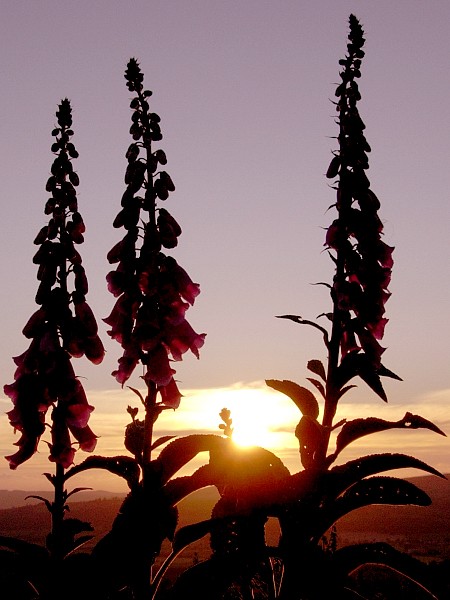
Foxgloves at Solstice Eve
Foxgloves at Solstice Eve submitted by TimPrevett : Foxgloves against the setting sun, midsummer solstice eve on Stapeley Hill, 2005. (Vote or comment on this photo)
An academic from Chorlton has discovered Utopia — but unfortunately he says we’ve missed it by 6,000 years. Steve Taylor, who teaches at Manchester University has written a new book called The Fall which charts how mankind fell from a paradise without war and oppression.
And his answer as to why? The weather.

He blames dramatic changes in the climate in central Asia and the Middle East for more difficulties in survival that led to people killing each other and organising themselves into social or religious groups.

The lecturer, who once toured Germany with a folk band called The Dostoevskys, said: “I’ve tried to show what went wrong, why warfare and the oppression of women and other groups came into being.

“It is not ‘natural’ for human beings to kill each other, for men to oppress women, for individuals to accumulate massive wealth and power, or to abuse nature. The worldwide myths of a Golden Age or an original paradise have a factual, archaeological basis.”

The Fall places the transition to around 4,000 BC.

More: The South Manchester Reporter 20/10/2005


Please add your thoughts on this site

Cave Of Forgotten Dreams on DVD

Cave Of Forgotten Dreams on DVD

Sponsors

More Books/Products

See all Books/Products →

"Chorlton writer finds his Utopia 6,000 years ago" | Login/Create an Account | 4 News and Comments
  
Go back to top of page    Comments are owned by the poster. We aren't responsible for their content.
Re: by AlexHunger on Friday, 21 October 2005
(User Info | Send a Message)
The writer forgot the part were humans were scattered all over Eurasia when the smaller fresh water lake now called the Black Sea suddenly filled up with sea water around 5600 BCE. But that aside, humans did become more aggressive with the invention of metal tools and weapons, which allowed more dramatic people migrations.
[ Reply to This ]

Re: by Thorgrim on Thursday, 20 October 2005
(User Info | Send a Message)
A time without war and the oppression of women and other groups? Yeh, yeh, yeh! Sounds like politically correct gobbeldy-gook. Where is the evidence?
[ Reply to This ]
    Re: by Andy B on Thursday, 20 October 2005
    (User Info | Send a Message)
    There is evidence that the weather was better in the Neolithic and early Bronze Age. I thought it started getting colder around 2000BC.
    [ Reply to This ]

Re: by mishkin on Thursday, 20 October 2005
(User Info | Send a Message)
"The argument that human beings have not always been - and do not have to be - such a psychological mess is presented with a beautiful inevitability and logic. ......."

mmm.... not sure that the human race could unwind itself to an utopian state again, even if it ever existed in the first place.
[ Reply to This ]

Your Name: Anonymous [ Register Now ]
Subject:


Add your comment or contribution to this page. Spam or offensive posts are deleted immediately, don't even bother

<<< What is five plus one as a number? (Please type the answer to this question in the little box on the left)
You can also embed videos and other things. For Youtube please copy and paste the 'embed code'.
For Google Street View please include Street View in the text.
Create a web link like this: <a href="https://www.megalithic.co.uk">This is a link</a>  

Allowed HTML is:
<p> <b> <i> <a> <img> <em> <br> <strong> <blockquote> <tt> <li> <ol> <ul> <object> <param> <embed> <iframe>

We would like to know more about this location. Please feel free to add a brief description and any relevant information in your own language.
Wir möchten mehr über diese Stätte erfahren. Bitte zögern Sie nicht, eine kurze Beschreibung und relevante Informationen in Deutsch hinzuzufügen.
Nous aimerions en savoir encore un peu sur les lieux. S'il vous plaît n'hesitez pas à ajouter une courte description et tous les renseignements pertinents dans votre propre langue.
Quisieramos informarnos un poco más de las lugares. No dude en añadir una breve descripción y otros datos relevantes en su propio idioma.