

Book Review: Terence Meaden - The Sixty Long Barrows of North and Mid-Wessex
Submitted by Andy B on Friday, 26 June 2026 Page Views: 1313
Reviews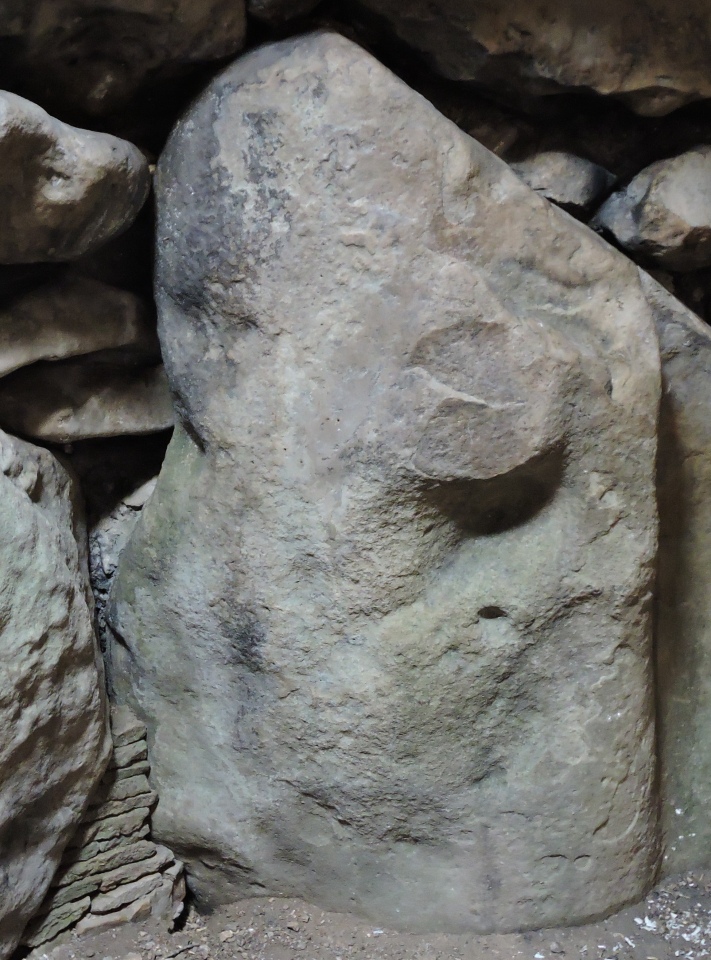
Read alongside his 2024 guide to the Cork and Kerry stone circles (reviewed here on the Portal), where the same framework is tested on Bronze Age monuments in southwest Ireland. This book shows where the method was first worked out: in the chalk country of Wiltshire, Hampshire and Somerset, where Meaden lives, and where long barrows are thick on the ground.
The Method
The long barrow is the oldest substantial monument in the British landscape. These are the long earthen mounds, typically 25 to 100 metres in length, built by the earliest farming communities over roughly the fourth millennium BCE. Some have megalithic chambers, like West Kennet and Stoney Littleton. Most are earthen mounds sealed by chalk rubble. Archaeologists have largely focused on their funerary contents. Meaden asks a different question: why are they pointing in those particular directions?The answer requires two tools. A military compass measures each barrow's axis to within half a degree. A digital elevation model calculates the effect of the local horizon on the actual moment of sunrise, because a hill to the east means the sun appears later and further north than it would on flat ground. Meaden calls this horizon delay, and it turns out to matter significantly. Several barrows that look misaligned on a flat-horizon assumption become correctly aligned once you account for the specific hill over which the sun actually rises in that location. The crucial point is that the calculation can be made in advance and then tested by standing at the site before dawn.
This is the same method he uses in the stone circles work, and the stone circles reader will recognise it immediately. The difference here is the monument type: instead of a standing stone casting a shadow onto a recumbent, you have a chambered gallery receiving the sun's light on a specific morning, or an earthen mound whose axis bisects the horizon at a specific azimuth.
No formal astronomy is implied, and Meaden is equally clear about what he is rejecting. These were not a privileged class of astronomer-priests performing complex celestial calculations. They were farming communities who counted days on wooden tally sticks, roughly 45-46 at a stretch from the midwinter solstice, and watched where the sun rose on the counted day. The mechanism is straightforward: designate the winter solstice as Day 1, move a peg along a notched stick one mark per sunrise, and the eight festival dates fall out automatically at Days 47, 92, 137, 183, 229, 274 and 320. No arithmetic, no astronomical calculation.
This also resolves a longstanding objection in archaeoastronomy: why do supposed equinoctial alignments at sites like West Kennet and Avebury's South Circle point to azimuths of 88 or 89 degrees rather than a true 90? Because the builders weren't finding the astronomical equinox - they were hitting the midpoint between solstices by day-count. The tally stick gives you Day 92, not the moment of equal day and night, and the stones reflect exactly that.
Meaden sets out the full calendar mechanics in his 2016 *Stonehenge, Avebury and Drombeg Stone Circles Deciphered* [Ref 1]. Opportunistic skywatchers, he calls them. This framing matters: it moves the builders from mystical to practical, and makes the calendar argument independently plausible across different monument traditions without needing any chain of cultural descent.
What the Barrows Were Doing
Meaden's central claim is that 47 of the 60 barrows he studied, 80 percent, show interpretable celestial orientations. He organises them by festival date: 18 equinoctial (the largest group, including West Kennet), 7 midwinter, 4 midsummer, and several at the 'cross-quarter' days of early February, May, August and November. Seven further barrows appear oriented to extreme lunar positions rather than the solar calendar.Among the midwinter group, Adam's Grave above the Vale of Pewsey and Stoney Littleton near Bath are the two most clearly documented. The result, if it holds, is an 8-fold agricultural year encoded in earthen monuments, roughly a thousand years before the Cork-Kerry stone circles encoded the same system in stone.
Stoney Littleton, a seven-chambered megalithic barrow near Bath, is the entry-point. Compass axis: 138 degrees, pointing nowhere significant. Local horizon delay from the hill behind: 9 degrees. Effective sunrise azimuth: 129 degrees, which is midwinter solstice. Meaden photographed sunlight penetrating the innermost chamber on 26th December. The horizon delay isn't a retrospective correction; it's a physical feature of that specific hillside, calculable before the visit and confirmed on the day. The mechanics of the alignments at sites like this, and at Old Ditch in the Salisbury Plain group, are among the most persuasive passages in the book.
South Street Long Barrow near Avebury adds evidence of a different kind. Excavation revealed stake-holes in the buried soil beneath the mound, preserved under the chalk. Meaden reads the main stake-hole axis, adjusted for horizon delay from Folly Hill, as pointing to Imbolc and Samhain. A secondary diagonal line points to Beltane and Lughnasadh. If he's right, the builders were encoding the calendar in the site layout before the first shovelful of chalk was heaped.
The Territorial Groups
The most original contribution in the book isn't any individual alignment but the territorial grouping argument in Chapter 16. Meaden maps the barrows of the Marlborough Downs and identifies six clusters, each centred on a different valley catchment. Within the Windmill Hill group, five barrows together provide all eight calendar dates: each serves a specific festival, and no single barrow does everything on its own. Meaden shows how the group functions as a distributed calendar in the landscape.He suggests these communities weren't the mobile pastoralists of current orthodoxy, drifting seasonally across the chalk. A group that maintained five specific barrows for five specific ceremonies throughout the year was anchored to its territory in a way that demands a more settled picture of Neolithic life. There is no doubt the barrows are land claims as well as potentially calendars, and the clustering pattern implies a patchwork of neighbouring communities that would have looked quite recognisably territorial to a modern eye.
The Avebury South Circle, built later in the third millennium BCE, shows the same calendar logic in stone circle form: the Obelisk at the circle's centre cast shadows onto circumferential stones at midsummer, May Day and August. Meaden treats this as a bridge between the long barrow tradition and the stone circle tradition in the same landscape.
Meaden isn't claiming cultural transmission from long barrow builders to stone circle builders. His argument is more interesting than that: any farming community in temperate northwest Europe will independently arrive at the same practical calendar because lambing, sowing and harvesting happen at the same points in the solar year regardless of who you are or what century you live in. The calendar appears in both traditions because the agricultural need was the same, not because the same people made the monuments.
Not every barrow fits neatly into a territorial cluster. West Kennet Long Barrow, the largest chambered barrow in Wiltshire and the best known, gets a characteristically detailed treatment. Meaden points to what he asserts is a 2-metre vertical carving on the central facade stone, acknowledged by practical sculptors, which he reads as a female symbol. Also a carved human head in the end chamber. His question: does it represent a female, in view of the carved vulva on the facade stone fronting the gallery?
Reservations
Eighty percent is a striking number, and Meaden is honest about what it leaves out. Chapter 11 covers barrows that don't fit the solar calendar, Chapter 12 addresses the lunar group, and Chapter 13 covers a handful that fit neither framework. That candour about exceptions is the right approach. But the 80 percent result hasn't been independently tested, and the DEM-plus-fieldwork methodology would benefit from someone else running it on the same corpus. That's not a reason to dismiss it. It's the obvious next step, and one hopes a postgraduate somewhere is planning it.A related caveat: where a barrow has been severely damaged and survives only as a crop mark or parch mark, the compass bearing is necessarily less certain than one taken from a standing monument. Meaden records his margins of error site by site, often 2 to 3 degrees for partially destroyed earthworks, and the reader should be aware that some of the 47 orientations rest on sturdier evidence than others.
The megalithic barrows, with their surviving stone galleries, are the most reliable. The destroyed earthen mounds are more provisional. A practical note for anyone thinking of checking these for themselves: a number of the Salisbury Plain barrows sit on military training land and are not freely accessible. Meaden was given a guided tour by a military archaeologist, casual visitors will need to check access before heading out.
The hieros gamos reading - the Sacred Marriage of sky and earth enacted when the sun enters the barrow chamber - is treated here with more caution than in some of Meaden's other writing. "Conceivably accompanies", "could have been prevalent", "it may be so". He keeps the religious interpretation as a hypothesis rather than a conclusion. The calendar observations are the solid ground; the fertility-religion superstructure is a separate, more speculative claim.
Verdict
This is where Meaden's broader research programme was worked out, and that shows in the quality of the methodology. The compass-plus-DEM approach is carefully explained, the tables are detailed, the outliers are honestly accounted for, and the territorial clustering argument is most original. A comparison point for anyone who has read Meaden's Pytheas book: where that volume asks you to follow a classical source chain through Hecataeus to Diodorus and trust the inferences built on top, this study asks only that you accept compass bearings and elevation data. The evidence does the heavy lifting. If you found the Pytheas argument interesting but a bit over-reliant on inference, this is the Meaden book to read alongside it.The late Professor George Eogan, who spent forty years excavating at Knowth, wrote to Meaden that he liked the shadow-calendar argument very much. Geoffrey Wainwright, former chief archaeologist of English Heritage, called an earlier volume "full of good ideas". These are not fringe endorsements, and these books deserves the wider readership the Megalithic Portal audience can give them.
Anyone who has walked the Marlborough Downs and passed these familiar grassy mounds at any time of year should take this book back up there. The barrows haven't moved.
Book Review by Andy B.
Terence Meaden adds: "A major question is, how did it come about that all the academic archaeologists missed spotting the physically-present, annually-recurring, calendrical features. The observer must be present at sunrise. Once I realised this was the key, I went to the stone circles and long barrows at dawn to see what the rising sun actually did relative to the positioned stones. Be there to see the sun rising."
The Sixty Long Barrows of North and Mid-Wessex is available Open Access from the University of Buckingham Press:
ubpopenbooks.com/index.php/ubp/catalog/book/16
This is the third in a series of three reviews of recent books by Terence Meaden, all available to read Open Access, links below. The first covers his Pytheas book and the second his Guide to the Stone Circles of Cork and Kerry (2024), both reviewed separately on the Portal.
More Open Access books by Terence Meaden:
https://ubpopenbooks.com/index.php/ubp/search/search?query=meaden
Guide to the Stone Circles of Cork and Kerry, reviewed here
ubpopenbooks.com/index.php/ubp/catalog/book/14
Reference:
1. Meaden, G. T. (2016). Stonehenge, Avebury and Drombeg Stone Circles Deciphered: The archaeological decoding of the core symbolism and meanings planned into these ancient British and Irish monuments. Saarbrücken: Lambert Academic Publishing. A 228-page, all-colour volume features 180 photographs. You can access the text online through Academia.edu using the following link:
oxford.academia.edu/Deciphering-stone-circles-Drombeg-and-Stonehenge
The research is available via ResearchGate and physical copies can be purchased through Amazon and other booksellers
Video Lecture: Decoding Stonehenge, Drombeg and Avebury Stone Circles, Prof. Terence Meaden at Megalithomania
http://www.youtube.com/watch?v=KOFY-6sG1v0
More relevant writing by Prof. Meaden:
Peer-Reviewed Journal Papers
Journal of Lithic Studies (Drombeg Stone Circle): doi.org/10.2218/jls.v4i4.1919
Journal of Lithic Studies (Stonehenge & Avebury): doi.org/10.2218/jls.v4i4.1920
(also cited as doi.org/10.2218/jls.v4i3.1919)
Journal of Skyscape Archaeology (Stonehenge Lunar-Solar Calendar, 2023): doi.org/10.1558/jsa.26598
Expression Journal (the free e-journal where he has published dozens of papers): http://www.atelier-etno.it/e-journal-expression/
Megalithic Portal & Silent Earth Articles
Megalithic Portal Article (Was Tara the Earth Goddess at Avebury?):
http://www.megalithic.co.uk/article.php?sid=2146411660
Silent Earth Guest Post (Dr Terence Meaden's Research into the Core Meaning of Axial and Recumbent Stone Circles):
http://www.silentearth.net/dr-terence-meadens-research-into-the-core-meaning-of-axial-and-recumbent-stone-circles-by-shadow-casting-at-sunrise/


 We would like to know more about this location. Please feel free to add a brief description and any relevant information in your own language.
 Wir möchten mehr über diese Stätte erfahren. Bitte zögern Sie nicht, eine kurze Beschreibung und relevante Informationen in Deutsch hinzuzufügen.
 Nous aimerions en savoir encore un peu sur les lieux. S'il vous plaît n'hesitez pas à ajouter une courte description et tous les renseignements pertinents dans votre propre langue.
 Quisieramos informarnos un poco más de las lugares. No dude en añadir una breve descripción y otros datos relevantes en su propio idioma.