


<< Feature Articles >> The Megalithic Temples of Malta - A brief (pre)history
Submitted by Andy B on Wednesday, 26 June 2019 Page Views: 5218
Multi-periodCountry: Malta Island: Mainland Type: Ancient TempleInternal Links:


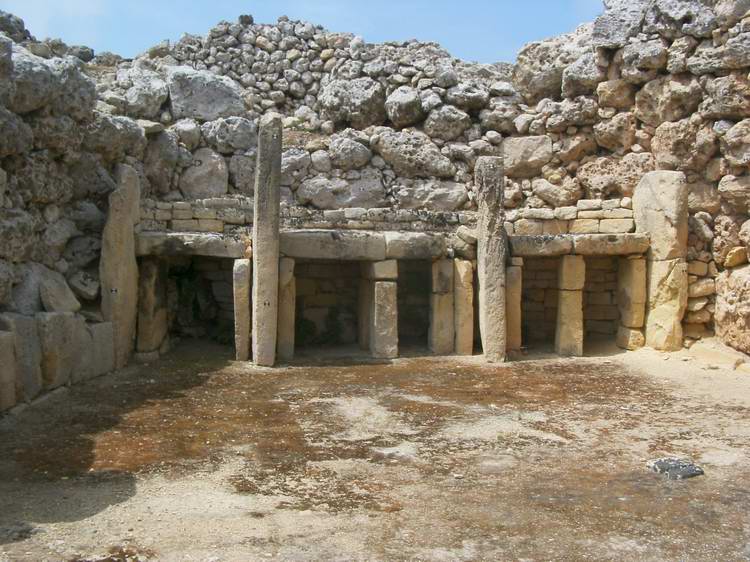
There are a total of 1,092 World Heritage Sites total, so it’s amazing that you can visit seven of them in Malta. For many people the temples are their main reason to travel to Malta so here's a look at some of the best sites to visit:
Ġgantija
Ġgantija is technically 2 separate sites because there are 2 complete temples and 1 partially complete temple all within the same outer wall. These temples are of course older than the pyramids of Egypt. Archaeologists used to think that the temples were dedicated to Great Mother Earth, the goddess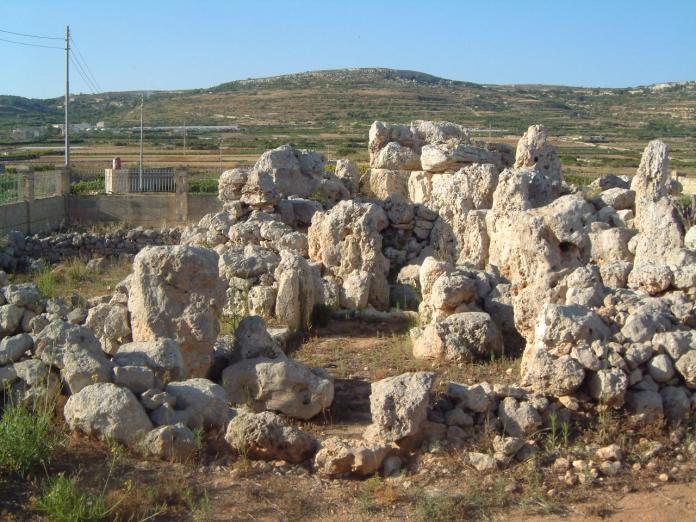 of fertility, but that idea has very much gone out of fashion these days, with a number of more subtle interpretations which you can read about here. It is likely tthey were ritual / religious structures, possibly used for fertility rites or other such things we can only imagine.
 The temples are thought to have been built between 3600 and 3000 BC. A popular interpretation of the round, curved architecture is thought to reflect great Mother Earth, with the two completed shrines representing her body, and the round rooms symbolizing her womb.
Ta' Ħaġrat
Ta' Ħaġrat (pictured above right) is composed of the Major Temple and the Minor Temple. A number of ancient artifacts have been found here, including pottery and a scale model of the temples. The temples were thought to have been built in two separate time periods. The Major Temple dates back to 3600 - 3200 BC and the Minor Temple dates back to 3,300 - 3,000 BC. However, ceramic material found at the sites proves that the location was used both before and after the construction of the temples.Skorba
These temples aren’t in the best condition, but they are still worth a visit. The area around the Skorba Temples was inhabited during the early years of the Neolithic period, and findings around the temples have led to insight on neolithic culture. Skorba was built between 3600 - 3200 BC and replaced a village. Pottery, stone tools, and wheat, lentil and barley seeds have all been found.Ħaġar Qim
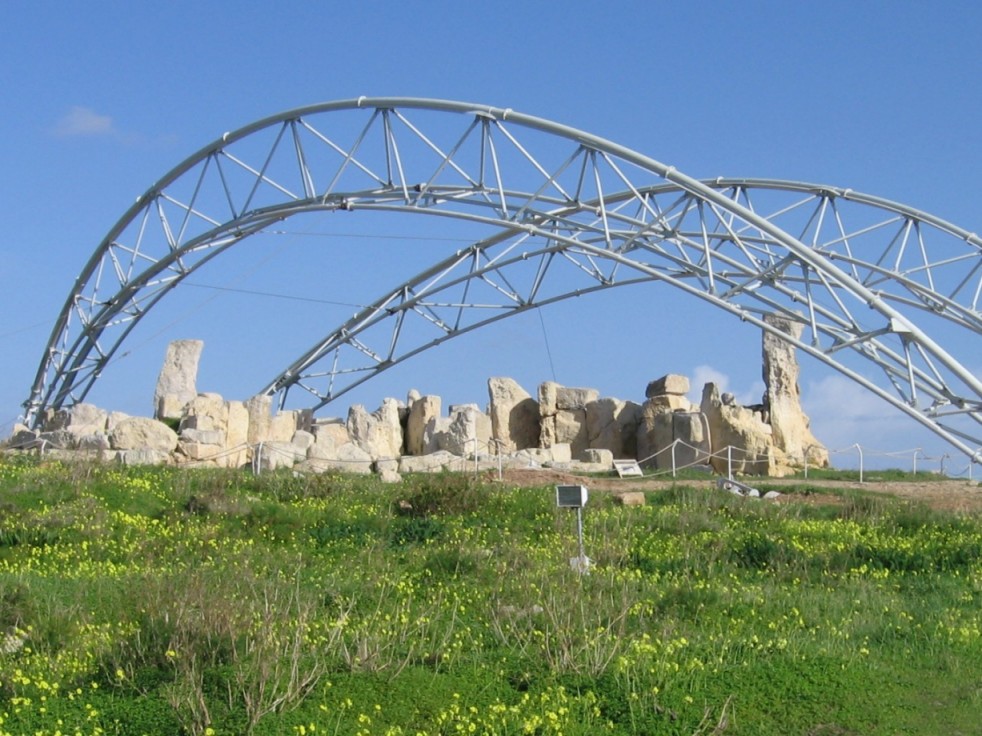 The Ħaġar Qim is a complex composed of a main temple and three megalithic structures. It is thought to be associated with fertility rituals and animal sacrifices.
 The remains suggest that Ħaġar Qim was built between 3600 – 3200 BC. It is made up of a series of C-shaped rooms called apses. Some of the most notable artifacts found here include obese figures made of stone and clay. These figures are of an undetermined sex because they lack breasts, but do seem to be related to fertility.
Mnajdra
Mnajdra is another temple complex. No written records have ever been found to confirm their purpose, but artifacts found inside the temples suggest that they were used for religious ceremonies that were thought to heal illnesses and promote fertility. Flint knives, ropes, animal remains, and stone tables have all been found. All three structures were built at different times. The oldest structure dates back to 3600 - 3200 BC.Tarxien
Finally, the Tarxien Temples are to me, the most impressive site on Malya, composed of four separate structures that form a complex. Many animal carvings have been found on reliefs and altars, leading to ideas of animal sacrifices, but again we really don't know for certain. Originally the structures were built between 3600 - 2500 BC, though they were re-arranged between 2400 - 1500 BC. In addition to the animal carvings, spiral carvings were found. Spirals could be seen to symbolize eternity and have been found at other megalithic sites.
What to know before visiting
Before you visit any of the Megalithic Temples of Malta, keep in mind that some of the lesser known ones are off limits to the public. The ones listed above are open to the public on certain days of the week, but some of them limit how many individuals can enter at a time, to help preserve them. Some of the temples also have an entry fee.To protect the sites from weathering, Mnajdra, Ħaġar Qim, and Tarxien now have protective structures built over them.
While some of the temples themselves might be tricky to visit, you can still view the artifacts found within the temples at a number of museums. The National Museum of Archaeology in Valletta has many many fascinating artefacts, including more of the obese figurines.
With many thanks to Jon, tfar, enkidu41 for their help with this article.

 We would like to know more about this location. Please feel free to add a brief description and any relevant information in your own language.
 Wir möchten mehr über diese Stätte erfahren. Bitte zögern Sie nicht, eine kurze Beschreibung und relevante Informationen in Deutsch hinzuzufügen.
 Nous aimerions en savoir encore un peu sur les lieux. S'il vous plaît n'hesitez pas à ajouter une courte description et tous les renseignements pertinents dans votre propre langue.
 Quisieramos informarnos un poco más de las lugares. No dude en añadir una breve descripción y otros datos relevantes en su propio idioma.