Featured: Hare and Tabor T Shirts for discerning antiquarians

Hare and Tabor T Shirts for discerning antiquarians

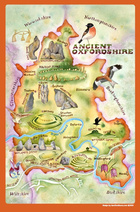
Ancient Oxfordshire Tea Towel – Hand Painted Design

Ancient Oxfordshire Tea Towel – Hand Painted Design

Login

Register here - as a registered user you get more features and fewer ads.

Who's Online

There are currently, 307 guests and 1 members online.

Sponsors

Stonehenge ‘No Place for the Dead’, Says Darvill Wiltshire

Submitted by Andy B on Sunday, 19 November 2006  Page Views: 12874

Stonehenge

<< News >>

Country: England County: Wiltshire Type: Henge

Internal Links:

Stonehenge.
Stonehenge. submitted by rxfelix : Touching Stonehenge (Vote or comment on this photo)
Professor Timothy Darvill, Head of the Archaeology Group at Bournemouth University, has breathed new life into the controversy surrounding the origins of Stonehenge by publishing a theory which suggests that the ancient monument was a source and centre for healing and not a place for the dead as believed by many previous scholars.

After publication of his new book on the subject - Stonehenge: The Biography of a Landscape (Tempus Publishing) - Professor Darvill also makes a case for revellers who travel to be near the ancient monument for the summer solstice in June to reconsider. Instead, Professor Darvill believes that those seeking to tap into the monument’s powers at its most potent time of the year should do so in December during the winter solstice when our ancestors believed that the henge was ‘occupied’ by a prehistoric god - the equivalent of the Roman and Greek god of healing, Apollo – who ‘chose’ to reside in winter with the Hyborians, long believed to be the ancient Britons.

The basis for Professor Darvill’s findings lies in the Preseli Mountains in west Wales where he and colleague Professor Geoffrey Wainwright have located an exact origin for the bluestones used in the construction of Stonehenge some 250 km away.

“The questions most people ask when they consider Stonehenge is ‘why was it built?’ and ‘how was it was used?’” says Professor Darvill. “Our work has taken us to the Preseli Mountains to provide a robust context for the source of the bluestones and to explore various ideas about why those mountains were so special to prehistoric people”.

“We have several strands of evidence to consider. First, there have folklore in the form of accounts written in the 14th century which refer to a magician bringing the stones from the west of the British Isles to what we know as Salisbury Plain,” he continues. “It was believed that these particular stones had many healing properties because in Preseli, there are many sacred springs that are considered to have health-giving qualities; the water comes out of the rocks used to build Stonehenge and it’s well established that as recently as the late 18th century, people went to Stonehenge to break off bits of rock as talismans.

“Also, around the Stonehenge landscape, there are many burials, some of which have been excavated and amongst these there are a good proportion of people who show sings of being unwell – some would have walked with a limp or had broken bones – just the sort of thing that in modern times pressurises people to seek help from the Almighty.

“In the case of Stonehenge, I suggest that the presiding deity was a prehistoric equivalent of the Greek and Roman god of healing, Apollo. Although his main sanctuary was at Delphi in Greece, it is widely believed that he left Greece in the winter months to reside in the land of the Hyborians – usually taken to be Britain.

“Altogether, and with the incorporation of the stones from Wales, Stonehenge is a very powerful and positive place of pilgrimage, although whether the monument’s healing power actually worked is a matter for further discussion,” he concludes.

Source: Bournemouth University Press Release

Please add your thoughts on this site

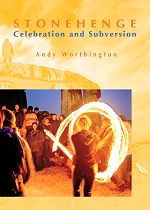
Stonehenge: Celebration and Subversion

Stonehenge: Celebration and Subversion

Sponsors

More News

See all News →

"Stonehenge ‘No Place for the Dead’, Says Darvill" | Login/Create an Account | 4 News and Comments
  
Go back to top of page    Comments are owned by the poster. We aren't responsible for their content.
Re: The new archaeological theory as to why huge monoliths were dragged from Wales to by Anonymous on Friday, 02 January 2009
This theory has more holes in it than a broken neolithic skull! No death? The whole landscape is full of it!If it was a healing centre it didn't work! Most burial grounds of this date--all over the country-- have bones with evidence of trauma; it was a hard life back then...break a bone and you'd probably suffer for life.
As for the Timewatch programme--what a huge assumption to have the archer fall off a horse. We don't know if they were riding in Britain at that period. Heck, he could have fallen down a mountain in his native Switzerland for all we know!
Then they had a scene about the Stonehenge Archer, the young man with the arrows in his back who was found in the ditch. He seemed just thrown into the show, because how this related to a healing theory i don't know. I don't think they could heal him. With up to 6 arrows in his back I think he'd very definitely be dead...
The last bit was funniest of all--with a skull from somewhere or other (not even from the stones) of a woman who had a funny shaped head. this apparently would make her a healer....yeah,right.
[ Reply to This ]

The new archaeological theory as to why huge monoliths were dragged from Wales to Sal by Andy B on Friday, 01 December 2006
(User Info | Send a Message)
Simon Jenkins in the Guardian:

The Stonehenge mystery is solved [yeah, right - AB :) ]. I always knew there was something odd about the "Amesbury archer". He died circa 2300BC and was rediscovered near the henge in Wiltshire in 2002, one of the most sensational prehistoric corpses ever found. His hair was laced with gold, the earliest found in England. His grave contained traces of fine clothes and implements of archery and copper-working. Analysis of his bones and teeth revealed that he came from central Europe, probably Switzerland, with possessions from Spain and France. Was this evidence of invasion? Was the Amesbury archer a Beaker lord of Stonehenge and were foreigners perhaps responsible for moving its giant bluestones from Wales?

One thing about the archer was strange. He was missing a kneecap, requiring him to walk with one leg rigid. Bone deterioration suggested that the deformity took place years before his death. He was an improbable warrior, more likely a rich trader. Besides, near him lay a younger male revealed (such being the wonders of science) as a close relative brought up in south-east England. So what was this wealthy but disabled man doing in the shadow of Stonehenge, far from his and his putative son's birthplace?

More
http://www.guardian.co.uk/commentisfree/story/0,,1961517,00.html
[ Reply to This ]

Re: What Stonehenge was really for... by sem on Monday, 20 November 2006
(User Info | Send a Message)
I came across the theory of Winter as opposed to Summer about a year ago and thought it an interesting idea. Someone was obviously looking at Stonehenge in a way different to "the establishment." However, by equating stone and bronze age gods/religion with the latter Graeco-Roman gods, I feel Prof. Darvill is supporting the establishment and doing our ancestors a great dis-service.
[ Reply to This ]

What Stonehenge was really for... by Cernunnos on Monday, 20 November 2006
(User Info | Send a Message)
I believe Stonehenge is an alien landing site for the followers of Xenu, who will one day return to earth and 'anonize' Tom Cruise and John Travolta before sinking L.Ron Hubbard's fleet of magic scientology ships to the bottom of the ocean...

Either that, or Stonehenge was a training potty for young giants. A bit of digging in the middle of the circle should quickly establish whether this latter theory is true or not. Oh yeah, and the deformed bones weren't burials -- they were lunch.

I must be really bored today.
[ Reply to This ]

Your Name: Anonymous [ Register Now ]
Subject:


Add your comment or contribution to this page. Spam or offensive posts are deleted immediately, don't even bother

<<< What is five plus one as a number? (Please type the answer to this question in the little box on the left)
You can also embed videos and other things. For Youtube please copy and paste the 'embed code'.
For Google Street View please include Street View in the text.
Create a web link like this: <a href="https://www.megalithic.co.uk">This is a link</a>  

Allowed HTML is:
<p> <b> <i> <a> <img> <em> <br> <strong> <blockquote> <tt> <li> <ol> <ul> <object> <param> <embed> <iframe>

We would like to know more about this location. Please feel free to add a brief description and any relevant information in your own language.
Wir möchten mehr über diese Stätte erfahren. Bitte zögern Sie nicht, eine kurze Beschreibung und relevante Informationen in Deutsch hinzuzufügen.
Nous aimerions en savoir encore un peu sur les lieux. S'il vous plaît n'hesitez pas à ajouter une courte description et tous les renseignements pertinents dans votre propre langue.
Quisieramos informarnos un poco más de las lugares. No dude en añadir una breve descripción y otros datos relevantes en su propio idioma.