


Introduction to prehistoric Malta and Gozo
Submitted by enkidu41 on Wednesday, 20 October 2004 Page Views: 11998
Neolithic and Bronze AgeCountry: Malta Island: MainlandInternal Links:

The first settlers made their appearance in the islands in the Neolithic era about 5,200 BCE when the islands were still covered by woods and rivers both of which have long since disappeared. As elsewhere the era is divided into phases characterised by pottery design and it is not until the arrival of newcomers from Sicily that megalithic constructions appear with the first temples. These phases are the Ggantija phase (3,600–3,000) named after the temple on Gozo. This evolved into the Saflieni phase (c. 3,000) named after the unique subterranean temple known as the Hypogeum of Hal Saflieni, and the Tarxien phase (3,000–2,500) named after the temple on Malta. Temple construction ceased with the end of the Neolithic Period.
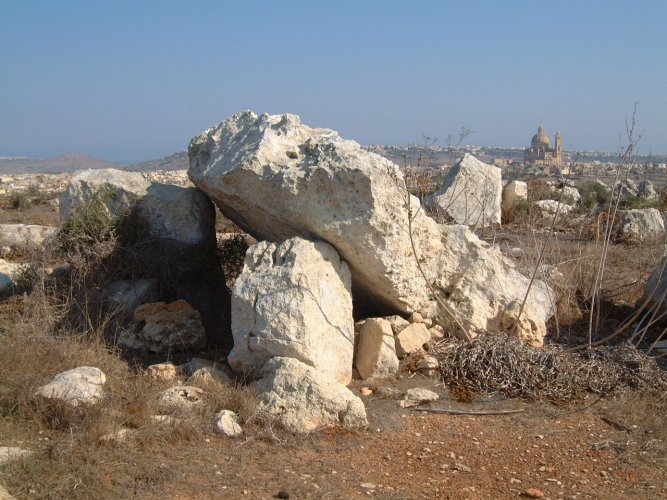
The Bronze Age followed lasting from 2,500–700. This was characterised by the use of metal and the construction of fortified villages and it was apparently during this period that other megalithic structures were built. True menhirs are few and far between, most standing stones appearing to be relics of other structures such as the megalithic temples. No menhir has been excavated so dating is difficult but they are likely to have been erected during the early part of the Bronze Age. Only one Dolmen (Ta’ Hammud A on Malta) has been excavated and the associated pottery finds suggest that it was constructed in the early Bronze Age between 2,500 and 1,500, a somewhat doubtful conclusion given the sophistication of the earlier techniques used in the construction of the temples. The enigmatic cart ruts have been attributed to the late Bronze Age (900–700) principally on the grounds that a number appear to run up to the entrances of Bronze Age villages.


 We would like to know more about this location. Please feel free to add a brief description and any relevant information in your own language.
 Wir möchten mehr über diese Stätte erfahren. Bitte zögern Sie nicht, eine kurze Beschreibung und relevante Informationen in Deutsch hinzuzufügen.
 Nous aimerions en savoir encore un peu sur les lieux. S'il vous plaît n'hesitez pas à ajouter une courte description et tous les renseignements pertinents dans votre propre langue.
 Quisieramos informarnos un poco más de las lugares. No dude en añadir una breve descripción y otros datos relevantes en su propio idioma.