

‘Don’t forget our world-class sites’ says Guernsey
Submitted by PaulM on Monday, 29 December 2003 Page Views: 846
Site Watchletre1Politicians have been accused of virtually ignoring Guernsey’s world-important archaeology sites. Jason Monaghan, of La Societe Guernesiaise’s archaeology section, said that mechanisms to check and protect sites were not in place and States resources on the areas were lacking.He said that the Rural Area Plan and Island Development Committee laws made the right noises about archaeology, but were flawed.
‘The key problem is you’ve got words like “expect to” and “encourage”. It’s plurality in a way that gives everyone an excuse not to do anything – the States, the developers or the IDC. What I know is that they will take the line of least effort.’
La Societe will make a strong representation about the States’ treatment of archaeology through the planning laws at the RAP planning inquiry next year.
Projects such as the St Sampson’s marina development have taken place without an environmental impact assessment, which could identify important archaeological remnants. Mr Monaghan said that the States was one of the worst culprits.
‘The ancient monument law dates back to the late 1960s and the procedures are pre-1980s, really. I was working in London in 1978 and 1979 – the legal position of archaeology in London was better then than it is in Guernsey now. The key problem is that Guernsey’s big-hitting politicians have not been interested.’
He described the Heritage Committee’s budget as very small and was worried that when the department was split for the new-look States, archaeological interests would be missed.
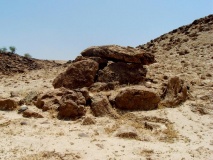
‘For a small place, there is a massive amount of archaeology. There are Nazi sites, dolmens, about 800 shipwrecks and hundreds of smaller sites. We have everything from pre-history to the Nazis without a break,’ he said.
‘Guernsey has got a lot of world-class sites, like the Roman ship and the Dehus dolmen; stuff other people haven’t got. It’s important in global terms.’
Mr Monaghan said the problem was chiefly about resources and the authority to intervene when sites were threatened. There are fewer than two-dozen people looking after Guernsey’s archaeology, mostly volunteers, with one person employed full-time by the Heritage Committee, compared with 70 archaeological staff in York.
‘We do some very good work and make a little bit go a long way, but actual field archaeology is quite difficult and there’s very little money put into it.
‘The museum and collections are the focus and field archaeology is seen as extra.’
He illustrated the situation in York, where the authorities work with the builders. They were informed if an important site was discovered and the builders funded the work after a tendering process.
In UK, archaeology funding is split roughly 50/50 between the government and developers. This was not available locally.
‘Specialists don’t exist here and the mechanisms to pay them don’t exist. Those who are qualified either move to the UK or work in finance,’ he said.
Although he felt archaeology was not as important as issues such as the homeless and education, he was worried that it always came second.
Source: This is Guernsey 29/12/2003
For Prehistoric Sites in Guernsey see our Ancient Site Database.


 We would like to know more about this location. Please feel free to add a brief description and any relevant information in your own language.
 Wir möchten mehr über diese Stätte erfahren. Bitte zögern Sie nicht, eine kurze Beschreibung und relevante Informationen in Deutsch hinzuzufügen.
 Nous aimerions en savoir encore un peu sur les lieux. S'il vous plaît n'hesitez pas à ajouter une courte description et tous les renseignements pertinents dans votre propre langue.
 Quisieramos informarnos un poco más de las lugares. No dude en añadir una breve descripción y otros datos relevantes en su propio idioma.