


Book Review: Thirst - Water and Power in the Ancient World by Steven Mithen
Submitted by DrewParsons on Wednesday, 12 September 2012 Page Views: 6069
Multi-periodCountry: Greece Type: Ancient Mine, Quarry or other IndustryInternal Links:


In the final chapter he attempts to look at how the current world’s expanding population can meet the challenges of future climate change and water shortages.
Steven is the author of the very readable book After The Ice - A Global Human History 20,000 - 500 BC - 'Thirst' takes the reader on a similar tour to sites visited in his earlier book but this time focuses on the rise and fall of civilisations and the impact that water control, irrigation, climate change and political turmoil had upon those societies leading to their demise.
Initial chapters seek to identify the earliest examples of irrigation, particularly in the Middle East. Mithen identifies water control and irrigation as two of the key factors in the rise of the Sumarian civilisation in what is now Iraq. Water allowed thirsty urban populations to expand and agricultural output increase to feed those populations. Canals channelling it helped trade and the exchange of ideas as well as goods to take place, thus allowing civilisations to advance and expand. Control of water management became an effective tool for ruling such societies and allowed power structures to be consolidated. However, in the case of the Sumarian civilisations eventual salinisation of the soil led to lower crop yields and political and economic decline. [For further reading on this see Salt and Silt in Ancient Mesopotamian Agriculture - from the journal Science (1958) link to full paper as PDF]
In chapter four Mithen turns his attention to the Minoan, Mycenaean and Ancient Greek civilisations, giving examples of ingenious successes in water resource management including the amazing tunnel bored through the mountain from both ends and meeting in the middle on Samos in 520 BC [See the Megalithic Portal page here].
Chapters 5 and 6 are devoted to the ingenious methods of bringing water to Petra, Rome and Constantinople so enabling these centres to flourish until they succumbed to political and military factors. Chapter 7 examines Li Bing’s Dujiangyan scheme still functioning in China today and which brought irrigation, wealth and power to the Chengdu Plain. In Chaper 8 Mithen explores the various theories regarding the intricate networks of canals and water tanks or barays at Angkor which he calls the Hydraulic City, and shows that there was both a religious and agricultural aspect to these huge irrigation works.
In the Americas Mithen attributes Hohokum political power to the ability to control water via canal networks and shows how climate change adversely affected that control. Mayan sites are shown to incorporate huge water catchment systems within the temple and public plaza areas of urban centres like Tikal.
The rise and fall of Mayan civilisation is examined in the light of climate change with droughts leading to economic collapse and power being lost by rulers with their subject populations moving away from affected urban centres so weakening them and leaving them vulnerable to other economic and military threats. For the Incan civilisation the control of water and the engineering needed to bring it to terraced fields and urban areas, given the mountainous terrain that they occupied, is shown to be central to political control.
A final chapter is devoted to summarising the causes of the rise and decline of civilisations based on their access to and use of water which is seen as a key element in their establishment, political control and eventual demise. Mithen concludes with a brief examination of modern climate change and the scarcity of world resources, in particular water, in relation to the world’s expanding population.
'Thirst' is written with the lay reader in mind and describes Mithen’s journeys to all but the currently inaccessible Iraqi sites that he writes about, describing the sites in detail and giving interesting glimpses into the modern culture and environment of each region visited. I have personally visited all these regions and many of the ancient sites that he describes with the exception of Chengu so for me Thirst provided an interesting tour.
If you are at all interested in ancient engineering then you should find plenty to discover here. I would also recommend his book After The Ice for a more detailed glimpse at these sites - perhaps this is a better starting point for the general reader. However Thirst will also appeal to academics interested in the origins of civilisations as it gives a new insight into their establishment and into their elite’s power base through the control of access to water.
Review by Drew Parsons, August 2012
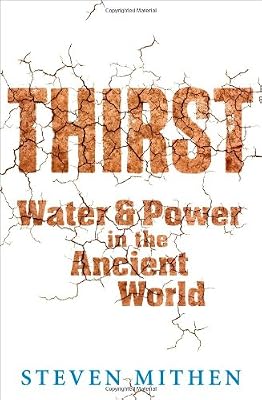 Thirst – Water and Power in the Ancient World by Steve Mithen
Just published by Weidenfeld & Nicolson, London 2012.
346 Pages including 46 pages of notes on sources, bibliography and detailed index.
RRP £20
Available from Amazon.co.uk (currently on very good promotion)


 We would like to know more about this location. Please feel free to add a brief description and any relevant information in your own language.
 Wir möchten mehr über diese Stätte erfahren. Bitte zögern Sie nicht, eine kurze Beschreibung und relevante Informationen in Deutsch hinzuzufügen.
 Nous aimerions en savoir encore un peu sur les lieux. S'il vous plaît n'hesitez pas à ajouter une courte description et tous les renseignements pertinents dans votre propre langue.
 Quisieramos informarnos un poco más de las lugares. No dude en añadir una breve descripción y otros datos relevantes en su propio idioma.