

Featured: Hare and Tabor T Shirts for discerning antiquarians

Hare and Tabor T Shirts for discerning antiquarians

Prehistoric Cumbria

Prehistoric Cumbria

Login

Register here - as a registered user you get more features and fewer ads.

Who's Online

There are currently, 479 guests and 12 members online.

Sponsors

Book Review: The Story of Silbury Hill by Jim Leary and David Field Artificial Mound Wiltshire

Submitted by Runemage on Friday, 14 January 2011  Page Views: 11454

Multi-period

<< Books/Products >>

Country: England County: Wiltshire Type: Artificial Mound

Internal Links:

Silbury Hill
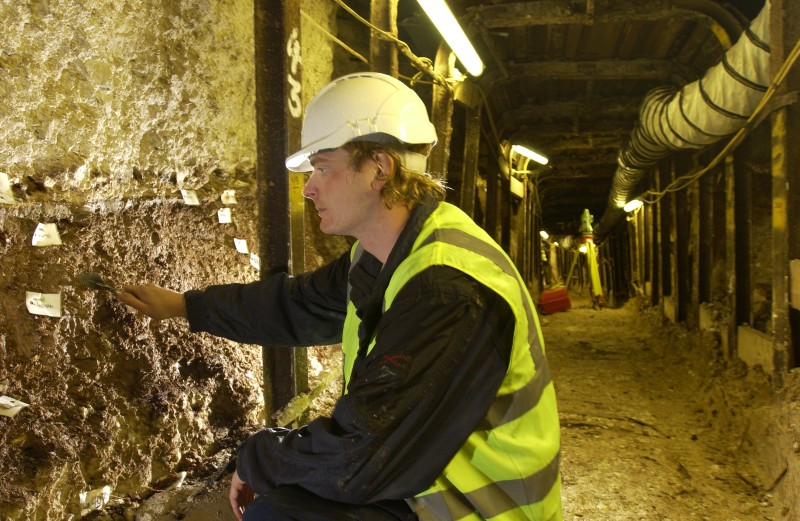
Silbury Hill submitted by Andy B : Head archaeologist Jim Leary studies artifacts in the tunnel created underneath Silbury Hill, Wiltshire Friday, October 19, 2007 Copyright Matt Faber/PA, used with permission. (Vote or comment on this photo)
Runemage writes: The Story of Silbury Hill is very well presented, easy on the eye and clearly laid out. The illustrations range from very good botanical pencil drawings through diagrams, interpretative paintings, photographs and a timeline. Considering the number of top-quality photographs of Silbury that are available, I was surprised to find a contemplative painting on the cover.

It's not until almost the end of the book (page 181) that the authors reveal why this particular work was chosen. I won’t spoil it by saying why, but it’s a very nice touch.

The first part of this book is a detailed and interesting historical account of who did what and when at Silbury from its inception to the Millennium and as far as the authors can ascertain, the reasons for their actions.

English Heritage came in for a fair amount of criticism from several quarters for the time it took from discovery of the hole in the top of Silbury to actually being seen to be doing something about it. This account explains the complexities of their position and many of the obstacles they encountered, both expected and unforseen.

Anyone who has undertaken restoration of an old property will nod sagely, knowing that to achieve objective H from starting point A, it’s impossible to proceed in a straightforward eight-step alphabetical order because every step has some snag or other which needs remedial work or needs a complete re-think, so to complete those eight steps, it involves making at least 50. The budget for such projects, when having to take into account all of the extra steps, instead of being anything like the original costings is more like pick a number, double it, add two noughts then take away the number you first thought of.

The first-hand accounts of the finds in the tunnels are fascinating, of course they are factual but there’s a much more modern empathic and interpretative thread throughout the book than an account written by archaeologists would suggest. The authors give examples of other ancient cultures and their worldviews where known and make an effort to try and work out what the ancient inhabitants of the area around Silbury may have understood about their world.

As an example of this, the authors cite an interesting parallel in the Hopewell culture’s mounds - muddy earth at the centre represented their creation myth and subsequent layers of soils were designed to be read and understood in their mythology and worldview, not just looked upon as only soil.

On finding a very thin layer of grey material brought in to Silbury at ground level to make the floor of the first mound, the authors say, "the idea that the ground could have been prepared before any construction had begun would profoundly affect our understanding of the origins of the site, suggesting that the location had already seen considerable activity before monument construction began. If the Hill already attracted people it may have already been special, perhaps even sacred ground"

They also emphasise that the process of construction is as important as the finished form. Did the ancients sit down with their equivalent of a blueprint and construct Silbury from scratch? No, it was done in stages over several generations, but importantly, each phase had meaning to the contemporary society who created it. Do bear in mind that the only evidence the authors have is what they discovered in the existing tunnels and the hole in the top. The rest of the mound remains unexcavated until such time in the future there’s either a pressing need or a way to do so without damage. For the time being, every section of the tunnels is recorded and preserved in Virtual Reality to enable much further study to be done.

In addition to the content about Neolithic Silbury itself, a totally unexpected find was made in nearby fields. A small Roman town slowly revealed its presence and gave more continuity of human occupation to the surrounding land.

This book will appeal to a wide audience, no matter what your interest in Silbury, there’ll be something in here you didn’t know, I’m sure. Also, it lays a lot of the rumour and conjecture about the excavation and restoration to rest.

Silbury is a truly unique monument and the hard work by so many people that has resulted in the new-found knowledge shared in this book is a huge achievement. We have an exclusive set of images taken from inside the tunnel during the restoration in our gallery, and see the rest of our vast collection of information on Silbury here.

Review by Runemage, and apologies for the lateness of this review, which was caused by our review copy getting lost in the arctic wasteland that was East Yorkshire at the end of last year.

The Story of Silbury Hill, By Jim Leary and David Field.

Paperback, 224 pages

Published by English Heritage

ISBN: 1848020465

RRP: £14.99

From £10.61 at Amazon.co.uk

Please add your thoughts on this site

Stonehenge Landscapes Book and CD-ROM

Stonehenge Landscapes Book and CD-ROM

Sponsors

More Books/Products

See all Books/Products →

"Book Review: The Story of Silbury Hill by Jim Leary and David Field." | Login/Create an Account | 6 News and Comments
  
Go back to top of page    Comments are owned by the poster. We aren't responsible for their content.
Re: Book Review: The Story of Silbury Hill by Jim Leary and David Field. by mmike on Tuesday, 16 July 2019
(User Info | Send a Message)
Today I have just seen that picture taken inside Silbury Hill, and while it should have loads of natural Ley force there, its a sterile area without any energy dowsing the picture.The south side of Silbury is alive with many forces which would under normal circumstances pass through the hill, and continue south towards many other ancient sites, but the metal shuttering and the metal supports inside the hill removed all those.Okay its a health and safety problem for those working inside the tunnel, but why leave all that there when they left, it was a simple matter to remove all the metalwork, without any danger to those who back filled the tunnel afterwards.Any dowser on staff at English Heritage or National Trust would know this, but none are employed, so the heart of Silbury Hill was killed by those who should know better.
[ Reply to This ]

Re: Book Review: The Story of Silbury Hill by Jim Leary and David Field. by fachtna on Wednesday, 08 June 2011
(User Info | Send a Message)
Hi Andy - you are right - English Heritage contested my claim for unfair dismissal and my claim was dismissed by an Employment Tribunal - I haven't yet completed the website/pages.

Many thanks for your kind thoughts - my work situation has certainly improved since I was dismissed from English Heritage - I now work in 'adult social care' and actually look forward to meeting people each day (and having some sense of being valued for what I do/am).

kind regards

fachtna

[ Reply to This ]

Re: Book Review: The Story of Silbury Hill by Jim Leary and David Field. by fachtna on Wednesday, 08 June 2011
(User Info | Send a Message)
Hi - I hope the following observations and information are of some interest to the readers of this book.

I was on the Board of the Silbury Hill Conservation Project since its inception and I managed and carried out archaeological excavation and recording at Silbury from 2000 until the 15th June 2007.

This was the day that I was dismissed from the on-going conservation work and tunnel re-excavation and then replaced as ‘director of fieldwork’ by Jim Leary, hitherto a (relatively recently appointed) member of the project team. The manner of my removal and replacement was and remains controversial (described at
http://sites.google.com/site/anotherstoryfromsilburyhill/).

In these circumstances I feel it might be helpful and appropriate for me to make a few observations on the reporting of events in the book during that part of the Conservation Project for which I had responsibility and have first hand knowledge.

There are a number of factual inconsistencies in the portrayal of these events in the book ie:

1. ‘…. while Jim Leary directed the excavations in 2007 and 2008.’ (page xii)

The text quoted above gives the reader the impression that Jim Leary directed all of the excavations in 2007.

This is incorrect as I directed the excavations at Silbury from 2000 onwards and in 2007 until the 15th June.

2. ‘For archaeologists specialising in prehistory, any trepidation at being lowered into the hole was tempered by sheer excitement at the thought of seeing the interior of one of Europe’s most important prehistoric monuments.’ (page 70)

The text quoted above gives the reader the impression that archaeologists specialising in prehistory, like Mr Leary for example, were present at this very early stage in the project.

This is an incorrect portrayal. I was one of the very few people who were lowered into the hole and none of us was a specialist in prehistory.

On a slightly different tack the thing I found astonishing in this experience was not that the shaft was square but that people had been down the open shaft before us and had left offerings like tea-lights and a small model bull. I am surprised that the authors did not mention this to illustrate the compelling attraction of the monument.

One of the things that I found most interesting was the evidence for differing stages in the construction of the mound which could be clearly seen in the walls of the shaft. Here distinctly differing types of mound deposits were separated by a white continuous band of crushed or trampled chalk.

3. ‘On Friday 11 May 2007, the large green door that had been closed nearly 40 years previously was opened.’ (page 90)

The text quoted above gives the reader the impression that this was the first time that the tunnel door had been opened for nearly 40 years.

This is incorrect and omits to mention that the tunnel door had been opened in the previous year (2006) by Skanska.

4. ‘…. it could be seen that the tunnel had been filled with pink, Type 1 roadstone.’ (page 91)

The text quoted above reinforces the impression for the reader that this was the first time that this roadstone fill had been observed.

This is incorrect. The fact that the tunnel had been filled with pink roadstone had been established in a partial re-exposure of the tunnel entrance by English Heritage in 2004.

The above passages seem to me to reveal a willingness by their author (Mr Leary I believe) to re-write and misrepresent facts from even very recent history.

I recognise that the above view is based upon a limited set of observations but there is very little other material in the book which refers to matters of which I have first-hand knowledge. I was forbidden to visit Silbury during the engineering and archaeological work which took place from mid-June 2007 onwards.

best regards to all

fachtna mcavoy

[ Reply to This ]
    Re: Book Review: The Story of Silbury Hill by Jim Leary and David Field. by Andy B on Wednesday, 08 June 2011
    (User Info | Send a Message)
    Woah, that web site of yours makes for some reading Fachtna, well the bits I have dipped into anyway. I take it they didn't settle but it went to a Tribunal, what was the outcome, that page is blank? Certainly not an aspect of archaeology that gets much airing.

    I see now why you were so interested in the mysteriously disappeared Silbury Hill videos last year...

    It doesn't sound like Jim Leary had any involvement with what happened to you but it's always sad when contributors are airbrushed out of history like that. I hope things will move on and your work situation improves.
    [ Reply to This ]
    Re: Book Review: The Story of Silbury Hill by Jim Leary and David Field. by Runemage on Thursday, 09 June 2011
    (User Info | Send a Message)
    Hi Fachtna,

    I'm very sorry that you feel aggrieved but having been the person who reviewed the book - with no connection to EH - I must say I'd noticed your name in it and remembered it as it's unusual. I have two minutes and the review copy to hand and feel I must make a couple of points to show you are not ignored in the book.

    Re this quote of yours above,
    1. ‘…. while Jim Leary directed the excavations in 2007 and 2008.’ (page xii)
    To carry on after what you've quoted from that page, it says "Various surveys, analyses and targeted excavations took place between those times, during which Niall Morrisey was Superintendent of Works. Fachtna McAvoy managed the excavations between 2000 and 2007.
    My bold lettering for emphasis. To me as an ordinary reader it was very clear you were in a position of authority there for seven years.

    You're mentioned on page 71 as well, second paragraph begins, "By the end of July, Fachtna McAvoy and other English Heritage Archaeologists based at Fort Cumberland in Portsmouth had photographed,videoed, drawn and described the deposits and along with mining consultants,who carried out a basic survey of the hole, prepared an assessment that incorporated recommendations for excavations and recording around the lip of the shaft."
    Again, as a reader, that gave me the impression you had a very responsible job.

    I hope you get things sorted to your satisfaction.
    [ Reply to This ]

Re: Book Review: The Story of Silbury Hill by Jim Leary and David Field. by Runemage on Tuesday, 15 February 2011
(User Info | Send a Message)
This article by Jim Leary in Britarch gives a good flavour of the book itself. http://www.britarch.ac.uk/ba/ba116/feat4.shtml
[ Reply to This ]

Your Name: Anonymous [ Register Now ]
Subject:


Add your comment or contribution to this page. Spam or offensive posts are deleted immediately, don't even bother

<<< What is five plus one as a number? (Please type the answer to this question in the little box on the left)
You can also embed videos and other things. For Youtube please copy and paste the 'embed code'.
For Google Street View please include Street View in the text.
Create a web link like this: <a href="https://www.megalithic.co.uk">This is a link</a>  

Allowed HTML is:
<p> <b> <i> <a> <img> <em> <br> <strong> <blockquote> <tt> <li> <ol> <ul> <object> <param> <embed> <iframe>

We would like to know more about this location. Please feel free to add a brief description and any relevant information in your own language.
Wir möchten mehr über diese Stätte erfahren. Bitte zögern Sie nicht, eine kurze Beschreibung und relevante Informationen in Deutsch hinzuzufügen.
Nous aimerions en savoir encore un peu sur les lieux. S'il vous plaît n'hesitez pas à ajouter une courte description et tous les renseignements pertinents dans votre propre langue.
Quisieramos informarnos un poco más de las lugares. No dude en añadir una breve descripción y otros datos relevantes en su propio idioma.