

New book on Prehistoric Cumbria by Dr David Barrowclough
Submitted by coldrum on Sunday, 06 February 2011 Page Views: 5762
EventsCountry: England County: CumbriaInternal Links:


One theory Dr Barrowclough propounds is that patterns and marks carved on some of the ancient stones, such as Long Meg, in Eden, could have originally been ‘map’ symbols to guide people from valley to valley.
This early ‘rock art’ eventually was used to chart the movements of the sun and moon and rituals associated with passing from life to death, says Dr Barrowclough.
His book, Prehistoric Cumbria, also suggests that thousands of years ago the Langdale Valley was a centre of ‘professional’ axe-head production, with part-finished products being manufactured for both local and ‘export’ trade, overseen by organised groups.
He reveals that the axe-heads, which were finished by polishing in lowland Cumbria, have been found in excavations as far away as the Yorkshire Wolds and the Thames Valley.
But ancient Cumbrians were not just exporters of weaponry.
Dr Barrowclough writes that by the Bronze Age the area was a net importer of a range of manufactured artefacts, many of which were deliberately thrown into bogs and rivers — a practice known as ‘deposition’.
“To an outsider, there would be nothing to indicate the long-term history of deposition in a moss or river.
"Yet particular locations were selected time after time for such actions; in the case of the Furness Peninsula, from Neolithic through to the end of the Bronze Age.
“The repeated use of the same places must have been deliberate: such places were meaningful and historical and imbued with memory,” says Dr Barrowclough.
He suggests that depositing imported artefacts in bogs and rivers was a ‘compelling way to realign a foreign idea’ and ‘to make alien, ambiguous items morally acceptable at home’.
Dr Barrowclough claims there was previously a ‘proliferation of misconceptions about the region’s archaeology; in particular, that it was in some way a ‘black hole in prehistory’.
“This book takes the opportunity to publish details of excavations that have in some cases only been hinted at in previous works, and in other cases not known of at all,” he said.
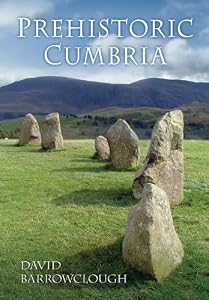 Prehistoric Cumbria is published by The History Press at £19.99.
 From £13.65 on Amazon.
Source: Westmorland Gazette


 We would like to know more about this location. Please feel free to add a brief description and any relevant information in your own language.
 Wir möchten mehr über diese Stätte erfahren. Bitte zögern Sie nicht, eine kurze Beschreibung und relevante Informationen in Deutsch hinzuzufügen.
 Nous aimerions en savoir encore un peu sur les lieux. S'il vous plaît n'hesitez pas à ajouter une courte description et tous les renseignements pertinents dans votre propre langue.
 Quisieramos informarnos un poco más de las lugares. No dude en añadir una breve descripción y otros datos relevantes en su propio idioma.