
Alex's intrepid Megalithic Tour through Croatia and Bosnia
Submitted by AlexHunger on Wednesday, 26 April 2006 Page Views: 23701
Iron Age and Later PrehistoryCountry: Croatia Type: HillfortInternal Links:

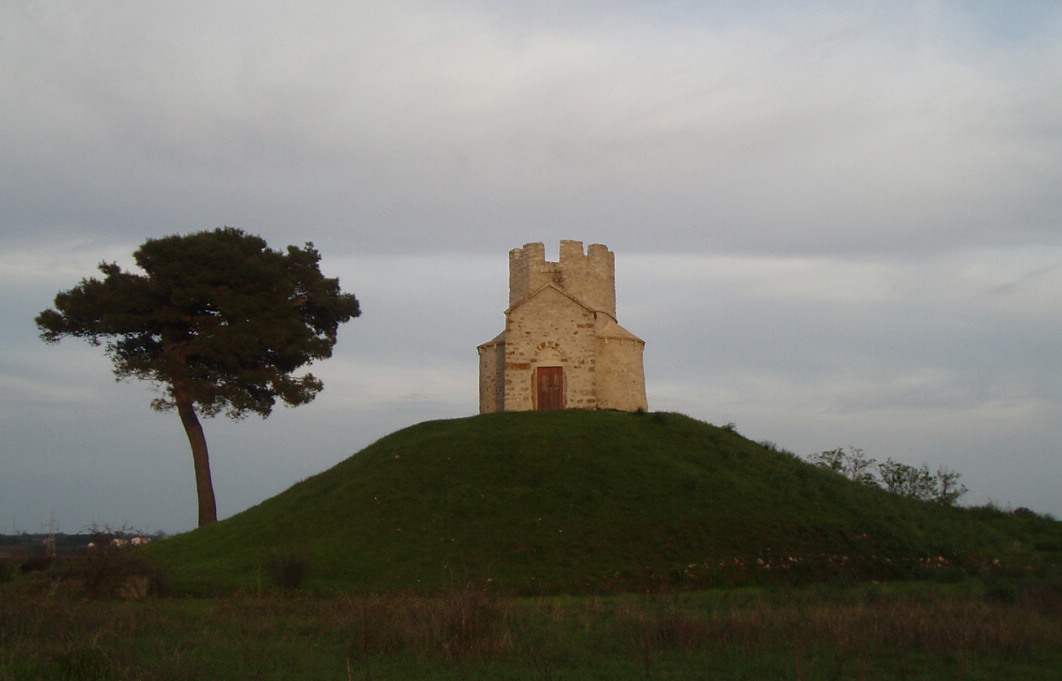
Croatia, or Hrvatska in the native language, has a long history, first as Illyrium, then under Roman occupation, followed by Slav invasions, Venetian occupation, Turk incursions, a period under the Austrian Hungarian Empire, an other Italian occupation of Istria and then nearly 50 years as part of Yugoslavia. While Yugoslavia was a lynchpin of the non-aligned movement in the 60s and 70s, it did not survive the death of Marshall Tito and the machinations of Slobodan Milosevic after 1992.
The Croats asserted their independence in 1992 and managed to liberate the remainder of their country by the mid 90’s. The period since then has seen solid economic growth due to reconstruction, returning tourists and the first steps towards what will hopefully result in EU membership. These upheavals have not left the Archeological community unscathed, as it has to carry on with relatively modest budgets compared to those going into basic infrastructure, like roads to reconnect this geographically challenged country, and the mass tourist industry.
I look forward to some of those future EU subsidies going into restorations of many sites and even the salaries of the Croatian scholars. The emphasis on mass tourism and the only nascent road network, have not properly focused attention on all aspects of Croatian Archeology. With tourists mostly staying in some of the coastal cities, this has elevated the importance of the Roman Sites like Diocletian’s Palace in Split, the Roman colony in Salona (Solin), the many remains in Pula, like the Amphitheater finished under the Flavian dynasty, or the Forum in Zadar. These are easy to access for those who need an easy break from the sea side and the cafes.
The prehistoric sites are, for the most part further inland and are to a large extent Hillforts. You could rightly say that Croatia is the land of 1001 Hillforts stretching from the Slovenian Border to Montenegro! Of these only a fraction have been properly explored, and even if archeology budgets were quadrupled, there would be enough work for centuries to properly study them all.
I was not able to see any dolmens or menhirs, and it is probable that even if at one time there might have been such structures, none have survived in the obvious places. The ancient graves in hillforts and tumuli used stone plates of a maximum 1 square meter in area as cover, as opposed to the massive cap stones we are used to in northern Europe.
Croatia was apparently relatively densely populated during the Neolithic, as the Ice age never encroached on the ancient Croats. Sea level changes might have been more traumatic, as a large tract of then viable land, now lies under the Adriatic. Nonetheless, stone axes of identical designs to those in Northern Europe can be seen in most museums. Porec, on the Istrian coast has the unique Mali Sveti Andeo Stone Circle, but it might be the remains of a Bronze age Tholos with many missing parts.
As surmised, the relics of the Bronze become more interesting as the advent of better metal weaponry caused the ancients to move into Hillforts with ever larger walls. Karastac with its large Orthostats stands out, but the research at Moncodonja shows a much more complex social structure within two concentric walls alongside a mysterious cave. The Bronze Age Kunci Hillfort near Labin, Istria also had an otherworldly atmosphere with its semicircle of innumerable loose stones at the edge of a cliff within dense vegetation.
Only the area around the gates has been properly explored, yet local kids drag race old Serbian built Fiats around the perimeter. The invasion of the Histri in 1200 BCE with Iron Age weapons sees the Bronze age Croats abandonment of the Moncodonja Hillfort, and probably others, in a rush and the creation of new ones all over old Illyrium.
Further South, the Dalmatians of the Iron Age gravitate towards Hillforts built on a massive scale with truly enormous and rectangular blocks. They probably were influenced by Greeks and comparisons with Dorian forts have been made. Asseria near Zadar or Tor on Hvar Island stand out as monumental buildings now out of place in largely unpopulated areas, but magical nonetheless. I was also truly fortunate to be able to see the Osanici Hillfort in Bosnia, which, with it’s imposing walls and impressive gate, seems completely exotic to a northern European.
To a large extent, these sites were swiftly re-occupied by the Romans, when the swiftly annexed the region in the 2nd century BCE. Very little of prehistoric Nesactium remains visible, having been redeveloped by Romans, until they too were kicked out during the Slav invasions in the 5th century CE, but the site yielded impressive pre-roman statues and remains that are now in the Pula Museum. Nesactium can be classified as the Histri Massada or Alamo on account of the fierce resistance against Roman invasion and resulting mass suicide at the end. Others were sold into slavery.
Reverie aside, recent history has left its mark on some of these sites. Farmers have pilfered hillforts and tumuli for “treasure” and building materials for centuries, in other cases one needs to be very well informed on the battle lines of the early 1990’s as there might have been land mines. Croatia intends to be mine free by 2010, but this might take longer in Bosnia.
In Northern Europe we might think twice about stepping onto private property to see a standing stone, but a red sign with a skull and cross bones will crystallize your thought process on "no" and "no go" very quickly! In due course the remaining interesting Hillforts near Zadar will become accessible again, but driving through war ravaged villages, only slowly being re-settled remind you that this is not a joke and that the country was nearly cut in two.
With or without the mines, sturdy footwear and thick trousers are also recommended as my Croat guides mentioned the existence of snakes, which also turned out to be true. Most of the snakes, will be more scared of you than you will be of them, but other breeds with a diamond like design on their backs are supposed to be poisonous. Some hillforts, like Asseria, Moncodonja, Karastac and to some extent Varvaria have excellent access, while others like Tor, Purkin Kuk and Arauzona are gruelingly difficult to get at.
In Arauzona’s case, the results were disappointing at the end, but at least the place had been mentioned by Plinnius the Elder. So you have be reasonably fit and think about your level of equipment up to and including a water bottle. I was pleased to observe that there was good mobile phone coverage on the Hillforts, just in case of emergencies.
This trip took a couple of months to organize. I timed the expedition to take place during the first week of May, not just to take advantage of the bank holiday, but to ensure good rain-free weather before the main tourist season and heat started in June. As preparation I purchased a more detailed tourist guide and started to contact officials in the main archeological museums of Zagreb and Pula as the tourist guides do not list anything older than the Roman period, unless it is exhibited in a museum.
In the end I hired two separate young archeologists from Pula to act as guides, one for Istria and one for the rest of Croatia. These were able to help with extensive historical facts, navigation in an area that Sat Navs have not prioritized yet and with translation not to mention good company. Without Darko and Josip, I wouldn’t have found any interesting site outside of the bigger cities and the museums, so I will remain indebted to them.
Not all museums were open on account of the May Day holiday and the fact that the season had not started yet. The ones that were open, were thoroughly professional with a solid selection from the Neolithic onwards. Pula and Zadar stood out in particular and should be considered must see sites. The small museum in Brijuni was also tastefully arranged.
Though most people in the towns speak a smattering of English, German, Italian and even French, asking for the best dirt road to the next Hillfort in a small village does require a fluent Croat speaker. Beyond that, the Croats are extremely welcoming towards foreigners with an interest in their country and its rich history.
In the evenings, you can then rest your weary bones while consuming authentic Croatian cuisine, fine Croatian wines that Tesco doesn’t even know exist and excellent local Pivo (Beer). Consider Croatia for your next adventure holiday.
Start your online tour at Zagreb Museum
Alex Hunger
See also Alex's Roman Tour through Croatia.
Note: See comment for links and news of a possible Pyramid buried within the Bosnian Landscape.


 We would like to know more about this location. Please feel free to add a brief description and any relevant information in your own language.
 Wir möchten mehr über diese Stätte erfahren. Bitte zögern Sie nicht, eine kurze Beschreibung und relevante Informationen in Deutsch hinzuzufügen.
 Nous aimerions en savoir encore un peu sur les lieux. S'il vous plaît n'hesitez pas à ajouter une courte description et tous les renseignements pertinents dans votre propre langue.
 Quisieramos informarnos un poco más de las lugares. No dude en añadir una breve descripción y otros datos relevantes en su propio idioma.