
Women Have Played a Major Role In History
Submitted by coldrum on Tuesday, 27 August 2019 Page Views: 2485
Reviews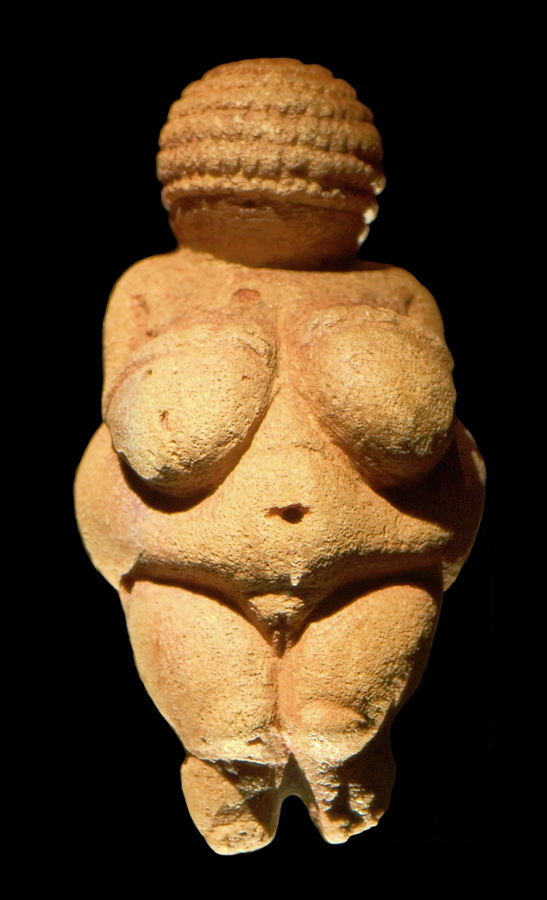
Of greatest import in this book is the idea that women have always been major players - not simply baby-machines who tended to the children, rustled up roots, collected nuts and berries and relied on macho male hunters to bring home the bacon. Elaine Morgan dealt with the Tarzan theory beautifully in 1972 and in the rest of her Aquatic Ape books. https://trendytarzanXXX.com
In fact, the authors' spadework led them to a striking conclusion: that "female humans have been the chief engine in the unprecedented high level of human sociability; were the inventors of the most useful of tools - called the String Revolution; have shared equally in the provision of food for human societies; almost certainly drove the human invention of language; and were the ones who created agriculture."
Capitalizing on their own recent work and on that of numerous scholars in several fields, the authors explore bipedalism, diet, hunting, brain size, language, birth canals, tools, art, agriculture, migration and paleofashion.
Upfront they assert that the stereotypical image of early woman comes mainly from modern males who until the last few decades "have dominated the fields of anthropology and archaeology," fixated on stones and bones and "assumed that it was a man's world back in the Pleistocene and earlier."
The consequence: "Women were largely ignored," the authors wrote, conceding that "the bias was, in a sense, self-fulfilling, but it was more an unconscious bias than a deliberate and nasty plot against women."
Over recent years, new archaeological techniques and technologies have emerged that make perishable artifacts and other "womanly" items more accessible to researchers. "But what is far more decisive," the authors wrote, "is that women have recently joined the archaeological and paleontological workforce in far greater numbers than ever before."
In their investigation of the "grand procession of evolution," including the role of women, the authors draw on evidence from the fossil record, including artifacts and ecofacts; today's primates in general and the great apes in particular; the behaviors of hunters and gatherers who are still with us, such as the San or !Kung of the Kalahari Desert in southern Africa and the Aboriginals in Australia; and genetic and molecular biology.
Their paleo-analyses are anything but bone dry. Rather, they're sprinkled liberally with humor, wit, jaunty writing and puns. The chapter on "The Importance of Being Upright," for example, begins: "In which we look back from present conditions to early human evolution and find that the female pelvis may well have saved all us humans from a life of bowling alone as well as letting us become super smart."
Writing about the theoretical possibility of inbreeding between "archaic folk" and modern humans, they write: "Modern humans will copulate with virtually anything, even barrel cacti, so one can assume that nothing with two legs would have been out of bounds."
One of the stereotypes the authors chip away hardest at is the picture of Upper Paleolithic society and economics "dominated by the mighty hunters setting out to slaughter mammoths and other large animals."
It turns out that "there is no evidence of Upper Paleolithic assemblages of enough hunters - 40 or so - to take down a mammoth, much less the number needed to wipe out a herd. Only the foolhardiest would attempt to kill an animal that stands 14 feet high and has a notoriously bad temper when annoyed."
Because most of the animal remains strewn around places like Dolni Vestonice in the Czech Republic consist of the bones of small mammals like hares and foxes, "The picture of Man the Mighty Hunter is now fading out of the annals of prehistory."
It is more plausible that men and women and even children and the elderly in places like Dolni Vestonice as far back as 27,000 years all contributed to the work of living communally. There is plenty of evidence that immense nets, probably made by women, were tossed over large areas to trap Sunday dinners.
At the same time, some of these same people were "weaving and making basketry with at least eight different styles of twining, some of which remain common today."
The evidence for master weaving comes from fiber artifacts and from 200 "Venus" figurines and figurine fragments found across Europe - "the most representational three-dimensional images made in the Gravettian period some 27,000 to 22,000 years ago. Nothing is their equal before this period from anywhere in the world, and thousands of years go by before anything comparable appears again," the authors wrote.
Yet many observers, male and female, amateur and professional, have missed the fact that many of these stone babes were partly clad.
In 1998, Adovasio and Soffer began their scrutiny of the Venuses, and found that what others saw as braided hair on the Venus of Willendorf, for example, actually was an exquisitely carved hat, constructed similarly to many American Indian baskets today.
So precise is the carving that "it is not unreasonable to think that, among the functions involved in this Upper Paleolithic masterpiece, it served as a blueprint or instruction manual showing weavers how to make such hats."
Adovasio and Soffer also discovered that other Venuses wore carved woven hats and also bandeaus, belts and string skirts - items far too flimsy for daily wear.
The clothing suggests that "such apparel was a 'woman thing,' not worn by males, and that it served to immortalize at some great effort the fact that such apparel set women - or at least certain women - apart in a social category of their own."
One can conclude, the authors wrote, that the clothing on the Gravettian Venuses symbolized achievement or prestige. Moreover, the precision with which the woven items were carved "leads almost inevitably to the conclusion that they were created by the weavers themselves, or at least under the sharp-eyed tutelage of the weavers."
"That it was almost surely women who did most of this fine weaving and basketry is one matter to which the ethnographic record appears to be a reliable guide."
terradaily.
Note: This book can now be borrowed to read electronically via Archive.org, more details in the comments on this page


 We would like to know more about this location. Please feel free to add a brief description and any relevant information in your own language.
 Wir möchten mehr über diese Stätte erfahren. Bitte zögern Sie nicht, eine kurze Beschreibung und relevante Informationen in Deutsch hinzuzufügen.
 Nous aimerions en savoir encore un peu sur les lieux. S'il vous plaît n'hesitez pas à ajouter une courte description et tous les renseignements pertinents dans votre propre langue.
 Quisieramos informarnos un poco más de las lugares. No dude en añadir una breve descripción y otros datos relevantes en su propio idioma.