

<< Feature Articles >> The best ancient sites to visit around Dubrovnik and the Southern Adriatic Coast
Submitted by Andy B on Thursday, 08 August 2019 Page Views: 6157
Resources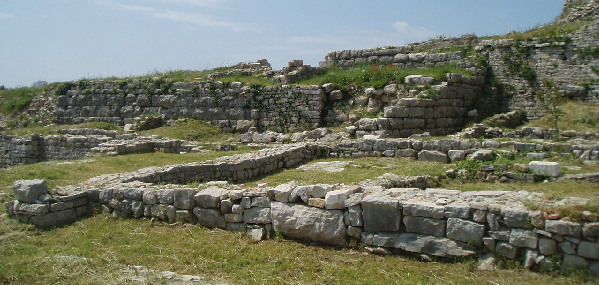
Our first site is Salona Town wall, close to the village of Solin near Split. The name Split comes from the Latin Spalatum, which derives from the Greek name Aspalathos of a local yellow flower. The Romans inherited the massive megalithic town walls from the Greek inspired Dalmatian Illyrians, so when the Romans invaded in the 2nd Century BCE, there was already a good deal of usable infrastructure, which became the Roman colony of Salona. The Romans simply added a triumphal gate to the existing Iron age walls - and judging by the gap you can now see, the older wall has stood the test of time much better. In the 5th century CE, it was all abandoned again. While in Split, make sure you visit the Archaeological Museum. This is the oldest museum in Croatia, founded in the early 19th century when local people started collecting statues and architectural remains from the Roman colony of Salona.
Another impressive town wall is that of Narona.
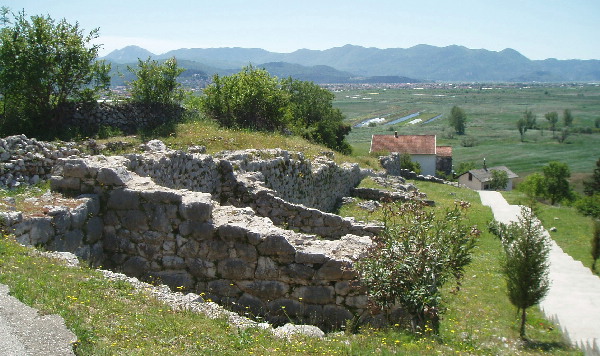 Again, construction was started by the Iron Age Dalmatian Illyrians, and later Greek traders and colonists settled in with the natives. After the Roman conquest, Narona became Colonia Iulia Narona and again there were new additions to the wall, as well as the usual Roman facilities like a forum, which is still partially visible. The town was sacked by the Visigoths in the 5th century, and completely abandoned in the 7th Century. Happily it’s now inhabited again, and the ancient town was first excavated in 1907. At this time, many fine statues were found - some of these were taken to the Ashmolean Museum in Oxford, and others can still be seen in the little Narona Museum, located beneath the local school.
 Alex Hunger, keen Megalithic Portal contributor and site admin visited Croatia in 2006. He writes: “I very much recommend hiring a local guide who knows the archaeology of the area. Though most people in the towns speak a smattering of English, German, Italian and even French, asking for the best dirt road to the next Hillfort in a small village does require a fluent Croat speaker. Beyond that, the Croats are extremely welcoming towards foreigners with an interest in their country and its rich history.”
Our next site, Osanici Hillfort is actually in Bosnia.
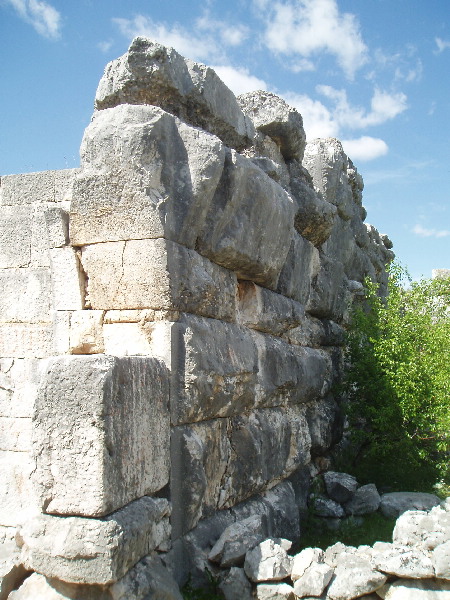 It is at 277 meters altitude, 3km west of Stolac and 2km north of Radimlja. Access is via a dirt track, and then walking along a vague path along the edge of the hill. The Iron Age parts of the hillfort were eradicated by the Romans, replaced by massive town walls made from very large blocks, and two great arched entrances that are now ruined. Towards the back, against the cliff there is a so-called Akropolis, with a depression in the middle of the compound which housed a Forum or Temple of some kind according to Archaeologists. There are massive ruins of foundations for individual dwellings in front of the ramparts. This beautiful site is badly in need of restoration or preservation, which will hopefully become more of a priority as Bosina develops its tourist infrastructure.
It’s relatively easy to cross the border from Croatia to Bosnia as a day trip, in fact you may need to do this to get to Dubrovnik in the first place due to the 22km Neum corridor - which is the coastal strip of Bosnia - you have to cross this to get to Dubrovnik along the coast road. Just be aware that you may not be able to cross into Bosnia with a German or Italian rental car, but with one hired locally in Croatia you should be fine.
 Dubrovnik is a deeply historic place, with a spectacularly picturesque Old Town. You may also want to visit Dubrovnik for its connection with Game of Thrones, particularly the final 2019 season. For Game of Thrones fans we hear the "GOT XXL Experience" is the one to book. This includes a personal guide to help you find all the filming locations inside and outside Dubrovnik. Amongst these are the gardens of "King's Landing" and the location of the fight between Oberyn Martell and the Mountain. Another highlight is the walking tour of filming locations in the Old Town before heading to another city of George R.R. Martin's fantasy world, the city of "Qarth", being the island of Lokrum, just off the coast of Dubrovnik.
I’ll leave the final words to Alex Hunger: “In the evenings, rest your weary bones while consuming authentic Croatian cuisine, fine Croatian wines that Tesco doesn’t even know exist and excellent local Pivo (Beer). I really recommend you consider Croatia for your next adventure holiday.”
With many thanks to Alex Hunger, local archaeologists Darko and Josip, ACCESS Dubrovnik and Dennis Jarvis (lower right image - Creative Commons) for their kind assistance with this article.


 We would like to know more about this location. Please feel free to add a brief description and any relevant information in your own language.
 Wir möchten mehr über diese Stätte erfahren. Bitte zögern Sie nicht, eine kurze Beschreibung und relevante Informationen in Deutsch hinzuzufügen.
 Nous aimerions en savoir encore un peu sur les lieux. S'il vous plaît n'hesitez pas à ajouter une courte description et tous les renseignements pertinents dans votre propre langue.
 Quisieramos informarnos un poco más de las lugares. No dude en añadir una breve descripción y otros datos relevantes en su propio idioma.