

The September/October 2011 issue of British Archaeology is out now
Submitted by Andy B on Thursday, 11 August 2011 Page Views: 3988
DiscoveriesWHO BUILT ROMAN ROADS?“The rolling English drunkard”, wrote GK Chesterton, “made the rolling English road”. Then along came Roman engineers to straighten things out with martial efficiency. Thus one of the great premises of British history and popular culture. But it may be quite wrong. In the latest British Archaeology magazine, Tim Malim and Laurence Hayes give full details of the Shropshire dig that found a prehistoric metalled road.
AMONG OTHER STORIES
PROFESOR MUNAKATA’S ADVENTURE
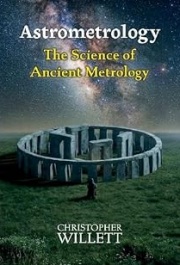
A manga comic story about a violent plot against the British Museum sold 200,000 copies in Japan. Now it has been translated into English, and we have exclusive extracts from the book to be published by the BM in October. We reveal how the artist Hoshino Yukinobu was inspired by a British archaeologist who dug at Stonehenge in 1901 – and which of two modern theories about Stonehenge that recently went head to head in the media is adopted in the book
FIRST SCOTTISH GOLD LUNULA IN OVER 100 YEARS
Scraps of gold found by a detectorist in Dumfries & Galloway will focus attention on the mystery that is the lunula, a flat, crescent-shaped neck ornament thought to date from around 2300–2200BC, and described by some archaeologists as a symbol of power.
SACRED WATERS
Jim Leary and David Field have worked at several of Wiltshire’s great neolithic monuments, not least Silbury Hill and the henge at Marden (where Leary has recently directed important excavations). Noting that these are sited by springs and streams, they here take a wider view of the religious significance of fresh water in Britain some 5,000 years ago. Was the Thames once a sacred river to rival the Ganges?
LOST DARK AGE POWER BASE FOUND
Archaeologists believe their excavations beside the famous Pictish engraved stones at Rhynie, Aberdeenshire, have identified a previously unknown Dark Age power centre, comparable in significance to royal sites in Scotland such as Dunadd, seat of the Scots, or Tintagel in Cornwall, whose rulers may all have been killed in battle before AD1000
7 ARCHAEOLOGICAL SOCIETIES
As one celebrates its 40th anniversary, another its 50th and a third its 150th – and a fourth looks back on its 300th – British Archaeology honours the regional archaeological society
THE LAW OF THE LAND
Government and law are shadowy features of the past, leaving subtle traces that present a difficult challenge for landscape archaeology. Yet, say Stuart Brookes, Andrew Reynolds and John Baker, recognising how pre-modern societies governed is crucial to understanding their worlds. Archaeology has much to say on the subject
THE BULLDOZER, THE SCHEDULER & THE COUNCIL LEADER
Archaeology and heritage are suffering as the country tries to pay off its debts. Perhaps we shouldn’t worry – it will get better. But will it? Three cases show how bad things can be, while some archaeologists are hopeful. Is this the beginning of the end? Or can imaginative action now lead to a glowing future?
REGULARS INCLUDE
* My archaeology
Mayan archaeologist and Times archaeology correspondent, Norman Hammond
* Letters
Detectorists are not all bad
* In view
Greg Bailey found BBC TV’s Planet of the Apemen in search of a voice
* Science
Is archaeology a science?
* Mick’s travels
Mick Aston celebrates the life and work of the late Philip Rahtz
* Books
Great digs, Roman mosaics and Anglo-Saxon metalwork
* Briefing
The UK's only archaeological events listing, with exhibition reviews
* CBA correspondent
Mike Heyworth defends England’s new planning policy
* Spoilheap
How archaeologists might reach the drinking public
British Archaeology is a bimonthly members' magazine that is also available in larger WH Smith stores and the best independent newsagents, and by subscription. Most of Issue 118 May/June 2011, is now available to read online.
Note: Loads of interesting stuff this issue, with details of the Shropshire dig that found a prehistoric metalled road, a Dark Age power centre and prehistoric gold in Scotland, and Jim Leary and David Field writing about sacred waters


 We would like to know more about this location. Please feel free to add a brief description and any relevant information in your own language.
 Wir möchten mehr über diese Stätte erfahren. Bitte zögern Sie nicht, eine kurze Beschreibung und relevante Informationen in Deutsch hinzuzufügen.
 Nous aimerions en savoir encore un peu sur les lieux. S'il vous plaît n'hesitez pas à ajouter une courte description et tous les renseignements pertinents dans votre propre langue.
 Quisieramos informarnos un poco más de las lugares. No dude en añadir una breve descripción y otros datos relevantes en su propio idioma.