
The July/August 2011 issue of British Archaeology is out now
Submitted by Andy B on Thursday, 09 June 2011 Page Views: 4132
Events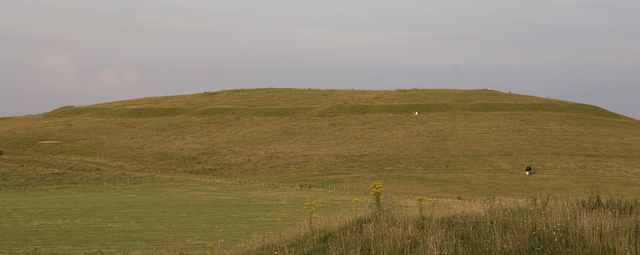
ON THE COVER
Digging for the origins of our modern landscape
Gabor Thomas has been directing major excavations of Anglo-Saxon remains at Bishopstone, East Sussex, and Lyminge, Kent. He compares the results of the two projects, and asks what light they throw on the origins of villages and the English landscape
OTHER STORIES
AI WEWEI
First sight – our full page photo of a new artefact – features the detained Chinese artist Ai Weiwei’s Colored vases, in the UK for the first time. Ai is arguably the world’s most important practising artist, and his controversial use of antiquities is deeply archaeological
THE END OF PREHISTORY
A major research project – the largest of its kind anywhere, by far – has opened up radically new perspectives on early Britain. It shows in unprecedented detail how farming and associated new technologies first spread across the British Isles, paving the way for modern times. There are also profound implications for archaeology around the world: radiocarbon analysis is now so precise that events occurring within single generations can be dated, allowing histories to be written when there was no writing.
In details published here for the first time, Alasdair Whittle, Frances Healy and Alex Bayliss argue that farming first reached Britain with small-scale colonisation in the Thames estuary a generation or two before 4000BC. Over the next 200 years the new practices spread across the rest of Britain and Ireland, and hunting-gathering seems to have disappeared as a major way of life. The first monuments were long burial mounds, from at least 3800BC and serving a few dominant families rather than the wider community. Of bigger impact were “causewayed enclosures”. These marked off large areas of land, typically on hilltops, for periodic communal gatherings. They are first seen just before 3700BC in the south-east, and then across most of Britain for a further two centuries. Before the new study, archaeologists had been unable to distinguish when or where these changes occurred as separate events.
HALF A MAN BURIED WITH 32 ANIMALS
Archaeologists in Wiltshire have excavated a huge heap of bones: the remains of at least 25 cattle, five sheep, a pig and a horse, and the left side of an adult man. The butchered animals were buried in 400BC when an existing village was defended with a large bank and ditch. They may represent the funeral of a significant person who added status to the enclosure’s protection – or the man could have come from a competing community, and was buried with the spoils of a raid.
NOT JUST ANOTHER ROMAN VILLA
Caunton Properties Ltd would like to build 29 new homes in Southwell, Nottinghamshire. The site is close to a Norman minster, and touches a little known but possibly uniquely significant Roman villa. Will Bowden thinks it is too important to be excavated during a development.
HISTORY UNDER THE NORTH SEA
When an amateur archaeologist found ice age animal remains and flint tools in gravel at a Dutch wharf, he showed that preserved beneath the North Sea are remains of great significance for our understanding of early humans in northern Europe. But how could archaeologists hope to study these remains off Norfolk? The sea floor is under 17-33m of water, sand is shaped by the strong currents into 6m high ridges and visibility is notoriously poor. Now an English Heritage-funded project has shown how – and found deposits contemporary with Britain’s first humans.
AT THE MOVIES
Seven great films archaeologists say you should see.
WALES FROM THE AIR
When the Welsh Royal Commission takes to the sky, it finds major ancient monuments below. Toby Driver reflects on a quarter century of aerial reconnaissance and discovery.
A TRUE PEOPLE’S ARCHAEOLOGY?
In his last editorial, the editor wrote of a “new, people’s archaeology”, a phrase picked up by the Times. Introducing his own slant, James Dixon presents an archaeological view of the recent riots in Bristol.
PROOF THAT COLLEGE MOUND IS SILBURY TWIN
Exclusive details of the discovery that a mound in the grounds of Marlborough College, Wiltshire, is the exact contemporary of Silbury Hill. It is the second largest mound known from prehistoric Britain, and a major addition to the neolithic landscape that includes the stone circles at Avebury.
REGULARS INCLUDE
* Britain in archaeology
Getting to the bottom of murder stories in Kent and Derbyshire
* Letters
The cost of treasure and the challenge of archives
* Greg Bailey on broadcasting
Greg listens to Farming Today
* My archaeology
David Clarke looks back on a life in Scottish museums
* Science
Sebastian Payne looks at new ways of examining rock art
* Mick’s travels
Mick Aston goes to west Dartmoor
* Books
Hunter-gatherers, modern Britain and Bishopstone
* Briefing
The UK's only archaeological events listing, with exhibition reviews
* CBA correspondent
Don Henson looks at successes and challenges in education
* Spoilheap
Archaeologist David Elkington is not all he seems to be
British Archaeology is a bimonthly members' magazine that is also available by subscription and in WH Smith stores and larger independent newsagents.


 We would like to know more about this location. Please feel free to add a brief description and any relevant information in your own language.
 Wir möchten mehr über diese Stätte erfahren. Bitte zögern Sie nicht, eine kurze Beschreibung und relevante Informationen in Deutsch hinzuzufügen.
 Nous aimerions en savoir encore un peu sur les lieux. S'il vous plaît n'hesitez pas à ajouter une courte description et tous les renseignements pertinents dans votre propre langue.
 Quisieramos informarnos un poco más de las lugares. No dude en añadir una breve descripción y otros datos relevantes en su propio idioma.