
The Hidden Details That Make Prehistoric Sites So Fascinating
Submitted by Andy_B on Saturday, 10 October 2026 Page Views: 38
Resources
Before written records, people left their stories in materials, landscapes and patterns of use. A few flakes of worked stone can reveal tool production, while burned seeds may show what people ate. The position of a hearth can suggest how a shelter was organised, and a line of postholes may be the only surviving outline of a building.
These small traces allow archaeologists to reconstruct lives that would otherwise remain almost invisible. The more carefully a site is examined, the more complicated and human the picture becomes.
Colour Can Be a Clue, but It Needs Context
The comparison works, but I’d make the connection more precise and less dependent on “for instance” as a bridge.Colour is one of the first things people notice, yet it is also easy to misinterpret. Red soil, darkened stone or traces of pigment may indicate burning, mineral deposits, deliberate decoration or natural processes that happened long after a site was abandoned.
Colour can also carry information in completely different fields. The guide from 8 Sheep Organics shows how changes in colour can correspond to different stages rather than pointing to one fixed explanation. Archaeological evidence requires its own methods and expertise, but the underlying lesson is similar: colour becomes meaningful only when it is interpreted alongside context.
Pigments such as ochre are especially interesting because they may have been used for decoration, symbolic practices or practical purposes. Their location and association with other finds usually matter more than colour by itself.
Tiny Stone Flakes Can Reveal an Entire Activity Area
A finished stone tool attracts attention, but the waste produced while making it can sometimes be even more informative.Stone tools are created by removing flakes from a larger piece of material. Where many flakes survive together, archaeologists may be able to identify a place where people sat and worked. The size and distribution of those fragments can even suggest different stages of production.
Raw material provides another clue. If the stone came from a source many kilometres away, people may have travelled to obtain it or exchanged materials with other groups.
That turns a handful of seemingly unimportant fragments into evidence of movement, skill and social connection.
The absence of finished tools can be meaningful too. People may have manufactured them in one location and carried them elsewhere, leaving only the production debris behind.
Fire Leaves More Than Ash
Hearths are among the most valuable features at prehistoric sites because fire sat at the centre of so many activities.People used it for warmth, cooking, light and protection, but the remains of a hearth can reveal far more than those basic functions. Burned bones and plant remains may preserve evidence of meals, while charcoal can help researchers identify the types of wood people gathered from the surrounding environment.
The position of fires within a settlement is equally revealing.
Several hearths close together might suggest repeated occupation of the same area, while a fire placed inside a structure can help identify how internal space was organised.
Repeated burning may also alter soil and stone enough to leave a visible trace thousands of years later. What looks like a simple dark patch can therefore mark a place where people repeatedly gather.
Postholes Can Reconstruct Buildings That No Longer Exist
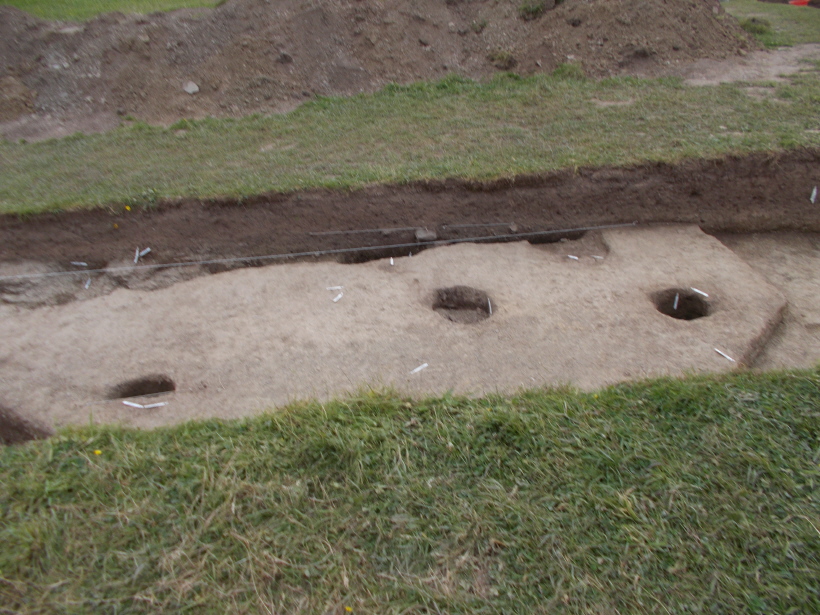
Prehistoric architecture often survives only at ground level.
Wooden walls and roofs decay, leaving behind little more than the holes where posts once stood. Yet when those holes form patterns, archaeologists can begin reconstructing the shape and size of buildings.
A line of postholes may indicate a wall, while larger supports can suggest where a roof carried more weight. Entrances may appear as gaps in an otherwise regular pattern.
When several buildings overlap, the site becomes even more interesting.
Different alignments can show that structures were rebuilt, expanded or replaced over time. A place that initially appears to contain one settlement may actually preserve several phases of occupation.
These subtle changes help reveal whether people stayed briefly, returned seasonally or maintained a community over generations.
Food Waste Can Describe the Landscape
Discarded food is another source of information that becomes more valuable with time.Animal bones can show which species people hunted or kept, while seeds and plant remains can provide evidence of gathered or cultivated foods. Shells may reveal access to rivers or coastlines, even when environmental conditions have changed since the site was occupied.
Together, these remains help reconstruct the landscape around the settlement.
If certain animals appear repeatedly, they may indicate nearby habitats. Changes in plant remains between different layers can suggest shifts in climate, agriculture or food preferences.
Food evidence can also reveal seasonality.
The age of animals at death or the presence of plants available only during particular months may indicate when people occupied a site.
That level of detail can transform a broad statement such as “people lived here” into a much more specific picture of how they organised the year.
The Spaces Between Objects Matter
One of the most important archaeological lessons is that location matters almost as much as the object itself.A tool found beside a hearth tells a different story from the same tool discovered in a burial. A cluster of animal bones in one area may indicate food preparation, while the same remains placed deliberately elsewhere could have another meaning.
This is why careful excavation records exact positions rather than simply collecting interesting finds.
Patterns emerge when objects are studied in relation to one another.
A concentration of tools might identify a work area, while an open space with few finds could have been deliberately kept clear. Different parts of a settlement may have supported cooking, sleeping, craft production or social activity.
The site becomes understandable through relationships rather than isolated discoveries.
Prehistoric Sites Become Richer the Closer You Look
The fascination of prehistory comes partly from how much can be learned from so little.A posthole, stone flake or burned seed may seem insignificant on its own, but each preserves part of a larger pattern. When these details are combined, archaeologists can begin reconstructing movement, diet, technology, architecture and even aspects of social behaviour.
That process also explains why prehistoric sites need careful excavation. Context can disappear permanently once layers are disturbed, and the smallest overlooked detail may contain information that cannot be recovered later.
Prehistoric landscapes are therefore not empty places waiting for spectacular discoveries. They are records built from subtle traces.
The most rewarding discoveries often begin when someone notices something that, at first, barely looks important at all.
