


Ancient Routes to Modern Journeys: How Technology Has Changed the Way We Explore
Submitted by Andy_B on Tuesday, 13 October 2026 Page Views: 17
Resources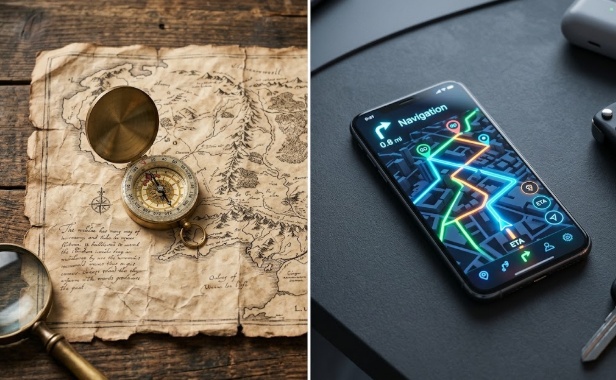 Humanity has always possessed an insatiable desire to explore the unknown. Centuries ago, navigating unfamiliar landscapes required an intimate knowledge of the stars, rudimentary compasses, and hand-drawn maps that were often more artistic interpretations than accurate geographical guides. Our ancestors relied heavily on established ancient trade routes, charting vast and unforgiving territories with basic tools and passing down survival knowledge through word of mouth. The margin for error was immense, and a journey of a few hundred miles could take months of gruelling effort. Today, that fundamental human wanderlust remains entirely unchanged, but the sophisticated tools we use to satisfy it have been completely revolutionised.
The shift from fragile paper maps to pocket-sized smartphones has not only altered how we find our way physically, but it has also transformed the practicalities of modern life while on the move. We now live in an era of unparalleled convenience, where a single handheld device manages our complex itineraries, instant translations, and everyday finances. Consider how effortlessly we now handle transactions; just as a leisure seeker might look for a casino sms pay option to quickly and securely fund their entertainment on the go, today’s holidaymakers expect that exact level of frictionless, instant purchasing power when buying a train ticket, booking a last-minute excursion, or settling a restaurant bill in a foreign city. The expectation for seamless connectivity now permeates every single aspect of our journeys.
Charting the Course: From Compasses to GPS
Before the advent of modern technology, a journey across international borders required meticulous planning and a wealth of physical resources. Explorers carried hefty atlases, language dictionaries, and thick guidebooks, often having to rely on the goodwill of locals to find their way through winding, unmapped city streets. Getting genuinely lost was simply an accepted, and sometimes celebrated, part of the traditional travel experience, though it often brought considerable stress.Today, losing one’s bearings is almost a conscious choice rather than an unavoidable accident. Global Positioning System (GPS) technology and sophisticated mobile mapping applications have comprehensively mapped the globe, providing pinpoint turn-by-turn directions in almost every corner of the planet. These dynamic tools do far more than simply point us in the right direction; they provide crucial real-time traffic updates, suggest intelligent alternative routes to avoid sudden congestion, and highlight culturally significant points of interest along the way.
Furthermore, online archaeological databases and high-resolution satellite imagery have allowed us to uncover and explore historical sites before we even pack our bags. We can virtually walk the ancient streets of Rome or explore the layout of a sprawling museum, allowing for a much deeper understanding and appreciation of our destinations long before our flights depart.
The Rise of the Smartphone Traveller
The modern smartphone is arguably the most significant travel innovation since the commercial jet aeroplane. It serves simultaneously as a 24-hour travel agency, a multilingual personal tour guide, and an indispensable communication tool. According to recent demographic data, smartphones are now the primary device for accessing the internet, accounting for a staggering 77 per cent of daily time spent online by UK adults. This fundamental shift towards mobile reliance has reshaped the entire tourism landscape.This constant connectivity means that we are never truly cut off from the world, even when venturing into relatively remote regions. We can instantly translate foreign menus using augmented reality cameras, check hyper-local weather forecasts, and stay in touch with loved ones thousands of miles away via high-definition video calls. The smartphone has effectively democratised travel, providing a crucial psychological safety net that makes independent exploration significantly less intimidating for novice adventurers.
The sheer volume of crowd-sourced information available at our fingertips has also changed the way we research our chosen destinations. We no longer rely solely on printed guidebooks published months or years in advance. Instead, we turn to vibrant social media platforms, independent travel blogs, and real-time community reviews to discover hidden culinary gems and actively avoid overpriced tourist traps.
Streamlined Planning and Instant Booking
Gone are the days of spending hours sitting in a high street travel agency, thumbing through glossy holiday brochures and waiting for a consultant to confirm availability over the telephone. The modern traveller has complete, unadulterated control over their itinerary, possessing the ability to seamlessly tailor every single aspect of their trip to their specific personal preferences. The financial scale of this shift is immense, with the online travel sector projected to reach a market value of over $31 billion in the UK alone by 2026.Technology has introduced several distinct, highly beneficial advantages to the modern booking process:
• Dynamic Packaging: Travellers can now effortlessly bundle their flights, boutique accommodation, and vehicle hire into a single, customisable digital package, often securing significant financial discounts compared to booking each element separately.
• Real-Time Price Comparisons: Sophisticated metasearch engines instantly aggregate pricing data from hundreds of global airlines and hotel providers, ensuring that consumers can effortlessly find the most competitive rates available without having to scour individual corporate websites.
• AI-Powered Itineraries: Artificial intelligence tools and generative language models can now automatically produce bespoke travel plans based on a user’s specific budget, niche interests, and precise timeframe, completely removing the logistical stress from holiday planning.
• Instant Mobile Reservations: Whether attempting to secure a table at a highly-rated, fully-booked restaurant or grabbing a last-minute West End theatre ticket, mobile platforms allow for immediate confirmation, granting travellers the ultimate flexibility to adapt their plans organically.
This unprecedented level of autonomy has fundamentally shifted the balance of power from the massive travel provider directly to the individual consumer. We can rapidly adjust our plans at a moment’s notice, responding to sudden changes in local weather or simply following a spontaneous whim without incurring massive administrative penalties.
The Transition to Cashless Exploration
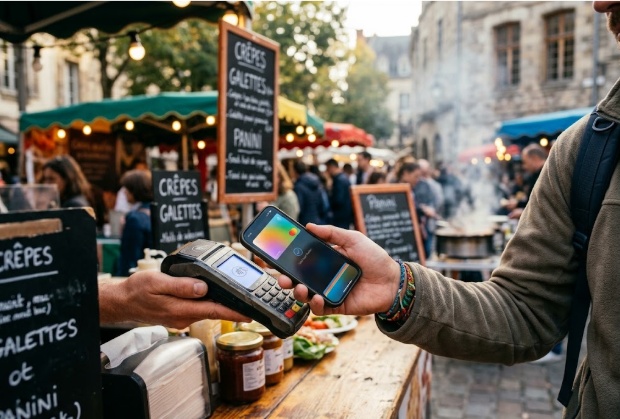
Perhaps one of the most profound and practical shifts in recent years has been the rapid, global move towards cashless travel. Carrying large amounts of foreign currency in a concealed money belt was once an absolute necessity, bringing with it the constant, nagging worry of loss or theft, as well as the frustrating hassle of calculating confusing daily exchange rates.
Today, mobile wallets, contactless payment systems, and digital-only challenger banks have largely eliminated the vital need for physical cash. Recent industry analysis confirms this structural shift, noting that 65 per cent of UK adults were registered for at least one mobile payment service in recent assessments, highlighting a massive cultural pivot. This rapid mainstream adoption means that tourists can fluidly navigate complex foreign transit networks, pay for independent street food, and accurately leave tips using nothing but their mobile phones or smartwatches.
This wholesale shift towards digital finance abroad also offers dramatically enhanced personal security. Modern transaction methods utilise advanced biometric authentication and tokenisation, ensuring that sensitive financial details are kept strictly safe from potential skimming devices or fraudsters. Furthermore, modern banking applications categorise expenses automatically, allowing travellers to track their holiday spending in real-time and stick to their budgets with remarkable precision.
Entertainment and Downtime in Transit
International travel inherently involves inescapable periods of waiting — whether sitting in a crowded airport departure lounge, enduring a turbulent long-haul flight, or taking a slow, scenic train journey across an unfamiliar country. Historically, this inevitable downtime was filled with dog-eared paperback books, solving crossword puzzles, or simply staring out the window. Now, however, mobile technology has decisively turned these previously frustrating delays into welcome opportunities for engagement and deep relaxation.We can now legally download entire seasons of our favourite television programmes before leaving the house, stream vast, algorithmically-curated catalogues of music, or read hundreds of heavy novels on a single, brilliantly illuminated lightweight device. The sophisticated mobile technology ecosystem ensures that we are virtually never without diverse options for amusement.
“Mobile technology hasn’t just simplified how we pay for things abroad; it has completely reshaped our downtime during transit,” says Jana Yarrow, iGaming expert and author at Сasinohex UK. “Whether you’re playing a quick slot game on a train or streaming a film at the airport, the seamless integration of mobile networks and instant payments means entertainment is always in our pockets.”
Looking Ahead: The Future of Travel Technology
As we collectively look to the horizon, the lucrative intersection of global travel and advanced technology shows absolutely no signs of slowing down. The industry is continuously, aggressively innovating, actively seeking out new ways to make our international journeys safer, faster, and exponentially more enjoyable.Several rapidly emerging technologies are currently poised to redefine the standard travel experience in the coming years:
• Biometric Boarding and Security: International airports are increasingly adopting sophisticated facial recognition software and advanced biometric scanning to process passengers securely, drastically reducing stressful queue times and streamlining the notoriously slow security process.
• Augmented Reality (AR) Navigation: Future pedestrian mapping applications will likely overlay glowing directional arrows and historical points of interest directly onto our physical surroundings via smart glasses or smartphone cameras, making urban navigation more intuitive than ever before.
• Smart Luggage Tracking: Embedded Internet of Things (IoT) sensors and widely available Bluetooth tags now allow travellers to actively monitor the exact global location of their suitcases in real-time from the cabin, virtually eliminating the anxiety of lost baggage upon arrival.
• Virtual Reality (VR) Pre-Trips: Deeply immersive VR experiences will soon allow prospective holidaymakers to confidently “try before they buy,” exploring premium hotel rooms, luxury cruise ship cabins, and even entire city centres in a three-dimensional virtual space before making a definitive financial booking.
These continuous advancements clearly highlight a near future where the traditional friction of travel is comprehensively minimised, allowing us to focus entirely on the pure joy of discovery.
A New Era of Exploration
From the brave ancient mariners who successfully navigated by the constellations to the modern metropolitan explorer armed with an encyclopaedic smartphone, the fundamental desire to travel is deeply ingrained in the human spirit. While our core motivations for seeking out the unknown remain remarkably unchanged, technology has unequivocally and permanently changed the way we physically and logistically experience the world.We are now measurably more connected, more informed, and significantly more empowered than any generation that has come before us. The seamless integration of digital mapping software, instant mobile payments, and AI-driven planning tools has smoothed the rough, unpredictable edges of international travel, transforming daunting overseas expeditions into manageable, highly enjoyable journeys.
