
The Archaeology of Chance: How Ancient Games Shaped the Way We Think About Luck
Submitted by Andy_B on Tuesday, 17 March 2026 Page Views: 95
Resources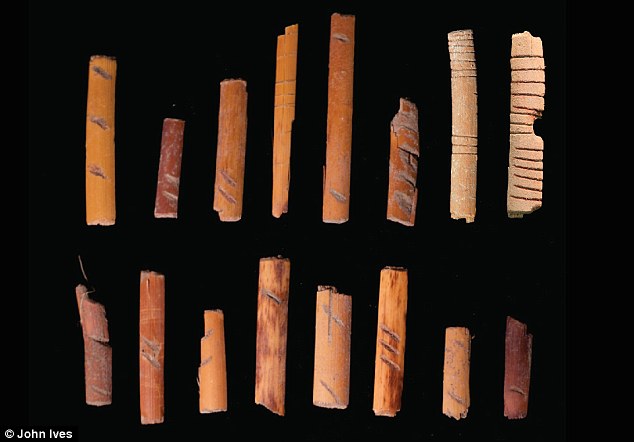
That impulse has never really gone away.
Archaeology gives us a surprisingly detailed record of these early behaviours. Across Europe, the Near East, and parts of Asia, researchers have uncovered dice, boards, tokens, and counting tools that date back thousands of years. They aren’t isolated curiosities either. They show up again and again, across completely different cultures. One of the more striking examples is a set of marked astragali found at a Neolithic site in Turkey, dated to around 6000 BCE - some showing signs of deliberate wear on specific faces, suggesting repeated, purposeful use rather than casual play.
What stands out isn’t just that people enjoyed games. It’s that they seemed drawn to uncertainty itself.
From Ancient Throws to Modern Tables
If you fast forward to today, the connection feels more obvious than it might at first glance.Take a game like blackjack which can be found on all of the best online casinos and comes in different variants. On the surface, it’s a modern invention, played in polished casinos or on a phone screen. But strip it back and the core idea is the same as those early throws of bone or stone. You’re weighing risk, trying to judge probability, making decisions with incomplete information.
The tools have changed. The thinking hasn’t.
There’s something quite striking about that continuity. A Roman soldier casting lots and a modern player deciding whether to hit on 16 are, in a sense, doing the same thing. Both are navigating uncertainty, just with different levels of mathematical awareness.
The First Games of Chance
Some of the earliest objects linked to gaming are surprisingly simple.Astragali, small ankle bones from sheep or goats, turn up in archaeological sites across the ancient world, from Mesopotamia to Greece. Because of their uneven shape, they never land the same way twice, which made them ideal for both games and rituals. They weren’t designed as dice in the modern sense, but they served a similar purpose: people used them to play, to decide outcomes, and in some cases to interpret what those outcomes might mean.
Later on, more recognisable dice begin to appear. By around the third millennium BCE, you start to see shaped and marked examples in places like the Indus Valley and ancient Sumer.
The Royal Game of Ur is one of the clearest examples of how far things had already developed. Discovered in royal tombs and dating back over 4,000 years, it’s a fully formed board game with rules, structure, and a mix of chance and strategy. The British Museum holds one of the best-preserved examples, and what’s remarkable is that a cuneiform tablet found separately appears to describe the rules in detail, suggesting this was a game people cared enough about to write down. It doesn’t feel primitive. If anything, it feels familiar.
Patterns, Stones and Early Mathematics
It’s easy to underestimate the people who built the ancient world.Sites like Stonehenge or Newgrange are often talked about in terms of mystery, but what’s sometimes overlooked is the level of precision involved. These weren’t random arrangements of stone. They were carefully planned, aligned with solar and lunar cycles, and constructed with a clear sense of measurement. The main axis at Stonehenge aligns with the midsummer sunrise to within a fraction of a degree - an accuracy that implies not just observation but sustained, systematic recording over generations.
Whether or not ideas like the so-called “megalithic yard” hold up under scrutiny, there’s no doubt that these communities understood patterns. They tracked time, observed repetition, and noticed when things deviated. That kind of thinking sits right at the edge of probability. You don’t need formal mathematics to start recognising that some outcomes are more likely than others. You just need observation, memory, and a willingness to look for structure in what appears chaotic.
When Chance Meant Something More
In many cultures, randomness wasn’t seen as random at all.Casting lots appears in ancient Israel, in Roman practices, in parts of China, and across Mesoamerican societies. The idea was simple: if the outcome couldn’t be controlled by humans, then it must be guided by something else. Chance became a way of accessing intention. That gave these acts a weight that modern games don’t quite carry. Throwing a set of marked objects wasn’t just a pastime. It could influence decisions, settle disputes, or reveal what was believed to be divine will.
Even now, there’s a faint echo of that mindset. People still talk about “feeling lucky” or sensing that something is about to go their way. It’s not rational, but it’s deeply ingrained.
From Tokens to Cards
The path from early counting systems to modern games isn’t a straight line, but you can follow it.In Mesopotamia, small clay tokens were used to track goods and quantities thousands of years before writing emerged. Over time, those systems became more abstract, eventually leading to numerical notation and record keeping. Card games appeared in China during the Tang Dynasty and gradually move west along trade routes. By the time they reach Europe, they’ve already evolved into something recognisable, with suits, rules, and structured play.
Blackjack, in its early forms, started to take shape in France and Spain in the 17th century - most likely descended from games like Trente-et-Un and Vingt-et-Un, themselves products of a card game culture that had been developing for centuries. By then, the foundations had been laid over millennia. The idea of combining chance with calculation was already deeply embedded in human behaviour.
The Long Thread of Uncertainty
What’s perhaps most interesting about all of this is how little the underlying instinct has changed.We still look for patterns where there might not be any. We still try to manage risk, even when the outcome is uncertain. And we still find something compelling about the moment just before a result is revealed. That moment has existed for thousands of years.
Whether it’s a carved bone hitting the ground or a card being turned over, the feeling is the same. A brief pause. A sense that anything could happen. And, for a split second, the belief that it might just go your way.
Always gamble responsibly.
