


Sites to visit along the route of the Camino de Santiago in Spain
Submitted by Andy B on Wednesday, 19 September 2018 Page Views: 6488
Multi-periodCountry: Spain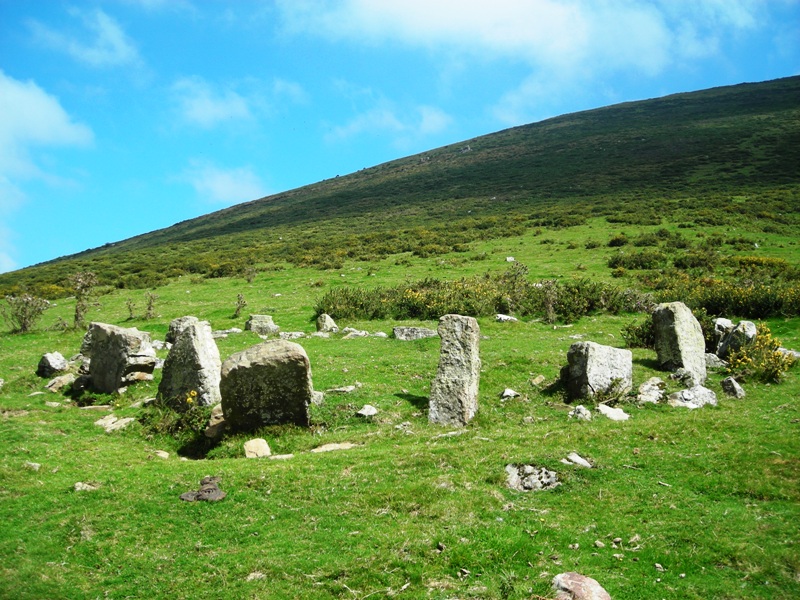
Firstly in Navarra, near the start of the route in north-eastern Spain is this lovely stone circle or cromlech in a mountainous location - it’s called Xantxoten-Harria
Moving over to Northern Portugal, but still close to the Spanish border, in the distrito of Bragança is Mamoa de Donai. This stands in the Place of Devesa, close to the town of Donai. Excavated at the end of the 19th century, and dated to the Copper Age, It has a tumulus or mound covering the burial chamber.
 Nearby were found four polished stone axes, and various flint tools, which are on display in the Museu da Sociedade Martins Sarmento, in Guimarães, Portugal
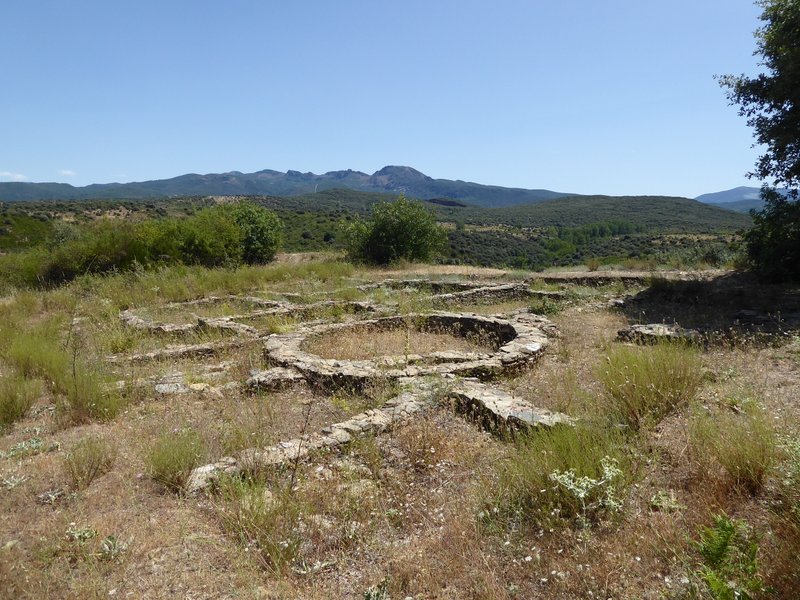
 Another site along the route is the Castrolin de San Juan de Paluezas (pictured right) - an Iron Age Castro from the Castreña Culture, situated in the village of Castilla y León. The structure is still clearly laid out - different rooms can be made out - what would seem to be a living area, a hallway, a storage area and a work area. The walls are of stone, and would have had a wooden and thatch roof.
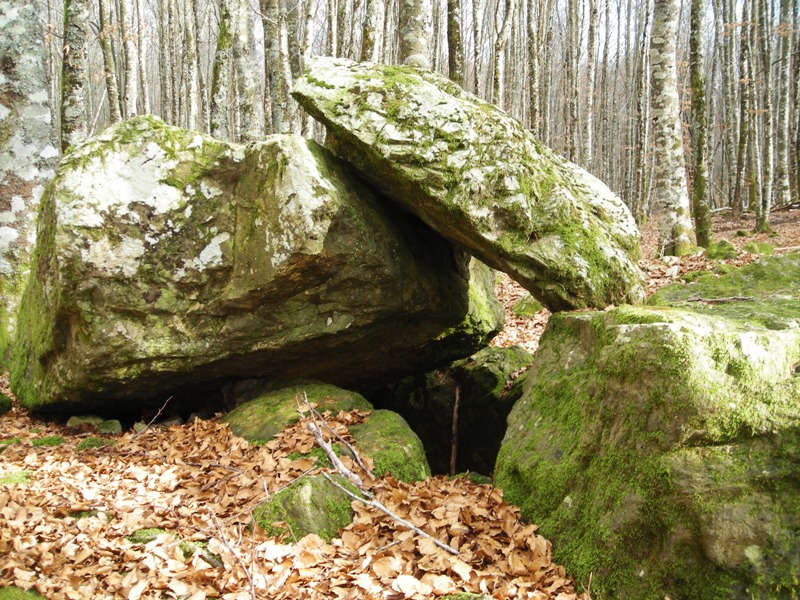 The Arzilo Dolmen (pictured left) is a beautiful, if rather tumbledown dolmen close to the village of Erro.
Moving finally to the city of Santiago de Compostela, where the end of the Camino de Santiago pilgrimage is the the shrine of the apostle Saint James the Great in the extraordinary cathedral of the same name. Tradition has it that the remains of the saint are buried here. Looking around the town, there are a number of little-known rock art sites to explore close by - one in the city itself, sharing the location with a rather overgrown Iron Age fort, the Castriño de Conxo.
 Here, a large petroglyph panel includes carvings of several daggers and swords, along with an anthropomorphic figure wearing what appear to a headdress and feathers on its arm.
See the nearby sites list from that page to find the other rather lovely examples of rock art up in the nearby hills.
With many thanks to our many contributors for the assistance with this article on things to see along the camino de Santiago routes, including santiagoways.com, Irundarra, and Armand.


 We would like to know more about this location. Please feel free to add a brief description and any relevant information in your own language.
 Wir möchten mehr über diese Stätte erfahren. Bitte zögern Sie nicht, eine kurze Beschreibung und relevante Informationen in Deutsch hinzuzufügen.
 Nous aimerions en savoir encore un peu sur les lieux. S'il vous plaît n'hesitez pas à ajouter une courte description et tous les renseignements pertinents dans votre propre langue.
 Quisieramos informarnos un poco más de las lugares. No dude en añadir una breve descripción y otros datos relevantes en su propio idioma.