


Protonuraghi - the oldest nuragic constructions of Bronze Age Sardinia
Submitted by SolarMegalith on Wednesday, 24 November 2010 Page Views: 5929
Neolithic and Bronze AgeCountry: Italy Region: Sardinia (Sardegna) Type: Broch or NuragheInternal Links:


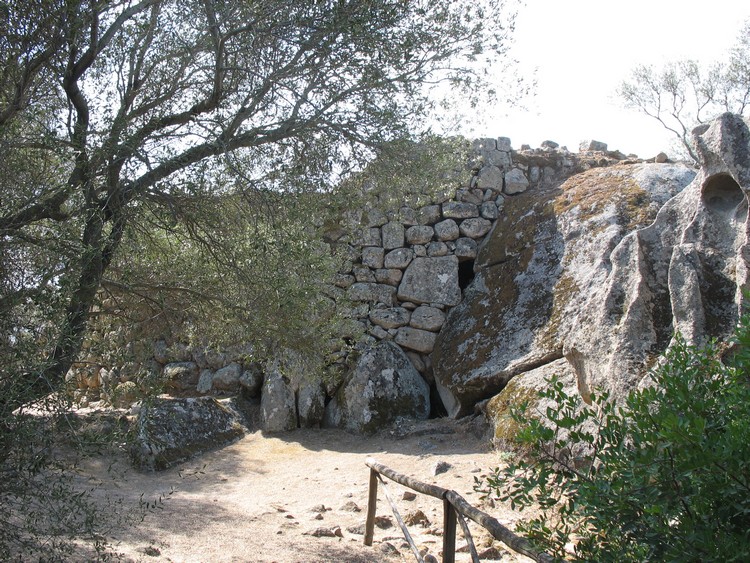
They don’t have the main chamber but a corridor leading through the whole building to all the chambers (sometimes just niches). The roof, usually flat, is available from the main corridor as well. Protonuraghi are also considerably lower then classic tholos-style nuraghi, they are rarely higher then 10 m. However, because of their plan, they usually cover a bigger area then tholos-style nuraghi (245 square meters average). About 300 protonuraghi are known nowadays, however some of the poorly preserved classic nuraghi might appear to be protonuraghi in the future. Among the most important known corridor-style nuraghi there are Agnu (Calangianus), Fronte Mola (Thiesi), Albucciu (Arzachena), Frenugarzu, Cubas (Dualchi) and Castrulongu (Lodine).
Age of the protonuraghi was a field of a debate for long years. Early theories by Giovanni Lilliu, one of the most famous Sardinian archaeologists, suggested that they were late and degenerated form of the nuragic towers. First excavations seemed to support that theory, for example Punic pottery was found in Protonuraghe Albucciu. Lilliu also cited Pausanias who described Roman campaign in 231 BC and mentioned that native inhabitants of Sardinia were hiding and attacking from underground constructions or caves. Protonuraghi seem to fit that description perfectly, as they are often build with use of rock as natural fortifications (especially visible at Protonuraghe Albucciu). However Contu, who ran excavations in Protonuraghe Peppe Gallu, opposed Lilliu’s theory. Now, after the key excavations at Protonuraghe Brunku Madugui (surrounded by later nuragic settlement), we can say without doubt that protonuraghi were one of the earliest nuragic constructions and are dated for Early Bronze Age. However, there is evidence that some of them were used also later, probably for specific purposes, until Iron Age and even colonial period.
How important were protonuraghi for societies of prehistoric Sardinia ? They were probably farmsteads for single families, as their living area wasn’t big (for ex. less then 50 square meters for Protonuraghe Brunku Madugui, one of the few excavated ones, in other ones even smaller). Most of the excavated protonuraghi brought such finds as cooking vessels, bowls, stone tools, supporting idea of these constructions being rather farmsteads then centers of tribal leadership.
For megalith hunters I especially recommend visiting Protonuraghe Fronte Mola near Thiesi. It’s located on a rock outcrop surrounded by the forest and very well preserved. It’s plan with main corridor and side chambers in perfectly visible, as well as passage to the roof. Another protonuraghe which is worth visiting is Albucciu near Arzachena, which is perfect example of protonuraghe constructed on irregular plan with use of natural rocks as part of defense system. It’s located near the road from Olbia to Arzachena, with nuragic temple of Malchittu and Tomba di Giganti Moru on the other side.
Bibliography:
Guido M. 1963. Sardinia. London: Thames and Hudson
Melis P. 2003. The Nuragic Civilization. Sassari: Carlo Delfino editore
Webster G. 1996. A Prehistory of Sardinia 2300 – 500 BC. Sheffield: Sheffield Academic Press


 We would like to know more about this location. Please feel free to add a brief description and any relevant information in your own language.
 Wir möchten mehr über diese Stätte erfahren. Bitte zögern Sie nicht, eine kurze Beschreibung und relevante Informationen in Deutsch hinzuzufügen.
 Nous aimerions en savoir encore un peu sur les lieux. S'il vous plaît n'hesitez pas à ajouter une courte description et tous les renseignements pertinents dans votre propre langue.
 Quisieramos informarnos un poco más de las lugares. No dude en añadir una breve descripción y otros datos relevantes en su propio idioma.