

Masterpieces: Art and East Anglia Exhibition
Submitted by Andy B on Tuesday, 06 August 2013 Page Views: 4778
MuseumsCountry: England County: Norfolk Type: MuseumInternal Links:


The exhibition is the centrepiece of the 50th anniversary celebrations of the University of East Anglia and marks the unveiling of the newly-refurbished galleries at the Sainsbury Centre for Visual Arts in Norwich.
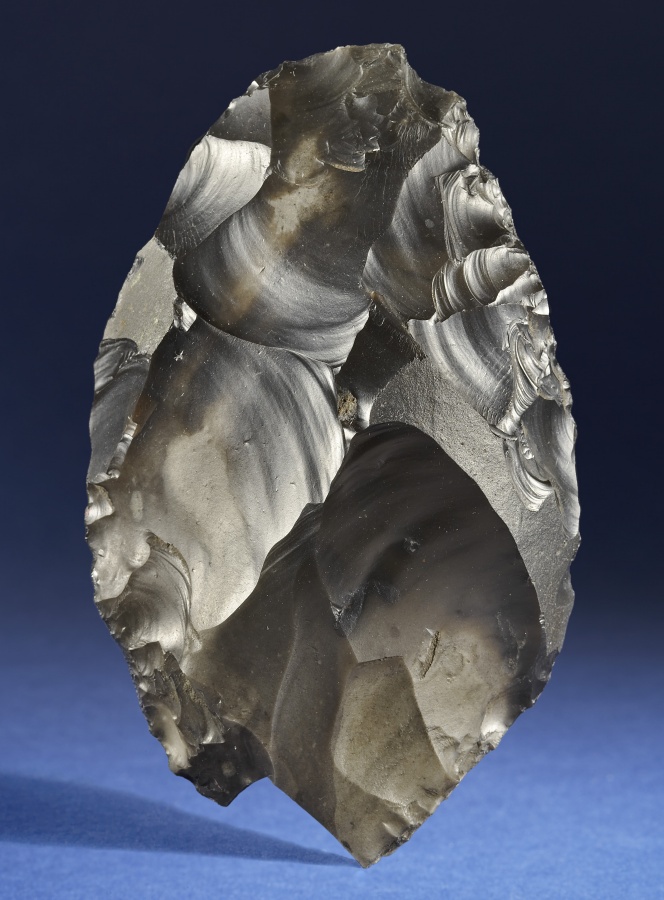
The works selected are very diverse, ranging from paintings, sculpture, architecture, ceramics, glass and jewellery to photography, graphic design, fashion, costume and textile design. A flint handaxe worked at least 700,000 years ago will sit alongside an ironstone pebble from the same Norfolk beach carved into a reclining figure by Henry Moore in 1930; striking pre-war posters and prints will hang in galleries with works by John Sell Cotman and John Constable; a masterly Thomas Gainsborough family portrait will be shown alongside haunting images of Edwardian fishermen by Olive Edis.
Sculptures by Barbara Hepworth and Elisabeth Frink will be interspersed with sculptural works from the Classical, Medieval and Renaissance periods; Ana Maria Pacheco’s mythical party in a gigantic boat will be moored in the East Gallery alongside a collection of gold discs owned by Alan Partridge, whilst the iconic Lotus 72 Formula 1 car leads the West End of the exhibition.
The Happisburgh flint handaxe, dating from around 700,000 BC, is the oldest object in the exhibition and its starting point. Unearthed in 2000 on Happisburgh beach, Norfolk, its find has radically altered historians’ understanding of our past, revealing that Britain was inhabited by humans 100,000 years earlier than previously thought.
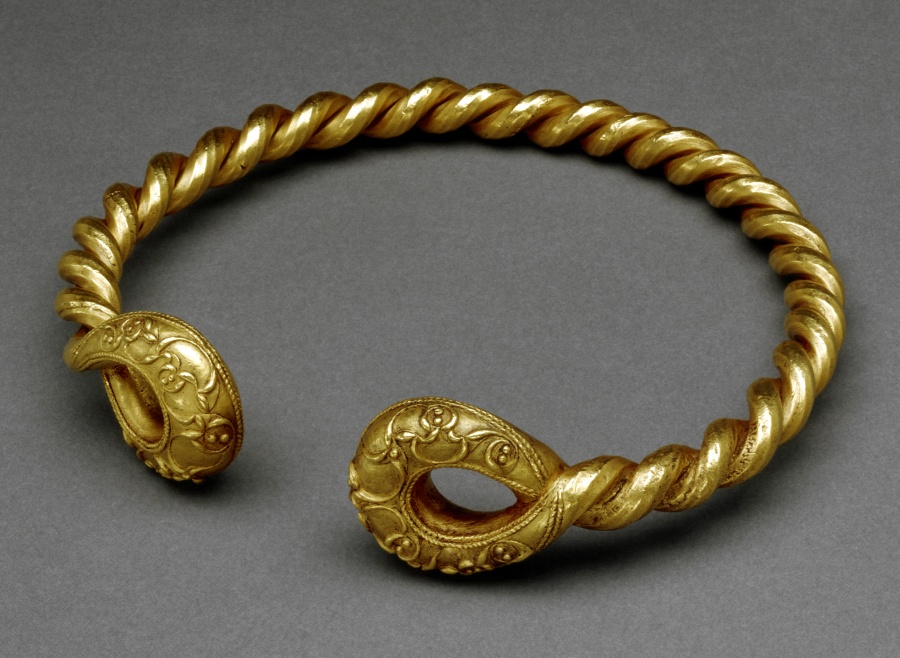
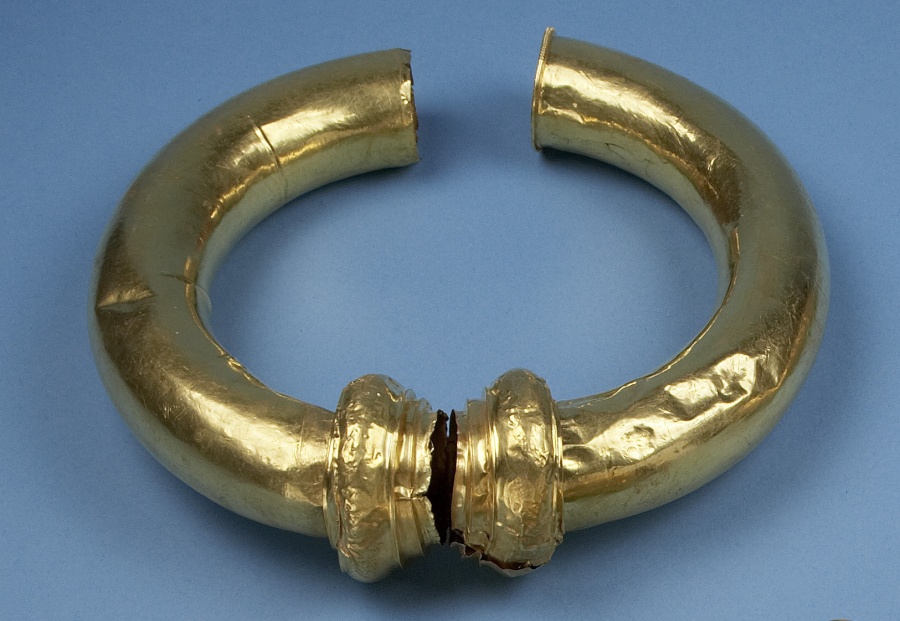
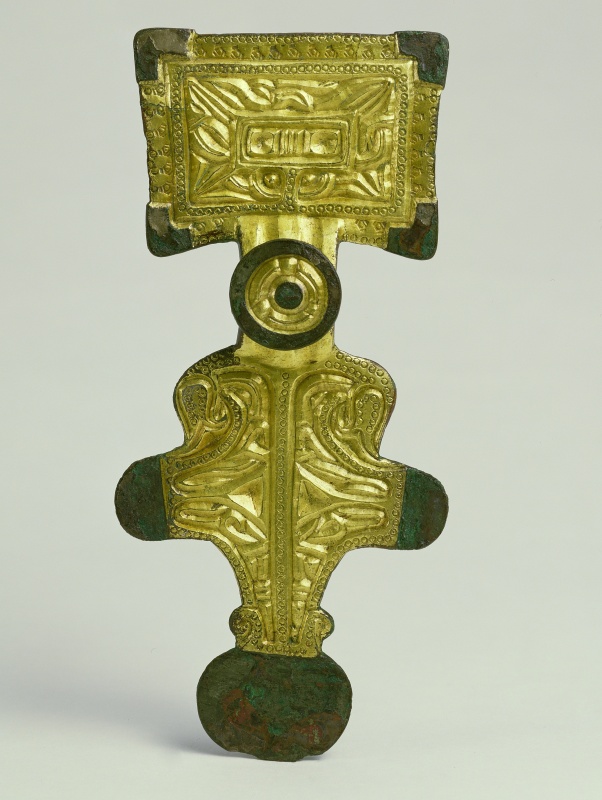
Norfolk and Suffolk have a rich heritage of sites where treasures, hoards and antiquities have been discovered. One of these remarkable finds is the striking life-size bronze head of the Roman emperor Claudius (r. 41-54 AD). The conquest of Britain provided a military triumph for Claudius who had been perceived as a retiring, scholarly man rather than a leader. Fished from the River Alde, near Saxmundham, Suffolk, in 1907, the head is probably part of a statue taken from the Temple of Claudius, in Colchester, by Boudica and the Iceni tribe when they sacked the Roman capital in 60 AD.
East Anglia has always enjoyed strong links with the monarchy and a number of works reflect this special relationship such as the silver, gold and bejewelled King John Cup, c. 1325. This King’s Lynn treasure is the oldest and finest specimen of English secular medieval cups, though it dates from more than a century after the crown jewels of King John were claimed by a Wash tide when en route to Lynn.
Portraits of Norfolk and Suffolk people feature prominently in the exhibition. Over the centuries, the country houses in the region have played host to royalty, nobility and politicians and this exalted social scene is embodied in a wonderful society portrait of Sybil Sassoon, The Countess of Rocksavage, painted in 1922 by Sir John Singer Sargent (1856-1925) – to be exhibited alongside the fabulous Worth dress in which she is posing.
The other end of the social spectrum is vividly captured in the photographs by the pioneering north Norfolk photographer, Olive Edis (1876-1955), recently acquired by Cromer Museum. Gilbert “Leather” Rook is just one of the stunning sepia images of Cromer and Sheringham fishermen included in the exhibition.
No exhibition of East Anglian masterpieces would be complete without works by masters of the Norwich School of painters which, founded in 1803, was the first provincial art movement in Britain. John Sell Cotman (1782-1842), a leading member, is represented by probably the finest surviving watercolour of a Norfolk scene, Storm on Yarmouth Beach, 1831, which has been chosen for the exhibition by Norfolk Lord Lieutenant, Richard Jewson. It will be shown next to a great oil painting of Yarmouth from the same year by J. M. W. Turner (1775-1851), loaned by the Victoria and Albert Museum.
The largest exhibit will be The Longest Journey by the Brazilian-born artist Ana Maria Pacheco (b. 1943), who was Head of Fine Art at the Norwich School of Art (now NUA) from 1985 to 1989. The Longest Journey is made from a 30-foot fishing boat, the Valentina, which Ana found in 1994 at Wroxham on the Norfolk Broads. The huge, disturbing figures on board have been chain-sawn, hewn, blow-torched, sanded and painted into existence. The Longest Journey has a rich, serious, literary and intellectual frame of reference and its title is from The Ship of Death, one of D. H. Lawrence’s most powerful poems, written when he was dying: ‘Build then the ship of death, for you must take the longest journey, to oblivion’.
A faster journey would definitely be taken in the Lotus 72, a Formula One car designed by Colin Chapman and Maurice Philippe of Lotus for the 1970 season, which was one of the most remarkable and successful designs in F1 history. The car resembled a wedge on wheels inspired by the earlier Lotus 56 gas-turbine model. Driven by Jochen Rindt, it won the Dutch, French, British and German Grands Prix in quick succession. In 1966 Lotus moved to a purpose-built factory in Hethel, Norfolk, a former US Air Force base.
The Sainsbury Centre for Visual Arts is the art gallery and museum situated on the campus of the University of East Anglia (UEA) in Norwich. One of Britain’s leading institutions for the study of the arts of all nations, the gallery was placed in the UK’s top ten cultural attractions by the Independent on Sunday. The Sainsbury Collection was gifted by Sir Robert and Lady Lisa Sainsbury to the University in 1973, and includes the most important collection of ceramics by Hans Coper, the largest collection of early works by Francis Bacon in Northern Europe, multiple works by artists such as Henry Moore, Giacometti, Picasso, Jacob Epstein and Lucie Rie.
The Sainsbury Centre was the first public building designed by Norman Foster, a world-renowned example of 20th century architecture, and was awarded Grade II Listed status at the beginning of 2013.
[PS. Did you spot the one I made up (second to last in the fourth paragraph) to check you were paying attention - MegP Ed]
Note: We have a special preview of some of the artefacts brought together for this landmark exhibition


 We would like to know more about this location. Please feel free to add a brief description and any relevant information in your own language.
 Wir möchten mehr über diese Stätte erfahren. Bitte zögern Sie nicht, eine kurze Beschreibung und relevante Informationen in Deutsch hinzuzufügen.
 Nous aimerions en savoir encore un peu sur les lieux. S'il vous plaît n'hesitez pas à ajouter une courte description et tous les renseignements pertinents dans votre propre langue.
 Quisieramos informarnos un poco más de las lugares. No dude en añadir una breve descripción y otros datos relevantes en su propio idioma.