

Gone – the secrets of a 4,000-year-old tomb
Submitted by coldrum on Friday, 02 October 2009 Page Views: 1628
DigsIT WAS like the Raiders of the Lost Ark – at least it was as close as the Westcountry gets to ancient mysteries.Very carefully in yesterday's sunshine – in the wild, dark bogs of Exmoor – a top-flight team of archaeologists prepared to enter a tomb which had not been opened for the best part of 4,000 years.
It was only a couple of feet wide and filled with the soils of centuries – but, despite its smallness, the excitement mounted as trowels went in. No-one could possibly know what was there.
As it turned out – nothing. Not a single bone or bit of bracelet – no cremation urn or any other ancient piece of ephemera.
Not that archaeologists from Bristol and Leicester Universities seemed too disappointed. When welcoming the WMN to be the first newspaper ever to be present at the opening of a Bronze Age tomb, they warned us it might be empty.
"It could have been a Victorian vicar who fancied himself as an archaeologist, or someone may have helped themselves to whatever was inside just after it was built," shrugged Dr Mark Gillings who, as senior lecturer in archaeology at the University of Leicester, is in charge of the dig near Simonsbath.
It was the first time a stone cist had been opened on Exmoor for more than 100 years – but the special occasion seemed lost on the dozen or so archaeologists present.
They were too busy being excited when a tiny flint was found. "This allows us to put the story here into a real time frame," grinned Dr Gillings, examining the flint tool made some 3,500 years ago.
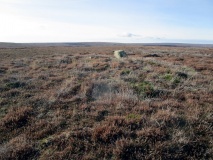
The Exmoor dig is a fascinating work that might revolutionise the way we look at our oldest Westcountry forebears. To cut a long story short, the archaeologists were invited on to moorland owned by the National Park Authority because a number of extremely small standing stones had been discovered in its bogs.
Dr Gillings is used to bigger finds. He has recently been working at Avebury in Wiltshire where the largest stone discovered weighed in at 100 tonnes.
"We though 'Blimey' when we first saw these," said Dr Gillings, pointing at a 12in-high baby monolith.
"But it was when we started asking 'Why are these stones here and what might lie between them?' that we really made discoveries. Sometimes tiny can open more secrets than big."
What the team has discovered is the possibility that entire field systems once existed in this lonely place – even ancient dwellings or hamlets. In short, it seems Exmoor's most lonely wilds were once quite busy places.
Members of the team still have no firm answers as to what went on here 3,500 years ago, but they are fairly certain it was a good deal more than previously thought. Now they are looking forward to returning to Exmoor if more funding can be found.
thisiswesternmorningnews.


 We would like to know more about this location. Please feel free to add a brief description and any relevant information in your own language.
 Wir möchten mehr über diese Stätte erfahren. Bitte zögern Sie nicht, eine kurze Beschreibung und relevante Informationen in Deutsch hinzuzufügen.
 Nous aimerions en savoir encore un peu sur les lieux. S'il vous plaît n'hesitez pas à ajouter une courte description et tous les renseignements pertinents dans votre propre langue.
 Quisieramos informarnos un poco más de las lugares. No dude en añadir una breve descripción y otros datos relevantes en su propio idioma.