


Found an Ancient Site You Want to Visit? Check Access Weather, and Terrain Firs
Submitted by Andy_B on Monday, 21 September 2026 Page Views: 20
Resources
That is why researching history should only be part of the preparation. Access, weather, terrain, opening hours, transportation, and what facilities are actually available can determine whether the visit becomes a highlight of the trip or an exhausting day spent wishing you had planned differently.
A little preparation does not remove the sense of discovery. It simply makes it easier to spend the day paying attention to the site rather than worrying about sore feet, missing water, or an unexpectedly difficult route.
Pack for the Day You Will Actually Have
Ancient sites can involve several hours outside, so pack around the conditions rather than around how short the visit appears on a map.Comfortable shoes should come first, followed by water, sun protection, and a small bag that will not become irritating after an hour. Travelers who like keeping beauty essentials with them can also bring a compact kit with familiar products from places such as https://www.plapro.com/ rather than carrying a large collection of items that will spend the entire day in the bag.
Keep everything else minimal. A portable charger, sunglasses, tissues, and any essential personal items are usually more useful than filling a backpack with things that might never leave it.
Remember that every extra item has to be carried over whatever terrain the site provides. When stairs, hills, and long walking routes are involved, traveling light becomes noticeably more valuable.
Check What “Accessible” Actually Means
A website describing a site as accessible does not necessarily mean every part of it is easy to reach.Some archaeological locations have modern visitor centers and paved routes near the entrance but become much rougher farther inside. Others involve steep stone staircases, gravel tracks, narrow paths, or considerable elevation changes.
Look for practical information before arriving. How far is the parking area from the main ruins? Is there a shuttle? Are major sections connected by paved paths? Are there places to sit?
Travelers with limited mobility should pay particular attention to which areas are genuinely reachable rather than assuming access information applies to the entire complex.
Even fully mobile visitors benefit from knowing the distances involved. A site described as a two-hour attraction may become a half-day experience once walking between individual monuments is included.
Look at the Weather, Not Just the Temperature
A forecast of 80°F or 27°C can sound perfectly manageable until the site turns out to be completely exposed to direct sun.Shade can be limited around ruins, particularly in open archaeological landscapes where modern structures are intentionally kept away from historic features. Humidity, wind, and elevation can also make the same temperature feel very different.
Check the hourly forecast before leaving and consider when conditions will be most comfortable. Arriving near opening time can provide cooler temperatures and smaller crowds at many popular sites.
Rain creates different problems. Smooth stone can become slippery, unpaved paths may turn muddy, and exposed hilltop sites can feel dramatically less comfortable during poor weather.
Do not assume that light rain means the visit will be identical with an umbrella. Terrain often determines how much weather matters.
Research the Terrain Before Choosing Your Shoes
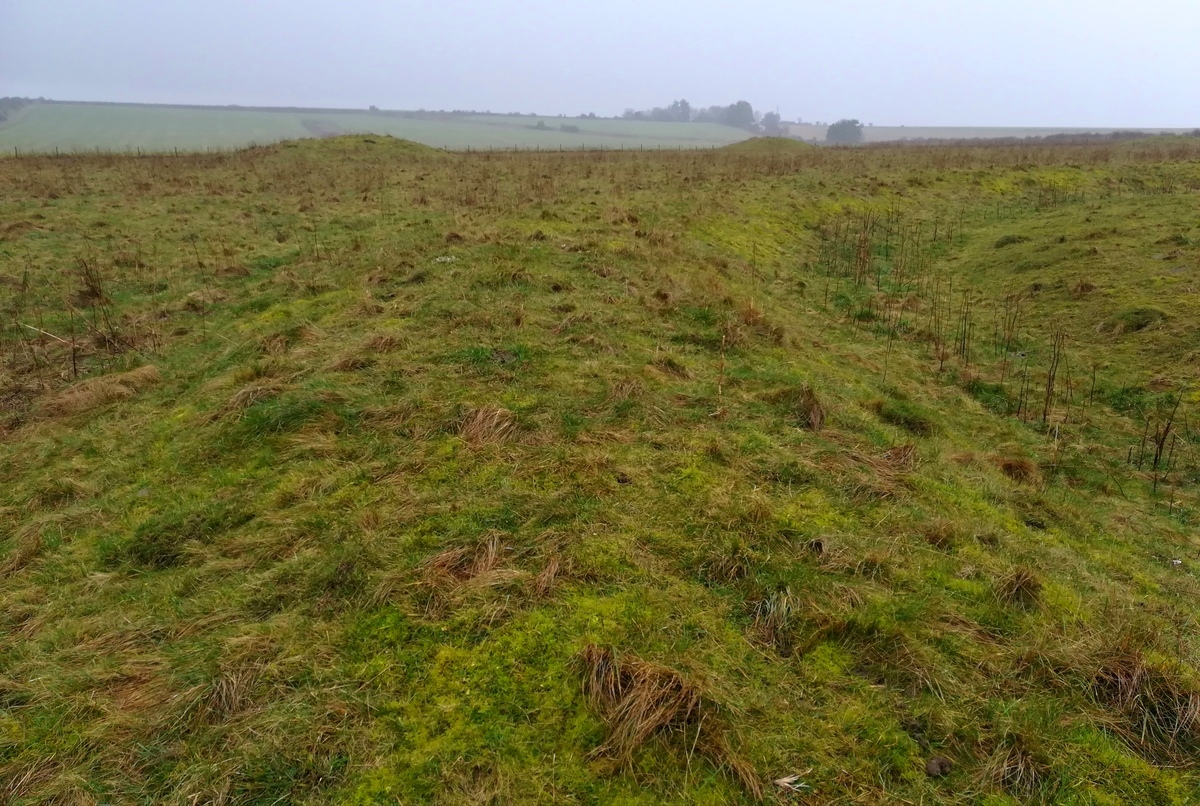
Oakley Down Barrows in the heavy rain. Photo by Bladup
Ancient streets were not designed around modern expectations of comfortable walking.
Cobblestones, broken paving, loose gravel, uneven steps, dirt trails, and polished stone are common. Shoes that feel perfectly comfortable while walking through a city can become much less pleasant after several hours on irregular ground.
Choose footwear that has already been worn enough to know it is comfortable. A major sightseeing day is rarely the right time to test brand-new shoes.
Grip matters as much as cushioning. This becomes particularly important around hillside ruins, stair-heavy complexes, and locations where rain is possible.
If the visit is part of a longer trip, alternating footwear can also help prevent the same areas of the feet from taking pressure day after day.
The archaeological site may be the reason for the excursion, but foot discomfort can quickly become the thing you remember most.
Find Out What Facilities Exist Inside
Do not assume a major tourist attraction will have cafés, water stations, or restrooms throughout the site.Some archaeological complexes have excellent visitor infrastructure near the entrance and virtually nothing once visitors begin exploring. Others allow re-entry, while leaving some means buying another ticket or ending the visit altogether.
Check the basics beforehand. Are there toilets inside? Can water be purchased? Is food available? Are there shaded rest areas? Can you refill a bottle?
If facilities are limited, carry enough water and a small snack to avoid cutting the visit short simply because hunger or thirst becomes distracting.
This becomes especially important when traveling with children or older family members. A route that is manageable for one traveler may require more frequent breaks for someone else.
Planning those stops does not make the experience less adventurous. It usually makes the group much happier.
Understand the Route Before You Start Walking
Large ancient sites can contain dozens of structures spread across several kilometers.Trying to see everything without a plan often leads to spending too much energy early and rushing through the most interesting section at the end.
Identify the features you care about most before entering. If there is a famous temple, amphitheater, palace, tomb, or viewpoint, understand roughly where it sits within the complex.
Then build the rest of the visit around those priorities.
This approach is particularly useful when a site has multiple loops or optional climbs. If energy remains high, additional areas can always be added. It is much more frustrating to exhaust yourself on secondary ruins and discover that the highlight requires another steep thirty-minute walk.
A downloaded map or screenshot can also be useful where mobile reception is unreliable.
Leave Enough Energy for the Return Journey
Reaching the most distant part of an ancient site is only half the walk.Travelers frequently underestimate this because exploring outward feels exciting. The return journey happens when the heat is stronger, water is lower, and legs are already tired.
Keep track of time and distance rather than continuing indefinitely because there is always one more structure ahead. If transport back to town runs on a schedule, allow considerably more time than the estimated walking duration.
The same principle applies when driving. Several hours of walking in heat followed by a long drive can be more tiring than expected.
Ancient sites reward curiosity, but there is no prize for leaving completely exhausted.
The best visit is one that allows enough time to stop, look closely, understand what is there, and still enjoy the rest of the day. Check the route, weather, terrain, and facilities before setting out, then leave enough flexibility to slow down once you arrive.
The ruins have already been waiting for centuries. There is no reason to rush through them.