

Book Review: A History of Aerial Photography and Archaeology
Submitted by JohnLindsay on Thursday, 01 March 2012 Page Views: 3939
Reviews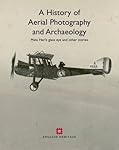 English Heritage has published a posh volume by Martyn Barber with lots of coloured photographs. The first half of the book tells the story of the balloonist-adventurers who first experienced the landscape from above and who pioneered the use of the airborne camera.
 The first aerial photographs of an archaeological monument in the UK were taken when a military balloon rose above Stonehenge in September 1906 however by that point aerial photography was already almost half a century old, as and people had been ballooning since the late 18th century.
The second half begins with the First World War, explaining the development of aerial survey on the Western Front and the subsequent adoption of these survey techniques by archaeologists.
Aerial archaeology got fully going in the 1920s by people such as OGS Crawford. Early discoveries such as prehistoric field systems and the path of the Stonehenge Avenue showed how that an airborne camera could capture traces of things no longer visible on the ground.
The chances of anyone being an expert in photography, archaeology, manned flight and more is pretty slight, so you should gain something of interest from this book.
There is a lot of new technology stuff to add to the mix, on LIDAR for example. The index worked well for this, and I found a good description so now I know something I didn't know previously.
I'd have liked something on the archiving and documentation - where and how they are stored, catalogued, and digitised. I might simply have missed among the material, but the complexity of the photographic record tells me I probably haven't. The photographic historic record must be particularly valuable, in particular for sites which have now been destroyed.
My particular fascination at the moment is the linearity of barrows, the Six Hills in Stevenage for example, or the Five Knolls at Dunstable. Aerial photography shows this up well.
We do now have Google maps to add to the resource [and don't forget Bing Maps as well - MegP Ed] but this account of the history of aerial photography makes a good read and you don't need to be an expert to follow it.
Review by John Lindsay
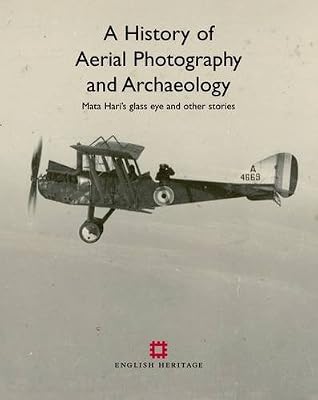 A History of Aerial Photography and Archaeology: Mata Hari's Glass Eye and Other Stories by
Martyn Barber is published by English Heritage, RRP £25.
A History of Aerial Photography and Archaeology: Mata Hari's Glass Eye and Other Stories by
Martyn Barber is published by English Heritage, RRP £25.Hardback, 304 pages
ISBN: 1848020368
Available from Amazon.co.uk


 We would like to know more about this location. Please feel free to add a brief description and any relevant information in your own language.
 Wir möchten mehr über diese Stätte erfahren. Bitte zögern Sie nicht, eine kurze Beschreibung und relevante Informationen in Deutsch hinzuzufügen.
 Nous aimerions en savoir encore un peu sur les lieux. S'il vous plaît n'hesitez pas à ajouter une courte description et tous les renseignements pertinents dans votre propre langue.
 Quisieramos informarnos un poco más de las lugares. No dude en añadir una breve descripción y otros datos relevantes en su propio idioma.