

<< News >> Amazon was not all manufactured landscape pre-Europeans contact, scientists say
Submitted by coldrum on Monday, 18 June 2012 Page Views: 2572
Pre-Columbian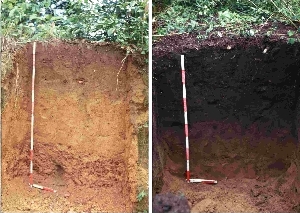
"Drawing on questionable assumptions, some scholars argue that modern Amazonian biodiversity is more a result of widespread, intensive prehistoric human occupation of the forests than of natural evolutionary and ecological processes," said co-author Piperno, senior scientist (Smithsonian's National Museum of Natural History, Smithsonian Tropical Research Institute.) "Climatologists who accept the manufactured landscapes idea may incorporate wholesale prehistoric Amazonian deforestation, widespread fires and carbon emissions into their models of what caused past shifts in atmospheric carbon dioxide and methane levels. But we need much more evidence from Amazonia before anything like that can be assumed."
This report paints a very different picture of the past. Crystal McMichael (Florida Institute of Technology,) first author of the paper, collected 247 soil samples from 55 sites across the Peruvian and Brazilian Amazon, including little-studied interfluvial forests, distant from major water courses. A lack of charcoal in the samples told the authors that fires, almost always caused by humans in the humid tropics, were few and of low intensity and did not result in much structural damage to the forests. Fragments of silica left behind when vegetation decays, called phytoliths, indicated that crop species and plants typical of human disturbance were scarce. Forms of intensive forest management such as groves of palm trees were not indicated by the phytolith records either.
Environmentalists fear that changes to the country's Forest Code, which mandates how much forest a landowner is required to maintain, could reverse progress in reducing deforestation, but the global consequences of such a policy remain unclear.
Said Piperno, "Hopefully, our data will help to place these questions into a more rigorous empirical context."
More information: "Sparse Pre-Columbian Human Habitation in Western Amazonia," by C.H. McMichael et al., Science, 2012.
For more, see phys.org/news.
Note: New evidence challenges the idea that the Amazon basin was densely inhabited before European arrival.


 We would like to know more about this location. Please feel free to add a brief description and any relevant information in your own language.
 Wir möchten mehr über diese Stätte erfahren. Bitte zögern Sie nicht, eine kurze Beschreibung und relevante Informationen in Deutsch hinzuzufügen.
 Nous aimerions en savoir encore un peu sur les lieux. S'il vous plaît n'hesitez pas à ajouter une courte description et tous les renseignements pertinents dans votre propre langue.
 Quisieramos informarnos un poco más de las lugares. No dude en añadir una breve descripción y otros datos relevantes en su propio idioma.