Featured: Stonehenge Tea Towels - Worldwide delivery

 Stonehenge Tea Towels - Worldwide delivery

Sacred Stones in Indian Civilization: with Special Reference to Megaliths

Sacred Stones in Indian Civilization: with Special Reference to Megaliths

Login

Register here - as a registered user you get more features and fewer ads.

Who's Online

There are currently, 3271 guests and 1 members online.

Sponsors

<< Other Photo Pages >> Nine Mile Canyon - Rock Art in United States in Utah

Submitted by bat400 on Wednesday, 26 August 2015  Page Views: 19201

Rock ArtSite Name: Nine Mile Canyon
Country: United States
NOTE: This site is 79.06 km away from the location you searched for.

State: Utah Type: Rock Art
Nearest Town: Price, Utah
Latitude: 39.811800N  Longitude: 110.2517W
Condition:
5Perfect
4Almost Perfect
3Reasonable but with some damage
2Ruined but still recognisable as an ancient site
1Pretty much destroyed, possibly visible as crop marks
0No data.
-1Completely destroyed
no data Ambience:
5Superb
4Good
3Ordinary
2Not Good
1Awful
0No data.
no data Access:
5Can be driven to, probably with disabled access
4Short walk on a footpath
3Requiring a bit more of a walk
2A long walk
1In the middle of nowhere, a nightmare to find
0No data.
4 Accuracy:
5co-ordinates taken by GPS or official recorded co-ordinates
4co-ordinates scaled from a detailed map
3co-ordinates scaled from a bad map
2co-ordinates of the nearest village
1co-ordinates of the nearest town
0no data
4

Internal Links:
External Links:

Nine Mile Canyon
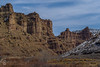
Nine Mile Canyon submitted by bat400_photo : Rock art panel in Nine Mile Canyon, Utah, showing Archaic and Fremont petroglyphs (including the Fremont "pregnant buffalo"), later Ute carving and painting, and a modern-era signature. This archaeological site, identified by the Smithsonian trinomial code 42Cb974, is listed on the National Register of Historic Places. 10 November 2007 Author Tricia Simpson This file is licensed under... (Vote or comment on this photo)
Rock Art in Duchesne and Carbon Counties, Utah.
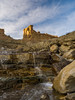
Described as the "World's Longest Art Gallery", Nine Mile Canyon is known for its spectacular and accessible petroglyphs. The rock art dates back to the Fremont Culture and up into the contact period. An awe inspiring settling, the canyon is actually over 40 miles long and a trip through it on the gravel road will cover 100 miles without public services.

The land is held by a variety of state and federal authorities. A picnic area and some interpretive signs have been placed along the road. A great deal of rock art can be seen easily with a short walk from the roadway, although sites occur throughout the canyon. Many panels have never been documented.

The accessibility of the all-weather road and the shared "ownership" has helped to threaten the canyon from frequent of traffic, much of it industrial, as well as thoughtless tourists. Most recently, natural gas drilling plans pose potential threats.

More information can be found at Nine Mile Canyon Coalition, the website of preservationists who have been credited with preventing vandalism and maintaining some of the simple amenities used by the public, as well as educating the public on threats to the canyon's prehistoric art.

Note: Nine Mile Canyon rock art vandalism case resolved with fine and planned restoration, see the latest comment on our page
You may be viewing yesterday's version of this page. To see the most up to date information please register for a free account.


Do not use the above information on other web sites or publications without permission of the contributor.

Nearby Images from Flickr
84 Nine Mile Canyon Rock Art 2013 1P1010546Site 51
20190325-180715
20190325-174222
20190325-174210
20190325-174208
20190325-141603

The above images may not be of the site on this page, but were taken nearby. They are loaded from Flickr so please click on them for image credits.


Click here to see more info for this site

Nearby sites

Click here to view sites on an interactive map of the area

Key: Red: member's photo, Blue: 3rd party photo, Yellow: other image, Green: no photo - please go there and take one, Grey: site destroyed

Download sites to:
KML (Google Earth)
GPX (GPS waypoints)
CSV (Garmin/Navman)
CSV (Excel)

To unlock full downloads you need to sign up as a Contributory Member. Otherwise downloads are limited to 50 sites.


Turn off the page maps and other distractions

Nearby sites listing. In the following links * = Image available
 43.7km S 174° Range Creek Ancient Village or Settlement
 97.0km NNE 32° McConkie Ranch Petroglyphs* Rock Art
 98.3km S 189° Black Dragon Canyon* Rock Art
 99.8km SSE 152° Sego Canyon Rock Art* Rock Art
 99.9km ESE 109° Book Cliffs Rock Art
 124.5km SSE 154° Dark Angel Monolith Natural Stone / Erratic / Other Natural Feature
 124.6km SSE 154° Dark Angel Petroglyphs B Rock Art
 124.6km SSE 154° Dark Angel Pictographs A Rock Art
 126.4km SSE 154° Landscape Arch* Natural Stone / Erratic / Other Natural Feature
 127.3km E 80° Canyon Pintado National Historic District* Rock Art
 129.7km SW 219° Rochester Rock Art Panel* Rock Art
 135.0km NE 52° Dinosaur National Monument* Rock Art
 135.1km SSE 152° Wolf Ranch Petroglyphs* Rock Art
 135.3km SSE 151° Delicate Arch* Natural Stone / Erratic / Other Natural Feature
 136.3km SSE 164° Bartlett Pictographs Rock Art
 137.0km SSE 154° Balanced Rock Arches* Natural Stone / Erratic / Other Natural Feature
 137.1km SSE 160° Intestine Man rock paintings* Rock Art
 138.8km SSE 154° Double Arch* Natural Stone / Erratic / Other Natural Feature
 139.7km SSE 153° North Window Arch* Natural Stone / Erratic / Other Natural Feature
 145.9km SSE 156° Courthouse Wash Rock Art* Rock Art
 150.1km S 178° Horseshoe Gallery* Rock Art
 150.2km S 178° High Gallery Rock Art
 150.8km S 178° Alcove Gallery Rock Art
 151.1km SSE 158° Moonflower Petroglyphs* Rock Art
 151.7km SSE 158° Potash Road petroglyphs* Rock Art
View more nearby sites and additional images

<< Bucklow Hill

Kandarodai ancient settlement >>

Please add your thoughts on this site

Earthen Long Barrows, Field

Earthen Long Barrows, Field

Sponsors

Latest Visit Logs

  • Wellhill Copse Barrow
    “Decent condition, good site.”
    by 123456789jeagles117 · 27 Jun 2026
  • Knudsby Jættestue
    “Middle of a field, Tot onze schouders in 't gras Op handen voeten in het hol vd grafheuvel!”
    by DeClercqErika · 27 Jun 2026
  • Ring of Brodgar
    “Early morning jaunt to get photos without humans.”
    by DeannaMcC · 26 Jun 2026
  • Pecos National Historical Park
    “This is a historical park run by the National Park Service. It comprises extensive Ancestral Pueblo …”
    by stonetracker · 24 Jun 2026
  • Cromeleque de Vale Maria do Meio
    “the site was easy to reach from Evora, signs on the street, and even a parking space right in front …”
    by ka · 23 Jun 2026

"Nine Mile Canyon" | Login/Create an Account | 12 News and Comments
  
Go back to top of page    Comments are owned by the poster. We aren't responsible for their content.
Vandal scars iconic Utah rock art site by bat400 on Sunday, 01 June 2014
(User Info | Send a Message)
One of Utah’s most famous rock art panels – the Pregnant Buffalo site in Nine Mile Canyon – was vandalized over the Memorial Day weekend by someone who etched into the dark patina next to prehistoric images the initials “JMN” and the date of “5/25/14.”

The vandalism occurred about 12:20 p.m. on Sunday, May 25, 2014, only moments after Jerry D. Spangler, executive director of the Colorado Plateau Archaeological Alliance (CPAA), had visited the site and had observed no evidence of recent vandalism. Twenty minutes later, two local property owners visited the site, found the vandalism and observed individuals hurrying away from the site.

Through the combined efforts of CPAA and the land owners, we were able to obtain a vehicle license plate number and other descriptive information of the vehicle and its occupants. The information has been forwarded to the Bureau of Land Management for a criminal investigation under the Archaeological Resources Protection Act.

“Each act of vandalism is a selfish disregard of the aesthetic, spiritual and scientific values that constitute our collective past,” Spangler said. “These sites are non-renewable resources, and the damage done can never be completely repaired.”

The Pregnant Buffalo site attracts thousands of visitors every year who marvel at the depiction of a large bison with what appears to be a bison fetus on the interior of the body cavity. The site also features numerous other rock art images, some pecked and some painted, that are believed to date to the Fremont period between A.D. 900 and 1250.

A few other names and initials have been carved at the site over the years, the earliest in 1867, but none have been added in recent decades until Sunday’s incident.

Spangler believes that an improved ethic among visitors to archaeological sites and greater public awareness of the importance of these sites has led to fewer incidents of vandalism and graffiti over the past 10 to 15 years. But Sunday’s event illustrates that a few thoughtless individuals will continue to damage archaeological sites regardless of public attitudes that value these sites as American treasures.

“Education has been fundamental in protecting archaeological sites, but there are circumstances when law enforcement is a necessary component to protect our past,” Spangler said. “We will be encouraging the BLM to investigate and prosecute this matter to fullest extent possible under existing laws. To ignore it would be to sanction the desecration of cultural treasures.”

Thanks to coldrum for this link. Source: http://www.standard.net/Police/2014/05/27
[ Reply to This ]
    Nine Mile Canyon Rock Art Vandalism Case Resolved by bat400 on Wednesday, 26 August 2015
    (User Info | Send a Message)
    In May 2014, Bureau of Land Management (BLM) Utah Price Field Office law enforcement officers and archaeological staff investigated citizen-reported damage to the Nine Mile Canyon Pregnant Buffalo rock art panel in Carbon County. The investigation revealed that two juveniles from the Salt Lake City area had carved their initials and the date into the rock face near the panel over Memorial Day weekend. These were two siblings, aged 17 and 14. -bat400.

    After careful examination and analysis, the BLM assessed the damage and identified specific mitigation measures. BLM archaeologists estimated that restoration and repair efforts would cost approximately $1,500. A BLM law enforcement officer met with the youths and their family to discuss the seriousness of the incident. The family agreed to pay $1,500, which will be used to mitigate the damage caused by the juveniles' thoughtless vandalism.

    One of the youths stated that he was sorry for his thoughtless actions and hoped that others would learn from his mistake. "I hope people try to think about the consequences and the effect their actions have on history," he said.

    Cultural resources like rock art are protected under various federal laws and regulations, including the Archaeological Resources Protection Act (ARPA). In ARPA, Congress affirmed that cultural and archaeological resources are an irreplaceable part of America's heritage and must be protected. As a result, ARPA prohibits the unauthorized damage to, or excavation and removal, of archaeological resources on federal lands. ARPA also prohibits the unlawful sale, purchase, or exchange of archaeological resources. ARPA violations may result in criminal prosecution or civil penalties based on the cost of restoration and repair.

    The BLM manages more than 245 million acres of public land, the most of any Federal agency. This land, known as the National System of Public Lands, is primarily located in 12 Western states, including Alaska. The BLM also administers 700 million acres of sub-surface mineral estate throughout the nation. The BLM’s mission is to manage and conserve the public lands for the use and enjoyment of present and future generations under our mandate of multiple-use and sustained yield.
    Source: http://www.blm.gov/ut.
    [ Reply to This ]

Nine Mile Canyon gets $5M gift for the ages by bat400 on Monday, 15 November 2010
(User Info | Send a Message)
Nine Mile Canyon • Once threatened by industry, this eastern Utah chasm’s archaeological splendor now has a corporate partner and a new chance at preservation. An energy company drilling for natural gas above Nine Mile Canyon is offering up to $5 million in grants to help study, protect and promote thousands of rock-art panels and long-abandoned American Indian sites.

Denver-based Bill Barrett Corp., which previously reached a compromise with environmentalists and archaeologists to use the canyon road to reach its West Tavaputs Plateau well field, this week announced the grant program to assist in protection.

The grants are open to any applicants who can prove to peer reviewers that they have a valid academic, educational or preservation project. It’s a new payoff for the cooperation that previously spawned a deal to shrink the company’s West Tavaputs drilling zone while mandating effective dust control on the canyon access road to protect petroglyphs from an obscuring — and potentially corroding — dirt blanket.

“It’s unprecedented in state history,” said Jerry Spangler, an archaeologist studying the evidence of Fremont and ancestral Ute occupation among the rock bands between Price and the Green River.

The federal government has pumped big money into archaeological digs such as Glen Canyon before construction of the dam, but always as a prelude to destruction, said Spangler, executive director of the Colorado Plateau Archaeological Alliance. Barrett’s money will aid both study and preservation.

Nine Mile Canyon, misnamed by mapmakers, is a roughly 50-mile gallery of ancient etchings.

The company has already created a $250,000 grant pool and will offer $5,000 more for each new well it drills in the next few years — potentially topping out around $5 million.

Spangler expects the canyon — a mix of ranches, oil company holdings and rocky, scrubby U.S. Bureau of Land Management hills — to be Utah’s most-studied archaeological trove during the coming decade, thanks to the grants. Sites on cliffs well away from the road are well-preserved and could hold compelling secrets about life through the millennia.

He showed off an example of the canyon’s 10,000 or so sites Tuesday — a sandstone panel that centers on a chiseled owl but also depicts bighorn sheep, humanoids and other forms of life. The panel needs a management plan because, while relatively unknown until recently posted on the Internet, people now traipse across private land to reach it. Left to its own, it could be scarred by vandals the way other sites near the road have been for decades.

Down the road, there are signs of public access on another rock face near a staging area where Barrett has stacked drilling pipe. People have scratched or hammered initials and dates during the past century, right next to snakes and deer tapped out by artists of 1,000 years ago. At another site, a divot in the center of a human figure’s torso is evidence that someone on the road sighted in a small-caliber rifle and squeezed off a shot for the ages.

Vandalism prevention is part of the reason for Barrett’s grants. Company spokesman Jim Felton said the work that archaeologists do here will help develop management plans on public and private lands. In some places, that will mean limiting access to ancient treasures. In others, it will mean increasing exposure and adding educational kiosks. A state or local tourism board might apply for money, he said.

The expense is minor compared with the $1 billion Barrett intends to invest in its development, or the $6.5 billion it expects to extract in gas. But Felton said it’s the kind of gesture that comes with cooperation among developers and interest groups.

“Listening sure beats litigation,” he said.

The company’s latest dust-suppression efforts, using a nontoxic pine resin on the road, appears to be protecting the petroglyphs, Spangler said. On fully exposed panels, rain has washed away dust that accumulated from previous truck traffic. Under overhanging rocks, some panels remain coated and probably won’t ever be exposed unless archaeologists decide it’s appropriate to wash them.

Despite the successes, there is an undeniable dilemma created by the gas development. Years ago, the canyon road was too rough for leisurely sedan travel, and few people ventured here. Now cars and trucks buzz through routinely. It means thousands more people have the chance to admire the rock art — or spoil it.

For more, see Salt Lake Tribune.
[ Reply to This ]

Deal Signed to Protect Ancient Art in Utah Canyon by bat400 on Friday, 08 January 2010
(User Info | Send a Message)
Submitted by coldrum --
An agreement signed Tuesday is aimed at safeguarding thousands of prehistoric American Indian drawings and carvings from truckers' dust in a famed Utah canyon near where a Colorado company wants to dramatically increase energy development. The pact signed at the Utah Capitol is the first major attempt to address concerns over dust in Nine Mile Canyon, whose miles of decorated walls are sometimes called the world's longest art gallery.

The canyon has been the focus of intense debate for several years after Denver-based Bill Barrett Corp. proposed developing 800 natural gas wells on West Tavaputs Plateau, which sits above Nine Mile Canyon. The Bureau of Land Management has not made a final decision on Bill Barrett's proposal.

The primary concern has been concern over dust from the unpaved road being kicked up by an increasing number of trucks ferrying equipment and workers. Some worry the dust could hurt the ancient art panels depicting bighorn sheep, owls, a two-headed snake, spear-wielding hunters and warriors engaged in hand-to-hand combat.

The agreement is meant to lay out protections for the rock art if Bill Barrett's proposal is approved. It was signed by BLM officials, Utah Gov. Gary Herbert, Bill Barrett Corp., as well as environmental and archaeological groups and advocates for the 78-mile-long canyon. The deal, including the canyon and the West Tavaputs Plateau, includes a list of tasks such as more dust suppression and studies to determine if the rock art is being harmed.

Much of the agreement's financial burden will be shouldered by Bill Barrett. Duane Zavadil, the company's vice president for government affairs, said the company could end up spending nearly $1 million a year for dust suppression, contractors to research and monitor rock art and other steps.
"We want to document and be sure we're leaving that rock art in as good a shape as we found it," he said.

Herbert praised the agreement, which was a year in the making by a long list of politically diverse participants, as a triumph of the "reasonable and rationale." Selma Sierra, BLM's director for Utah, said it would ensure that Nine Mile's artifacts "will be protected for generations to come."
Canyon advocates called it an important first step but said its success will be measured in how it's implemented.

Pam Miller, chair of the Nine Mile Canyon Coalition, said she's happy to see efforts to tamp down dust and study its potentially adverse effects. Whether the BLM cracks down when problems crop up will be something her group will be watching for.
"We haven't always been listened to before when we've reported problems," Miller said. "But we're hopeful. We sincerely hopes it's going to work."


For more, see abcnews.go.com.
[ Reply to This ]

Utah rock art canyon up for historic designation by bat400 on Saturday, 14 November 2009
(User Info | Send a Message)
Submitted by coldrum ---

Parts of a remote central Utah canyon decorated with ancient Indian art are being nominated for the National Register of Historic Places. The Bureau of Land Management this week nominated 63 sites along Nine Mile Canyon, which some call the world's longest art gallery. It contains more than 10,000 prehistoric rock carvings and paintings of bighorn sheep, owls, spear-wielding hunters and warriors engaged in hand-to-hand combat.

In the coming years, the BLM in Utah plans to nominate more than 800 sites in the canyon for the national register, according to Megan Crandall, an agency spokeswoman in Salt Lake City. She said it's the largest such attempt for archaeological sites in Utah.

The canyon is a prized destination for rock art enthusiasts. It's also been a place of controversy because of plans for nearby mineral development.

The BLM is about to launch another in-depth study on the nearby West Tavaputs Plateau. The agency has been considering a proposal that would allow about 800 more natural gas wells in the area and increase truck traffic on the narrow, 78-mile road that snakes through the sandstone and shale canyon. Conservationists worry the extra truck traffic would kick up dust in the canyon and jeopardize the irreplaceable rock art.

Listing on the National Register is an honorific designation and wouldn't provide additional protections for the canyon's petroglyphs and pictographs. It may, though, prompt decision-makers to be more thoughtful about development in the area, said Wilson Martin, Utah's state historic preservation officer.

"People come from all over the world to see this level of concentration," Martin said.

Pam Miller, chair of the Nine Mile Canyon Coalition, which advocates for the canyon's protection, said her group is thrilled by the nominations -- first sought more than 30 years ago -- even though they would have preferred creation of a historic district rather than nominations for individual properties.

"What this listing will say is this is a place that's valued in this country," Miller said. "It doesn't stop anything but it's another way to get it on the table for discussion."

The canyon's drawings and carvings, easily spotted today from the unpaved road, have been a source of fascination and speculation since their discovery in the late 1800s. Some of the art is believed to be the work of the mysterious Fremont people, who lived in present-day Utah, Idaho, Colorado and Nevada from 700 to 1300 A.D. Other inscriptions in the canyon's walls are from the Ute Indians, early explorers and members of the U.S 9th Cavalry.

The first batch nominated for the national register includes 19 rock art sites, 40 that include evidence of people living and working during the Fremont period and four sites with homesteads and cabins from the late 1800s and early 1900s. All the proposed properties are on BLM land.

Crandall said the designation for portions of Nine Mile Canyon, which is a mix of public and private property, is a clear statement of the area's cultural importance.


For more, see the Salt Lake Tribune.
[ Reply to This ]

Controversy brewing over suspected cleaning of ancient art by bat400 on Friday, 15 May 2009
(User Info | Send a Message)
An archaeologist claims someone has been secretly cleaning a Utah tourist attraction. If so, the mysterious high-pressure washes may be damaging world-famous rock art in Nine Mile Canyon.
The biggest issue is dust from hundreds of industry vehicles. Archaeologist Pam Miller, with the Nine Mile Canyon Coalition at the College of Eastern Utah, says dust is obscuring many ancient artworks. "We suspect it's being damaged, but we don't have scientific studies yet," she said.

But the most famous one, the Great Hunt Panel, seems brighter, more colorful, less dusty, even compared with art a few feet away. Miller believes someone has washed the Great Hunt Panel at least two or three times with high-pressure equipment.

"I think it's bad. I think it has the potential to really damage the site," she said.

State Trust Land officials who control the land surrounding the Great Hunt Panel recently upset archeology lovers by authorizing more drilling a few miles away. They believe rainfall may be...

Read the rest of this post...
[ Reply to This ]

Gas Drillers, Toxic Dust Threaten to Erase Utah’s Ancient Art by bat400 on Wednesday, 13 May 2009
(User Info | Send a Message)
Another article submitted by coldrum, dealing with the gas drilling problem and the pulling of the leases for new expansion:

The rock carving is a crude but evocative image. Chipped out of sandstone at least 800 years ago, the scene depicts bow hunters moving in on a herd of longhorn sheep, a poignant tableau of survival and ritual.

This fascinating petroglyph has endured the elements for centuries in what is now eastern Utah, but its future is less certain.

Every day scores of industrial trucks chug through Nine Mile Canyon. They kick up plumes of dust that archaeologists say are damaging thousands of prehistoric carvings and paintings crafted by some of North America’s earliest inhabitants -- the Fremont culture, the Utes and others who lived here more than 1,000 years ago.

“When industry came in, it just beat that road to death,” says Miller. The dust can rise 100 feet or more above the valley floor, but a light snowfall the previous night has made this day mostly dust-free....

Read the rest of this post...
[ Reply to This ]

Oil & Gas Leases in 9 Mile Pulled by Interior by bat400 on Tuesday, 12 May 2009
(User Info | Send a Message)
Submitted by bat400 and coldrum:

The Nine Mile Canyon Coalition reports the good news that the Department of the Interior is dropping over 70 leases for new oil and gas drilling on BLM land. Several of these new leases were in the immediate area of the canyon.
Although this action doesn't curtail any of the on-going activity of existing leases, it is a sign of attitude changes within the government. For more, see this link.

Here is a summary of a recent general article on the canyon and its rock art:

Located in the state of Utah, the Canyon is five times longer than its name indicates and full of cliffs. But it is also loaded with thousands of ancient images or petroglyphs that go back in time to the mysterious disappearance of a Native American culture.

At Utah's Nine Mile Canyon, breathtaking views are everywhere. In this arid environment of cliffs and rocks, there are also thousands of ancient carvings known as petroglyphs. As a result, the area has become known as...

Read the rest of this post...
[ Reply to This ]

Nine Mile Canyon Coalition sues Utah BLM for approving drilling without impact review by bat400 on Thursday, 02 October 2008
(User Info | Send a Message)
Nine Mile Canyon Coalition sues Utah BLM for approving drilling without impact review - Rock Art at risk due to increased trucking.

Go to the coalition's website Alert page to see latest news stories on the controversy, including the decision of the Utah legislature's Natural Resources, Agriculture and Environment Interim Committee to support the increased drilling.
[ Reply to This ]

Public Relations battle erupts over drilling in Utah's Nine Mile Canyon by bat400 on Friday, 12 September 2008
(User Info | Send a Message)
A public relations battle has broken out over a controversial drilling project in the Nine Mile Canyon area of eastern Utah. Critics say the company's new media campaign is luring Utahns with false environmental promises.

Jim Felton, with the Bill Barrett Corp., said, "There will be no net impacts. There will be temporary impacts, but at the conclusion of the project, they will all be remediated."

The Bill Barrett Corporation has already spent $1 billion to drill 100 natural gas wells. It's seeking government permission for 800 wells and a switch to year-round drilling.

Steve Bloch, with the Southern Utah Wilderness Alliance, said, "The term I use is greenwashing, and I would describe it essentially as trying to mislead the public."

Federal officials will decide soon whether drilling should be revved up in an area prized by lovers of history and archaeology. Now critics are blasting an ad campaign that's meant to influence the process.

You may not have noticed all...

Read the rest of this post...
[ Reply to This ]

Utah Newspaper Calls for Public Outcry over Threat to Petroglyphs by bat400 on Monday, 25 February 2008
(User Info | Send a Message)
The Salt Lake Tribune blasts Bureau of Land Management and Bill Barrett Corp. over planned natural gas drilling plans that will require the road through the Nine Mile Canyon petroglyph area to support dramatically increased traffic of 80,000 lb tanker trucks 365 days a year.
[ Reply to This ]

Natural-gas drilling threatens ancient rock art by bat400 on Wednesday, 20 February 2008
(User Info | Send a Message)
Submitted by coldrum ---

Eastern Utah's Nine Mile Canyon holds more than 10,000 known American Indian rock-art images. But they may be no match for 800 gas wells. A Denver-based energy company's proposal to drill at least that many wells on the West Tavaputs Plateau threatens the thousand-year-old Anasazi ruins, where dust and chemicals are already corroding peerless rock art.

And the Bill Barrett Corp. wants to drill some of those wells in wilderness study areas and critical habitat for deer, elk and sage grouse, as well as operate year-round instead of laying off for the winter as has been the tradition to accommodate wildlife needs.

Conservationists say the company's full-field development of the Stone Cabin and Peters Point gas fields would guarantee the end of Nine Mile Canyon as it has been for millennia.

"This project, if approved, if implemented, will be the death blow for Nine Mile Canyon, for the cultural sites there and for the wilderness-quality areas there," said...

Read the rest of this post...
[ Reply to This ]

Your Name: Anonymous [ Register Now ]
Subject:


Add your comment or contribution to this page. Spam or offensive posts are deleted immediately, don't even bother

<<< What is five plus one as a number? (Please type the answer to this question in the little box on the left)
You can also embed videos and other things. For Youtube please copy and paste the 'embed code'.
For Google Street View please include Street View in the text.
Create a web link like this: <a href="https://www.megalithic.co.uk">This is a link</a>  

Allowed HTML is:
<p> <b> <i> <a> <img> <em> <br> <strong> <blockquote> <tt> <li> <ol> <ul> <object> <param> <embed> <iframe>

We would like to know more about this location. Please feel free to add a brief description and any relevant information in your own language.
Wir möchten mehr über diese Stätte erfahren. Bitte zögern Sie nicht, eine kurze Beschreibung und relevante Informationen in Deutsch hinzuzufügen.
Nous aimerions en savoir encore un peu sur les lieux. S'il vous plaît n'hesitez pas à ajouter une courte description et tous les renseignements pertinents dans votre propre langue.
Quisieramos informarnos un poco más de las lugares. No dude en añadir una breve descripción y otros datos relevantes en su propio idioma.