
Featured: New Book: Astrometrology: The Science of Ancient Metrology by Christopher Willett

New Book: Astrometrology: The Science of Ancient Metrology by Christopher Willett

Explore Cornwall with the amazing Megalithic Portal smartphone app

Explore Cornwall with the amazing Megalithic Portal smartphone app

Login

Register here - as a registered user you get more features and fewer ads.

Who's Online

There are currently, 784 guests and 4 members online.

Sponsors

Unravelling the mysteries of Stonehenge, online talk from Mike Parker Pearson Wiltshire

Submitted by Andy B on Thursday, 12 December 2013  Page Views: 10155

Stonehenge

<< Feature Articles >>

Country: England County: Wiltshire Type: Henge

Internal Links:

Stonehenge.
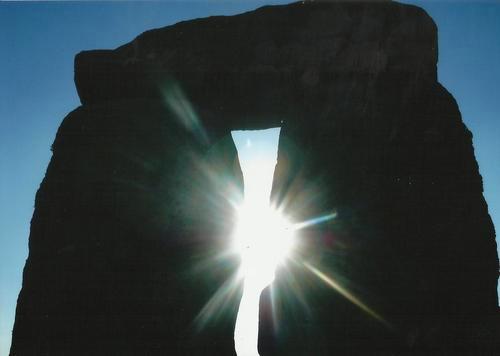
Stonehenge. submitted by Bladup : Stonehenge. (Vote or comment on this photo)
Dr Mike Parker Pearson from the UCL Institute of Archaeology gives an illustrated talk about the Stonehenge Riverside Project's recent investigations at Stonehenge. Held last week as a University College London 'Lunch Hour Lecture' and now viewable online,

This major research programme has been running since 2003 and has revealed new findings about its date, its purpose and its context within its surrounding landscape.

There's also a huge range of other fascinating lectures, in their archive, 146 and counting! I also enjoyed the one about the creation of the Victorian dinosaurs in Crystal Palace park.


Unravelling the mysteries of Stonehenge

Dr Mike Parker Pearson, UCL Institute of Archaeology


More about Stonehenge on our Site Page and Photo Gallery.

Please add your thoughts on this site

Stonehenge Complete

Stonehenge Complete

Sponsors

More Feature Articles

See all Feature Articles →

"Unravelling the mysteries of Stonehenge, online talk from Mike Parker Pearson" | Login/Create an Account | 4 News and Comments
  
Go back to top of page    Comments are owned by the poster. We aren't responsible for their content.
In-Depth Interview with Mike Parker Pearson from 2013 by Andy B on Monday, 07 August 2017
(User Info | Send a Message)
Interview with Mike Parker Pearson from 2013 - Thomas J. T. Williams and Hana Koriech

Mike Parker Pearson is the Institute of Archaeology’s newly Professor of British Later Prehistory. In this interview he reflects on his experience at the birth of post-processualism, current problems and opportunities in modern archaeology, and the subject for which he is best known: Stonehenge.

Williams, T.J.T. & Koriech, H., (2013). Interview with Mike Parker Pearson. Papers from the Institute of Archaeology. 22, pp.39–47. DOI: http://doi.org/10.5334/pia.401

https://www.pia-journal.co.uk/articles/10.5334/pia.401/
[ Reply to This ]

Mike Parker Pearson Stonehenge Lecture for the CBA by Andy B on Monday, 07 August 2017
(User Info | Send a Message)
Eminent archaeologist Mike Parker Pearson gives the Council for British Archaeology's 37th annual Beatrice de Cardi lecture on the Stonehenge landscape.

https://www.youtube.com/watch?v=BZ2lR5_N0vc&t=16s

[ Reply to This ]

Seasonal and Zodiacal Alignments in ritual Circles by SpaceTravellor on Friday, 20 December 2013
(User Info | Send a Message)
In cases where a Stone or Timber Henge or other ritual ring-structure clearly doesn't align with the cardinal and seasonal directions, these most likely shows zodiacal alignments in order to measure the stars and thus the Solar System and its cardinal directions in the Milky Way galaxy of which the direction to the galactic center is the most important. This direction is in many cases marked and symbolized by stones with aiming holes in taller standing stones or double stones with a slit. (In order to check out a position of a certain star in a specific cultural period, the precessional movement and elevation of a certain star shall be taken into account) (Example links below")

- For the time being, the offset angle of the zodiacal directions compared to the seasonal directions of the equinoxes and solstices, is about 13-15 degree referring to the actual difference between winter solstice December 21. and the January 3-4 where the Earth is closest to the Sun and when observed at midnight (or helical rising?) the directional and cardinal Sirius-Vega-line, mentioned above, points toward to the Milky Way center and thus referring to the religious/mythological traditions and rites of Epiphany, and since the star Sirius is involved in this zodiacal measurement and alignment, it is most likely to symbolize the biblical "Bethlehem Star". (Link)

Links:
Examples of holed Standing Stones:
Stan Stane: http://www.megalithic.co.uk/article.php?sid=27649
Pierre Percée: http://www.megalithic.co.uk/article.php?sid=6334172
Crow Stone: http://www.megalithic.co.uk/article.php?sid=1307916879

Epiphany Ritual: http://en.wikipedia.org/wiki/Epiphany_%28holiday%29#History
Milky Way Center: http://www.native-science.net/MilkyWay.Centre.htm
Milky Way Direction: http://www.native-science.net/MilkyWay.SolarSystem.htm

Regards
Ivar Nielsen
Natural Philosopher
[ Reply to This ]

Re: Unravelling the mysteries of Stonehenge by SpaceTravellor on Thursday, 19 December 2013
(User Info | Send a Message)
Hello,
With all due respect for Mike Parker Pearson´s (MPP) great archaeological works, I think there´s a need for a better understanding of the purpose of having made these enormous structures of stones and timber - and especially why there is a seemingly need to reconstruct the settings throughout larger periods of time.

MPP states the stone circles to represent "the dead" and the timber circles to the living, which in my mind is a little speculative. Ancient myths of creation speaks of the subject of "where we came from and where to we shall return" and in order to mark the cardinal directions of the creation, where our galaxy represents the ancient known Universe, 2 significant ritual circles are needed in order describe the myth of origin:

1 circle for the seasonal changes and daylight observations = The Earth centered year
1 circle for the movements of the stars and other nighttime observations = The Helio Centered year.

Because of the difference between the earthly and the starry year, creating the precessional movement of 1 degree every 71.6 years, it seems very likely that the builders had some difficulties with their ritual structures since it seemingly was necessary to rebuild and/or reconstruct the ritual sites so many times throughout larger periods of time.

If only concentrating on the seasonal circle and the positions of the Sun and Moon as a calendar system, this is not a problem, but when including the circle of the stars, which is necessary in order to locate the galactic center as the place from where everything is created in the ancient known Universe, this can cause troubles if a ritual site includes both circles because of the precessional movement where a setting stone or a timber pole comes "out of sync".

So again: 2 circles are needed if not having a possibility to regularly move a marker stone or timber pole accordingly to the precessional movement in just 1 circle. The star marking circle shall of course have a cardinal direction to the galactic center and thus to the story of origin and in my opinion many cultures have used Sirius in the star constellation of Orion in order to find the galactic direction. When drawing a line from Sirius over the north celestial pole area and further on to Vega in Lyra and prolonging this line, the direction point towards the galactic centre in the constellation of Sagittarius and to the galactic center, which often is marked on rock carvings as an open line going into the center of a ring, often marked as a center cup mark with concentric rings or in a maze figure. (Possibly also made as "the gateway" in the Stonehenge structure) See this image: http://en.wikipedia.org/wiki/File:Laxe_das_Rodas_01.jpg

So: One has to take this meaning into account when measuring and stating the cardinal directions of an actual ritual circle. Is it a seasonal circle or a star circle? But in both cases they tell of the movements in the creation and thus of the origin of mankind. Mike Parker Pearson and his friend, Ramilisonina, talks of "one timbered circle for the living and one stone circle for the dead" which in my mind is a simplification of the whole mythological story and meaning. Both kinds of circles tells of a cosmological and mythological connection and not of any kind of division between "the living and dead dimension", which certainly also would have been a very alien thought for our mythical and natural ancestors.

The ancient cosmological knowledge in Stories of Creation is very clear and precise when the telling is connected to the right observations and phenomena which in the first place regards the Milky Way galaxy and its observable contours all over the world.

Illustrative links:
Milky Way Contours: http://www.native-science.net/MilkyWay.Contours.htm
The Great Serpent: http://www.native-science.net/Divine_Serpent.htm
The Great Goddess: http://www.native-science.net/MilkyWay.MotherGoddess.htm
The Great God: http://www.native-science.net/MilkyWay.GreatestGod.htm

Other Mytho-Cosmological Papers: http://vixra.org/author/ivar_nielsen

Best Regards
Ivar Nielsen
Natural Philosopher

[ Reply to This ]

Your Name: Anonymous [ Register Now ]
Subject:


Add your comment or contribution to this page. Spam or offensive posts are deleted immediately, don't even bother

<<< What is five plus one as a number? (Please type the answer to this question in the little box on the left)
You can also embed videos and other things. For Youtube please copy and paste the 'embed code'.
For Google Street View please include Street View in the text.
Create a web link like this: <a href="https://www.megalithic.co.uk">This is a link</a>  

Allowed HTML is:
<p> <b> <i> <a> <img> <em> <br> <strong> <blockquote> <tt> <li> <ol> <ul> <object> <param> <embed> <iframe>

We would like to know more about this location. Please feel free to add a brief description and any relevant information in your own language.
Wir möchten mehr über diese Stätte erfahren. Bitte zögern Sie nicht, eine kurze Beschreibung und relevante Informationen in Deutsch hinzuzufügen.
Nous aimerions en savoir encore un peu sur les lieux. S'il vous plaît n'hesitez pas à ajouter une courte description et tous les renseignements pertinents dans votre propre langue.
Quisieramos informarnos un poco más de las lugares. No dude en añadir una breve descripción y otros datos relevantes en su propio idioma.