

The Great Stone Circles – How they Work Part 5a
Submitted by JACKME on Friday, 24 June 2005 Page Views: 7541
Neolithic and Bronze AgeType: Stone CircleInternal Links:


Shapes of Stones part 1
On visiting any circle we observe stones of various shapes and sizes. In the Great Circles these stones have either been very carefully selected or laboriously worked into the desired shape. This is often only seen when viewed from across the circle. All of the diagrams following are not to scale as the size of the stones varies from circle to circle, but they will hopefully provide a guide to the rough shapes which commonly occur and give an idea of what each one signifies.Great Stones
We will begin with what I have referred to as ‘The Great Stone’, (e.g. Stone 30 at Swinside), which is estimated to be the heaviest in the circle. These Great Stones are normally to be found in the southwest sector of the stone circle. Although having said that, at Lough Gur near Limerick in Ireland the Great Stone is located in the northeast sector. This seems to be an Irish variation which also extends into the Gors Fawr Circle in the Preseli Mountains in South West Wales.
The Great Stones fall into several basic shapes, which seem to be dependant on local choice. At Swinside it is a big, tall square block; at Castlerigg it is longer than it is tall, and similarly at Long Meg. These shapes have several variations culminating in the Great Trilithon at Stonehenge.
Tall Stones
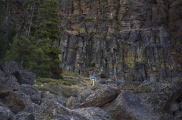
Around the circle there are several much taller stones. The height of these is dictated by their necessity to cast a long shadow which reaches a predetermined target stone at a certain time on a particular day. An example of this is the shadow from Stone 1 at Swinside (pictured above) which appears at First Gleam on Midsummer’s day. At the time of construction this would have struck Stone 42 and as the sun rose to Full Orb the shadow would have covered Stone 43 (where the First Gleam now touches), before the edge of the shadow moved on to touch the side of Stone 48 for the ‘Festival position’ which will be explained later.
The interior surface of many stone circles has been very carefully graded in order to facilitate this, whilst at others the site was specifically chosen because of its slope, as at Long Meg which provides shadows at the time of the setting sun right across the circle. The shadow is not always designed to target a stone within the circle, however. At Castlerigg, as previously mentioned, one shadow at the Midsummer sunset is cast over a great distance down into the valley below as seen in this photograph . The dark line across the picture is the shadow of the ridge on which the circle stands and at the time of construction, that shadow would have reached the bottom of the target at the same time as the shadow from the stone in the circle would have covered the target stone. At Midwinter the shadow is cast in the opposite direction, creating a shaft of light onto the bun altar (stone 40) at the corner of the Sanctuary as seen here .
The pillar type of tall stone can be fairly bulbous with a straight edge to give a good shadow line, particularly to the Great Stone. Other component stones in the circles not required to cast shadows are generally shorter regardless of their importance.
Bun & Table Top Altars.
The shadows from these tall stones are designed to touch various target stones, which I call altars, because the light/shadow edge reaches them either at first gleam or after a set time, which is universal, after sunrise when the sun has risen above the morning cloud or visa versa in the evening. There are normally 3 or more of these stones per circle.
Diamond Shapes.
Often the First and/or Last Gleam of the sun at the solstices at the time of construction were marked with a diamond shaped stone, either as the fore sight or the back sight apparently according to local choice. The biggest is the Swindon Stone at Avebury. Next week I will cover other stone shapes.
Contents page for the whole series is here
Note: This is the sixth of a series of previously unpublished articles by retired farmer, Jack Morris-Eyton.


 We would like to know more about this location. Please feel free to add a brief description and any relevant information in your own language.
 Wir möchten mehr über diese Stätte erfahren. Bitte zögern Sie nicht, eine kurze Beschreibung und relevante Informationen in Deutsch hinzuzufügen.
 Nous aimerions en savoir encore un peu sur les lieux. S'il vous plaît n'hesitez pas à ajouter une courte description et tous les renseignements pertinents dans votre propre langue.
 Quisieramos informarnos un poco más de las lugares. No dude en añadir una breve descripción y otros datos relevantes en su propio idioma.


