Protecting Heritage Sites While Building Work Goes On Nearby
Submitted by Andy_B on Thursday, 22 October 2026 Page Views: 17
Resources<< Web Picks >>
 Protecting a heritage site while building work goes on nearby depends on planning, monitoring and a clear line of responsibility agreed before the first machine arrives. Owners, contractors and neighbours each see different risks, such as ground movement, noise and deliveries, which is why a shared plan agreed in advance gives everyone the same starting point and a place to raise concerns early.
Planning and Responsibility Before Work Begins
Appoint one person to coordinate who is responsible for what, because every contractor on site shares some of the risk to the building. The success of work near historic fabric rests on careful analysis of the issues and risks, detailed project planning and monitoring through the whole project, so the assessments are done before the programme is fixed rather than after the first complaint. A survey that records the structure as it stands gives later monitoring something to compare against.
Reducing Noise at the Boundary
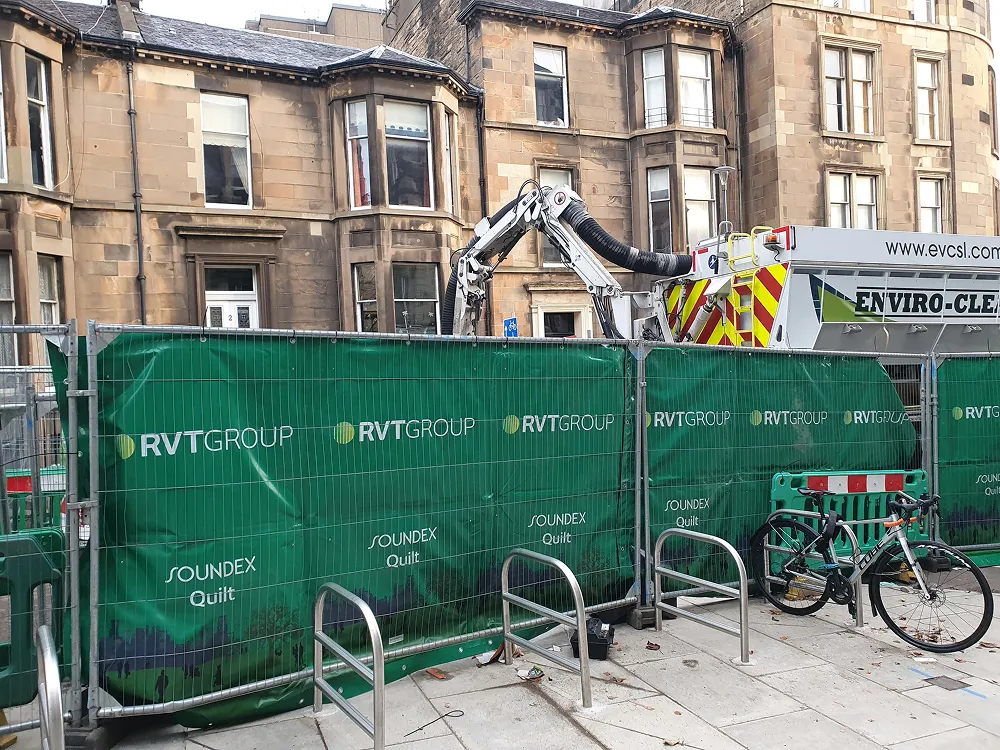
Where noise is the concern, acoustic curtains hung from scaffolding, fencing or hoarding along the boundary reduce the noise that reaches neighbours and visitors by putting a barrier between them and the work. Agreed working hours and quieter methods for the loudest tasks back up the barrier, and they keep a visit to the site pleasant while the work goes on. Curtains can be attached to an existing fence or barrier, which suits boundaries that already have fencing in place. They're made from weather-resistant, fire-rated materials, so they hold up outdoors.
Watching the Ground and the Stonework
During Crossrail's tunnelling, the Grade I listed House of St Barnabas in Soho Square was closely monitored for ground settlement, and concern about noise at the Barbican Centre led to a different track bed designed to damp vibration. Monitoring before, during and after work lets a site owner see movement early and agree changes to the method. Tunnelling teams at Tottenham Court Road and Bond Street advanced only a metre or so at a time because 18th century wells lay beneath, which let them react if anything unexpected appeared.
Scaffolding and Temporary Fixings
Temporary fixings on a listed building may need listed building consent, and scheduled monuments are controlled more tightly, so ties that drill into historic stone are generally avoided where possible. Scaffold legs need load spreading, pole ends need plastic caps, and the briefing for scaffolders should explain how significant the building is and the level of care expected before the first pole goes up. Most impact marks happen while scaffolding is erected or taken down, because of the long tubes involved.
Records and Communication
Photographs and condition notes taken at the outset give everyone the same baseline later, and a named contact for the site keeps questions from visitors and neighbours moving to the right person. Recording each stage of the work also helps whoever looks after the site next, and it answers questions later about what was done and when. Agree the plan, the limits and the contact before work begins, and the rest of the project has something to refer back to.