

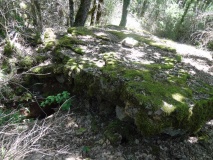

Out Now, the January/February 2007 issue of British Archaeology
Submitted by Andy B on Thursday, 07 December 2006 Page Views: 3559
Events
British Archaeology has worked with the French historian who discovered the new medieval drawing of Stonehenge, to bring the full details to the UK. This is a major event for British archaeology, Stonehenge and the early understanding of our past.
* only the third known medieval illustration of the stones, it is the first drawn by an artist who had clearly been at the site. It shows four free-standing trilithons (two uprights under one lintel), with tenons on the uprights – the first known description of this unique design feature. The text contains the first known modern spelling of Stonehenge
* the manuscript went to Douai, France with English Catholic refugees in the 16th century and its significance was lost
* it was found by Christian Heck, professor in the history of art at the University of Lille 3, in 2001, but, he said, “I had no idea whether it was important”
* Heck argues that the best known drawing, showing Merlin lifting a megalith, does not depict Stonehenge but the Irish stone circle that Merlin dismantled and re-erected in Wiltshire.
* the oldest known reference to Stonehenge, by Henry of Huntington in 1130, lists it as one of four English wonders, the others being natural (eg Cheddar caves). The new-found manuscript has four illustrations, which by contrast put Stonehenge amongst famous medieval Bible tales – the fall of Adam and Eve, Noah’s Ark and Pharaoh’s Castle
OTHER STORIES INCLUDE
* The great Bosnian pyramid scheme
Like the pyramids of Mexico, but thousands of years older: Semir Osmanagic’s discoveries in Bosnia-Herzegovina, welcomed by government officials and local business people, demand the rewriting of European prehistory. But are the Bosnian pyramids real? Anthony Harding has been to look
* Archaeologists excavate Transit van
Part post-modern joke and part conventional archaeological study (complete with expert reports), the total dissection of a retired Ford Transit van has divided observers. Is it archaeology? Is it art? It’s certainly popular with teachers. Christmas tinsel, dog hair, dents in the roof and a Victorian threepenny bit play their parts in the story of everyvan
* Early Cambridge town defences laid bare
Large scale excavation in the centre of Cambridge in advance of a major retail development has revealed details of the lost King’s Ditch (c1050–1150), a massive town defence earthwork, and rare medieval suburban development. Waterlogged conditions meant recovery of items such as a fine turned wooden jug, a leather tankard and wooden well linings
* Desperately seeking Sevso
Bonhams recently displayed one of the greatest known works of late antiquity to selected specialists and dealers. Although the Sevso silver is officially not for sale, the Marquess of Northampton wishes to cash in his investment. He could make £100m: but Eva Hajdú argues that it belongs to Hungary
* Iron age trading power near Inverness
Investigation of an ancient fenced enclosure overlooking Loch Ness led to the discovery of an exceptionally well-preserved prehistoric settlement cAD100, with 17 round houses up to 20m across, with wooden-planked floors and turf walls. Extensive evidence for casting and smithing, with eight furnaces, suggest this was a seat of power from which long-distance trading operations were mounted
* Watching eBay
We reveal details of a new survey of antiquities sales on eBay: an estimated 432 items that should legally have been declared treasure are put up for sale every year, approaching the 597 officially notified in 2005 from England and Wales
* Welsh dig reveals unique prehistoric monument
Survey and trial excavation have proved Wales’ first neolithic earthwork enclosure, at Banc Du, Pembrokeshire, close to the rock outcrops that provided the bluestones for Stonehenge
* Mick’s travels
In his regular feature, for this issue Time Team’s Mick Aston visits the border between Worcestershire and Gloucestershire, and discovers a county that has been lost altogether – as a result of boundary changes in the middle ages
* The Norwich book of the dead
Sally Mittuch argues that carved stone ceiling bosses in the cloister of Norwich cathedral tell the story of the medieval book of the dead
* Interview with Barrie Marshall
As the Stonehenge visitor centre inquiry opens, British Archaeology talks to the centre’s award-winning Australian architect
REGULARS
* Opinion
Warwick Rodwell says we are destroying parts of our architectural heritage for the sake of a minority
* On the web
Mapping archaeology, and the remains of the Berlin Wall
* In view
Is computer imagery on TV destroying the magic of the past?
* Spoilheap
While major instructions engage with PR, the real archaeology is in a saleroom
* Books
England’s historic landscapes, Homo Britannicus and Britain’s genetic history
* Science
Radiocarbon dating can offer insights into ancient climate change
* Letters
Roman disputes and what readers think of the editor
* Briefing
The comprehensive listing of archaeological activities, with exhibition news
* Council for British Archaeology News
A year of advising on alterations to historic buildings
You subscribe and can also read past issues of British Archaeology on their web site.

 We would like to know more about this location. Please feel free to add a brief description and any relevant information in your own language.
 Wir möchten mehr über diese Stätte erfahren. Bitte zögern Sie nicht, eine kurze Beschreibung und relevante Informationen in Deutsch hinzuzufügen.
 Nous aimerions en savoir encore un peu sur les lieux. S'il vous plaît n'hesitez pas à ajouter une courte description et tous les renseignements pertinents dans votre propre langue.
 Quisieramos informarnos un poco más de las lugares. No dude en añadir una breve descripción y otros datos relevantes en su propio idioma.