
Megalithic sites to visit in Malaysia
Submitted by Andy B on Thursday, 01 November 2018 Page Views: 9776
The Far East and ChinaCountry: Malaysia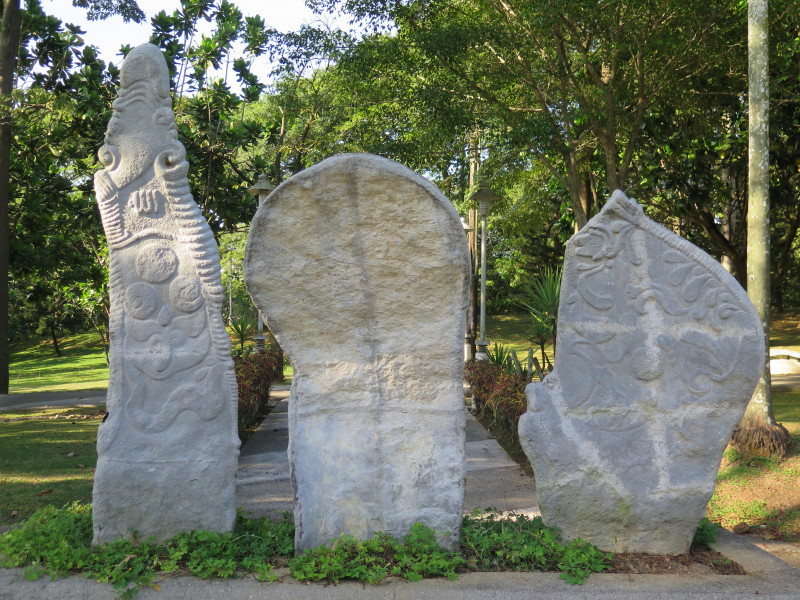
This is the site of the tomb of Sheikh Ahmad Majnun. a Islamic missionary who was slain in battle. The tomb, Keramat Sungai Udang, is venerated as a shrine and believed to be the oldest Muslim grave in Malaysia, dating back to the 14th Century.
Next to the tomb are three carved monoliths, thought to date from the second or third century AD. These are nicknamed the rudder, spoon and sword respectively due to their distinctive shapes and the tallest is about seven feet tall. They are the only stones in the area with carvings, including what looks like a unicorn, a peacock, a fish, a lotus looking flower or phallic symbol and a snake. They also have a solar disc symbol and wavy patterns on them.
The megaliths are known as 'Living Stones' - some local residents consider them magical and will swear they grow taller by one or two inches every year! There are also copies of these stones (pictured above) in a park in Putrajaya, a few km south of Kuala Lumpur alongside a site known as the Laman Megaliths (right)
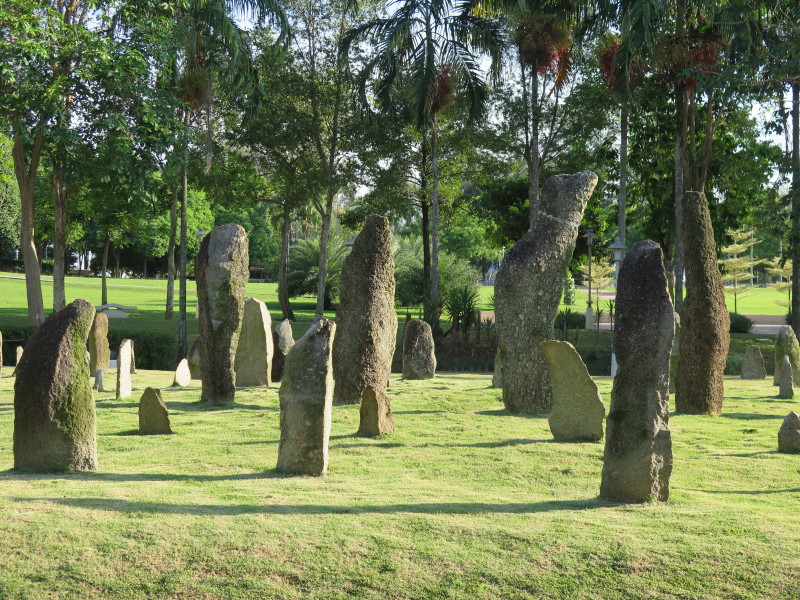 Also in the park are over eighty megaliths found in the Negeri Sembilan area by the Petronas oil company during work to lay a gas pipeline. The megaliths were excavated for temporary display between Dayabumi and Kuala Lumpur Railway Station but have now been relocated to this permanent home, near Taman Putra Perdana.
You can find large standing stones on many roadside tombs, one being the tomb of Datuk Paduka Seri Maharajalela Malacca. He retreated up the river Malacca with his followers after Malacca was attacked and defeated by Portuguese forces in 1511. He died in 1521 and is commemorated here.
In Melaka is a cluster of about 20 standing stones located on an earthen mound several metres from the road. As at other sites, locals call them Batu Hidup (Living Stones) or Batu Bercahaya (Glittering Stones). Over 500 standing stone sites exist in this part of Malaysia.
Travelling about 200km north of Kuala Lumpur takes us to upper Perak and the UNESCO World Heritage site of the Lenggong Valley. The whole area is an archaeological site where evidence of human settlement from the Palaeolithic age was found. Sites in the area include Kota Tampan, Bukit Jawa at Kampung Gelok and Kampung Temelong. The most famous archaeological findings were Perak Man, the 11,000 year old human skeletal remains discovered in 1991. 100,000-year-old stone tools were excavated at Kampung Geluk and Kampung Temelong and there is evidence that Gua Harimau was a site of bronze manufacture during the Bronze Age.

Visit the Lenggong Archaeological Museum at Kota Tampan to see artefacts excavated from the area. The museum is located within an oil palm estate on the road from Kuala Kangsar to Gerik (or Grik).
Malaysia’s people are a mix of Malay, Chinese, Indian, and the indigenous population, making for a unique blend of culture and cuisine. You can visit Kuala Lumpur, with everything a big cosmopolitan city has to offer, venture out to the rainforests - including potentially a detour to Borneo - and explore the many beautiful islands on both sides of the country. All things considered Malaysia is a pretty safe place to visit, and generous with its visas, allowing travellers from the US, Canada, and European Union up to 90 days to explore the country. If you are looking to make a quick getaway, this Expedia discount or this Klook promo could help you save some money you can put towards your trip.
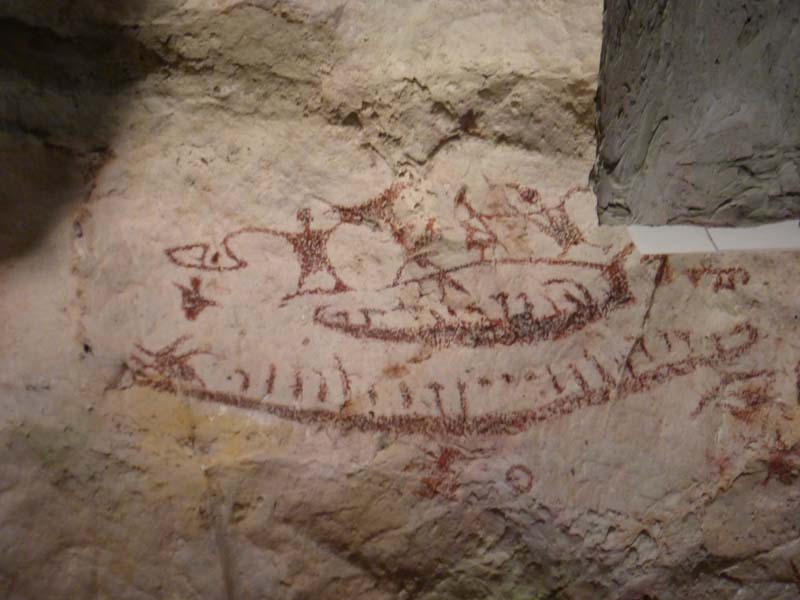 Back in Kuala Lumpur, the National Museum provides an overview of Malaysia’s history and culture. The ground floor showcases the geographic and natural history of the Malay peninsula starting with the Stone Age, the Bronze Age and the Iron Age, Hindu-Buddhist kingdoms to the Muslim sultanate of Malacca. Among the collections is a stone statue of the god Makara, the remarkable bronze Avalokiteshvara of Bidor, which weighs 63 kg, has eight arms, one now broken. It dates to the 7th to 12th Centuries AD, when the culture of ancient Malay was Hindu-Buddhist. There is also a model of the Bujang Valley temple in Kedah, aand ancient Javan Borobudur and Majapahit vessels.
See our site listings for Malaysia for more sites to visit, and check out the maps and nearby sites linked from our pages above. Special thaks to the following for their assistance with this article, Drew Parsons, Martin Calvalho, and the Malaysia Megalithic Legacy Exploration Project.

 We would like to know more about this location. Please feel free to add a brief description and any relevant information in your own language.
 Wir möchten mehr über diese Stätte erfahren. Bitte zögern Sie nicht, eine kurze Beschreibung und relevante Informationen in Deutsch hinzuzufügen.
 Nous aimerions en savoir encore un peu sur les lieux. S'il vous plaît n'hesitez pas à ajouter une courte description et tous les renseignements pertinents dans votre propre langue.
 Quisieramos informarnos un poco más de las lugares. No dude en añadir una breve descripción y otros datos relevantes en su propio idioma.