

Long Barrows of the Cotswolds and Surrounding Areas
Submitted by Hamish on Monday, 28 March 2005 Page Views: 9716
Neolithic and Bronze AgeCountry: England County: Gloucestershire Type: Long BarrowInternal Links:


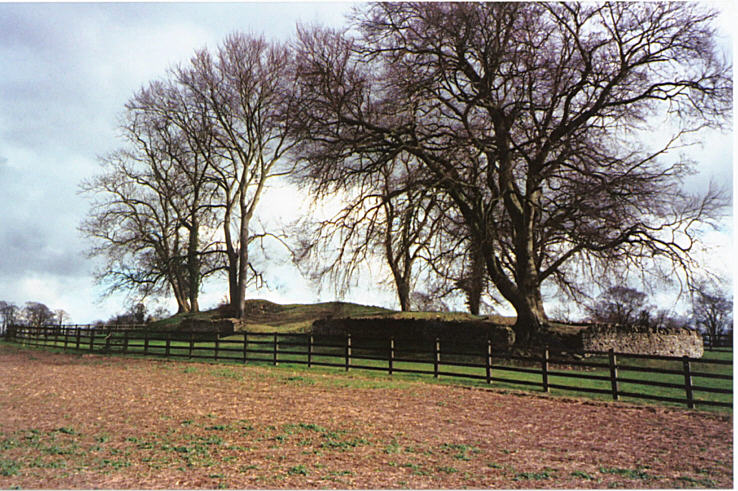
Tempus £19.99 July 2004
If you are interested in trekking through wet fields, dense woodlands and over miles of lonely moors in search of long barrows then this is the book for you. Primarily dedicated to the Cotswold-Severn type long barrow, Timothy Darvill has covered the subject meticulously. Within the covers are detailed descriptions and ground plans of many well known sites but also those less easy to find. There are 100 illustrations including diagrams and photographs of the sites.
Within the covers are detailed descriptions and ground plans of many well known sites but also those less easy to find. There are 100 illustrations including diagrams and photographs of the sites. The author tells us in the introduction “ the aim of this book is to review what is now known of the long barrows of the Cotswolds and surrounding areas in light of recent work within the region and beyond” This is definitely achieved in this book. Chapter 2 introduces us to the terms and concepts used within the book taking away the confusion of the many idiosyncratic ideas in general academic use. Chapters 2 and 3 takes up the evolution of the long barrows from the early small oval barrows and the additions creating the monuments we see today. The next chapters develop the long barrow tradition in the Cotswold region, the character, distribution and placement in the landscape. Then an examination of their construction and design, evidence of their use. And finally the blocking up and abandonment of these great monuments.
Included at the back of the book are two appendices. Appendix (a) listing the sites with an OS reference and, in most places, a brief description. Appendix (b) radio carbon dates from the long barrows. There is a bibliography at the end of the book of published works linked to the text for follow up and further reading. A useful addition is a ‘sites to visit’ section with details of access and a reminder to respect the sacred nature of long barrows as ritual, ceremonial, burial and religious centres.
I now take this book with me on my visits. When I now stand in front of one of these sites I have a greater understanding of what they are and why that particular place may have been chosen. I no longer just visit and photograph, but sit and contemplate and try to visualise 5000 years into the past.
Whilst I was reading the book, (it really is readable) I discovered a site on my own door step within the boundaries of Bristol. At the top of Druid Stoke Hill, in the Stoke Bishop area, are the remains of a Chambered Tomb. I grabbed my camera and dashed off to see it. There it was in the garden of a house just by the side of the main road. The house was called “ The Cromlech”. Since this I have revisited many sites and seen them in a totally different light.
In all I have found this book to be a great help to me in my own desire to visit and try to understand these enigmatic remains of our ancestors. It could also prove to be of great help to people who are just discovering the joys of Long Barrow hunting.
Professor Darvill is the author and co-author of many books and pamphlets including, The Concise Oxford Dictionary of Archaeology, and Prehistoric England.


 We would like to know more about this location. Please feel free to add a brief description and any relevant information in your own language.
 Wir möchten mehr über diese Stätte erfahren. Bitte zögern Sie nicht, eine kurze Beschreibung und relevante Informationen in Deutsch hinzuzufügen.
 Nous aimerions en savoir encore un peu sur les lieux. S'il vous plaît n'hesitez pas à ajouter une courte description et tous les renseignements pertinents dans votre propre langue.
 Quisieramos informarnos un poco más de las lugares. No dude en añadir una breve descripción y otros datos relevantes en su propio idioma.