

Book Review: A History of Ancient Britain by Neil Oliver
Submitted by AngieLake on Thursday, 10 November 2011 Page Views: 8348
TV and Radio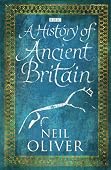 According to the blurb inside the jacket, Neil Oliver ‘...weaves the epic story - half-a-million years of human history up to the departure of the Roman Empire in the 5th century AD. It was a period which accounts for more than ninety-nine per cent of humankind’s presence on these islands.’ A sobering thought that concurs with Oliver’s poetic observation that 'we are flecks of foam on the surface of the blue. Beneath us is an ocean of deep time and we can gaze down into it whenever we want, from wherever we are.'
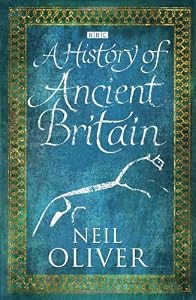
 While my first impression was of quite a modest-sized book, the 400 odd pages and tasteful cover give satisfaction and fit nicely in the hand, willing you to curl up in a chair and read it all again. The frame around the elegant title resembles copper inlaid with Celtic-patterned gold, reminding us of Britain’s glorious treasures and early trading years, while the enigmatic Uffington White Horse, whose ‘cousin’ appeared on pre-Roman coins, is surely a nod towards our presenter and author, renowned for striding across hillsides in his popular TV series. His only pictorial appearance is on the back of the jacket, looking intense, aiming to be taken seriously.
We’re led into the narrative by a perceptive introduction focussing on the sequoia tree as a way to introduce the wide span of history being written about. In the rather humble acknowledgements section, the first paragraph reminds us of ‘Neil the TV presenter’ with a recap on one of the worst, wet, pneumonia-threatening filming jobs he did during this series.
Neil dedicates the book to Tom Affleck – the director of his first dig as a Glasgow University undergraduate: ‘a former Spitfire pilot-turned-botanist-turned-archaeologist’ and the man whose character was the catalyst in ‘a life-changing experience’. Neil describes him as ‘a unique and special man: part Biggles, part joker and part professor, but gifted with the ability to infect everyone around him with his passion for his subject, which was Scotland during the Mesolithic.’
After seeing this excellent TV series, and reading the book, we find that Neil has developed many of Tom’s attributes, even becoming a bit of an ‘action-man hero’ himself. Amongst the pages are several of his ‘scary/hilarious’ exploits - just in making this series – to be enjoyed. The worst, on my ‘fearometer’, would be wriggling through narrow corkscrewing passages deep underground in the Gt Orme copper mine. Seeing it on TV is one thing, but reading Neil’s personal thoughts really drives home the sensation of frightening claustrophobia, yet at the same time you can laugh at the black humour of it all!
Another nugget of Scots humour slips through when wittily naming the Paviland ‘Goat’s Cave’ body ‘the Red Laddie’- another difficult-to-access place, as were the two dives on underwater sites. Because of these ‘hands-on’ reports the reader feels closer to the sights, sounds and sensations of the location and era being described; one good example being the experiment of living like a Mesolithic man - building his own shelter of smelly hides, making fire, and cooking what had been caught; then trying to sleep overnight - on a remote island off the West coast of Scotland.
As with the story of the ‘Red Laddie’, Oliver has a gift of bringing alive those characters he researches. This thread, and a strong theme of respect, runs through the book. While we are learning about history, we are also being shown their life - leaning against the shoulder of that person and gazing out into their world, sometimes sharing in their joy and their fear.
He does not mince words and there are some rather gruesome descriptions of the results of warfare and general cruelty in those ancient times (especially the grisly end suffered by Roman women who were captured by the justifiably angry Iceni!), but they are balanced with a fine sense of observation of some more delicate and beautiful aspects: 'Natural laws saw to it the circle was everywhere – from the shape of the sun and the moon to the tiny depressions made by the stalks of wind-blown sea grass shivering in the sand.'
The words he uses so eloquently to describe the process of making copper from powdered rock tumble like the new substance, truly bringing home the magic and awe of that moment – the molten liquid 'darting like a lizard' was one phrase.. and 'magical enough to make a man cry.' One could be led to believe Neil was a bit ‘wimpy’ when reading how often his hands trembled in anticipation of holding a rare artefact, or when he confesses to being afraid that an involuntary motion of his finger and thumb will crush a delicate gold hair piece, but it seems he just can’t control his excitement, for he had proved his mettle by not shirking those more manly assignments. We learn about ancient warfare, from his ‘have a go’ re-enactments with warriors’ weapons: the sword-swinging, and the longbow shooting. My eldest son, Warren (who is the same age as Neil) enjoys this hobby, and has also made his own arrows. I know how very hard these bows are to draw having attempted this myself!
It was astonishing to read that the author’s choice – given the wide selection in the series - of 'single most moving and impressive archaeological artefact I have ever seen', was the 'Dover Boat’, but after reading why, it all made sense. (Now you’ll have to buy the book!)
Following those eight long and absorbing chapters, from the Ice Age to the time when the Romans finally left our shores, having '…herded us across the bridge that separates prehistory from history', Oliver found a brilliant way, in the last few paragraphs, to tie up the ends of this epic story. One feels satisfied that here is someone who’s done his research well and does not patronize the reader, while making a potentially dull subject really come alive with a palpable sense of wonder, respect and enthusiasm for the history of our country.
Mr. Oliver speaks with an authority, based on first-hand experience, and keeps up the pace until the very last sentence. I learned such a lot about Britain’s history and will treasure my copy. When I watch the series DVD, it’ll be with a fresh insight. (Hopefully Santa will think I’ve been a good girl this year!)
End-note: The Bibliography is arranged in chapters, without numerical links, and the Index looks pretty comprehensive. If I had to find a fault, it might be that sometimes I was confused by lack of punctuation. Also, while most of the 38 colour photos were adequate, it would have been good to see larger images of the Stirling Hoard and the Kirkburn Sword to appreciate their decoration.
 Review by Angie Lake, who is pictured below with Neil at Stonehenge just after dawn on 2010’s Summer Solstice, when he’d finished filming for this series.
 Hardcover: 416 pages
Publisher: W&N
ISBN: 0297863320
A History of Ancient Britain by Neil Oliver
Available from Amazon.co.uk
Angie adds: It'll be forgiven if anyone doubts my impartiality in reviewing his book! ;-) I did my best, so if you’re in any doubt, you’ll have to buy or borrow your own copy!



 We would like to know more about this location. Please feel free to add a brief description and any relevant information in your own language.
 Wir möchten mehr über diese Stätte erfahren. Bitte zögern Sie nicht, eine kurze Beschreibung und relevante Informationen in Deutsch hinzuzufügen.
 Nous aimerions en savoir encore un peu sur les lieux. S'il vous plaît n'hesitez pas à ajouter une courte description et tous les renseignements pertinents dans votre propre langue.
 Quisieramos informarnos un poco más de las lugares. No dude en añadir una breve descripción y otros datos relevantes en su propio idioma.