
The Day the Sky Fell on the Heads of the Celts
Submitted by AlexHunger on Tuesday, 09 October 2007 Page Views: 19590
TV and RadioCountry: Germany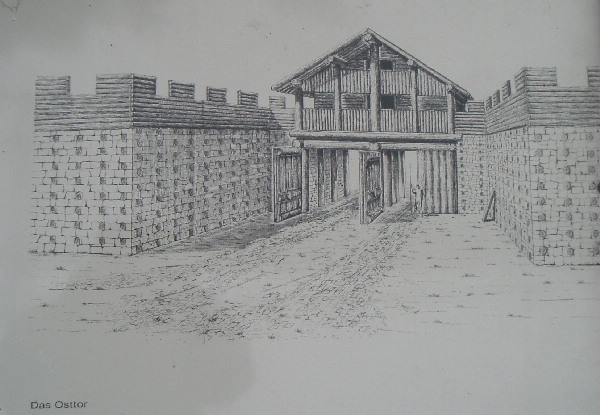
Before this time, the Celts were widely networked culturally and commercially all around Europe while their spirituality was very much nature oriented. After this fateful event, this completely changed.
Geologically, the cosmic impact is easy to prove. The area in Southern Bavaria is pockmarked with a multitude of impact craters that have by now often have become lakes. The region also has a layer of exotic metal and mineral deposits that would not normally occur. Physicists calculate that the small comet measuring about 1 km in diameter violently broke up at high altitude, perhaps 50 Km in the atmosphere, and the showered the area underneath with relatively large fragments that would have churned up the country side with a force of about 80 one Megaton hydrogen bombs. To add insult to injury, remaining methane fumes would have suffocated many survivors of the impacts and resulting fire storms. Please note, the emphasis here is on many, not all, as witnesses were required to turn the event into legend.
The archaeology is also fairly self explanatory as the artefacts found in southern Bavaria all date to before the middle of the 5th century BCE and new artefacts of any significance don't emerge until about 1 to 2 centuries later. Metal artefacts from near impact points show unusual burning or discoloration marks and can not be attributed to the usual burial offerings due to their haphazard placements. The impact on the survivors and other Celtic tribes is more subtle as there are no written records, just deeds and artefacts.
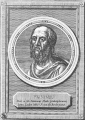 Roman historians, such as Pliny the Elder, a few centuries later, do mention the event, but not in a first hand manner. The fleeing survivors were probably not greeted by their neighbours with open arms. Historians note increasingly bellicose behaviour among all Celts, as some food shortages probably occurred. Within a couple of decades marauding Gaulish tribes, a subdivision of Celts, went on rampages all over Europe and as far as Turkey. In 398 BCE, they even sacked Rome, an injury that was not forgotten.
As mentioned previously, the religion also changed to one more focussed on terrifying gods of war, thunder and fire. Also the wickermen human sacrifice practice only emerged after the 5th Century. It is fairly easy to imagine how simple tribes would equate a fiery cataclysm with mother nature no longer being happy with them and requiring sacrifices as well as changed behaviour. It took the Romans until the 1st century CE to stamp that out. Ironically, it was the Romans that eventually most profited from the changed Geology once the dust settled. Initially the Norican tribes were the first to move back to South Eastern Bavaria, which is geographically close enough to northern Italy to be logistically interesting.
The Noricans, of course, started making weapons quickly enough using local ores. These iron ores had however apparently come from the comet and where ingrained with traces of titanium, and complex carbon structures, among other minerals, that allowed the Iron Age smiths to make extremely, strong, flexible and sharp steel that was largely unrivalled until the 20th century. Such swords became sought after export goods that became known as Noricum Black Gold to the Roman war machine. The Romans kept the Noricans occupied with lucrative arms contracts while conquering the remaining Celts who didn't have the foresight to purchase such wonder weapons. Caesar comments that Gauls frequently had to fall back behind the front line to bend their swords back into shape, while Romans with super swords could keep up the offensive longer.
So, in end effect, the sky falling on their heads remained ingrained in the minds of Celts for eons while also shaping their culture and their interaction with not just their neighbours but the rest of Club Med for generations. It might also explained the low distribution of megalithic sites in that part of Germany.
AlexHunger
This article is inspired by a documentary which ran on the Phoenix Channel in Germany.
Note: The Diagram of the Manching Oppidum from the post impact era is posted to illustrate the article, despite being about 75 KM morthwest of ground zero as there are very few megalithic sites in the impact zone. It illustrates the more defensive lifestyle of the Celts in the aftermath.


 We would like to know more about this location. Please feel free to add a brief description and any relevant information in your own language.
 Wir möchten mehr über diese Stätte erfahren. Bitte zögern Sie nicht, eine kurze Beschreibung und relevante Informationen in Deutsch hinzuzufügen.
 Nous aimerions en savoir encore un peu sur les lieux. S'il vous plaît n'hesitez pas à ajouter une courte description et tous les renseignements pertinents dans votre propre langue.
 Quisieramos informarnos un poco más de las lugares. No dude en añadir una breve descripción y otros datos relevantes en su propio idioma.