
Ancient history of the Turks and Caicos Islands, and things to see on your visit
Submitted by Andy B on Thursday, 06 December 2018 Page Views: 5999
Neolithic and Bronze AgeCountry: Caribbean Islands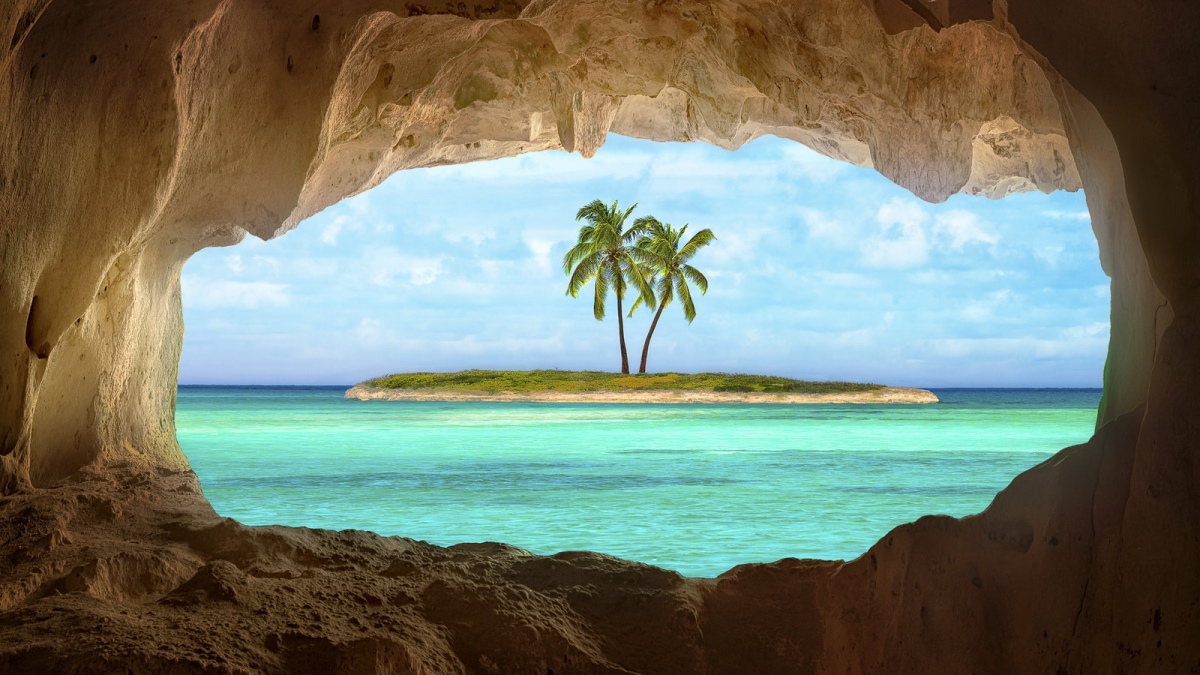
It’s an island paradise, and hard to beat as a relaxing escape. Only 90 minutes by air from Miami, it feels like a whole new world. Instead of a run of the mill hotel, consider a fantastic luxury villa rental the Turks and Caicos is known for. You can enjoy the utmost privacy, with a private pool, housekeepers to look after you so there are no chores, and a chef can be available to cater for you.
So let’s find out a little more about the early history of these islands. The original settlers were the Taino people (also known as the Lucavan), who inhabited the Turks & Caicos and Bahamas for about 800 years from AD 700. Sadly, these indigenous islander had disappeared shortly after the 1492 arrival of Columbus and the Europeans. Within a generation, an entire culture had been wiped out by economic upheaval, Spanish slave raids and foreign diseases to which they had no immunity. So today we are reliant on archaeology to try to understand the rich cultural tapestry of this island paradise’s first residents.
The Taino people did not live in caves, other than as shelter from severe storms, but we know
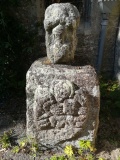
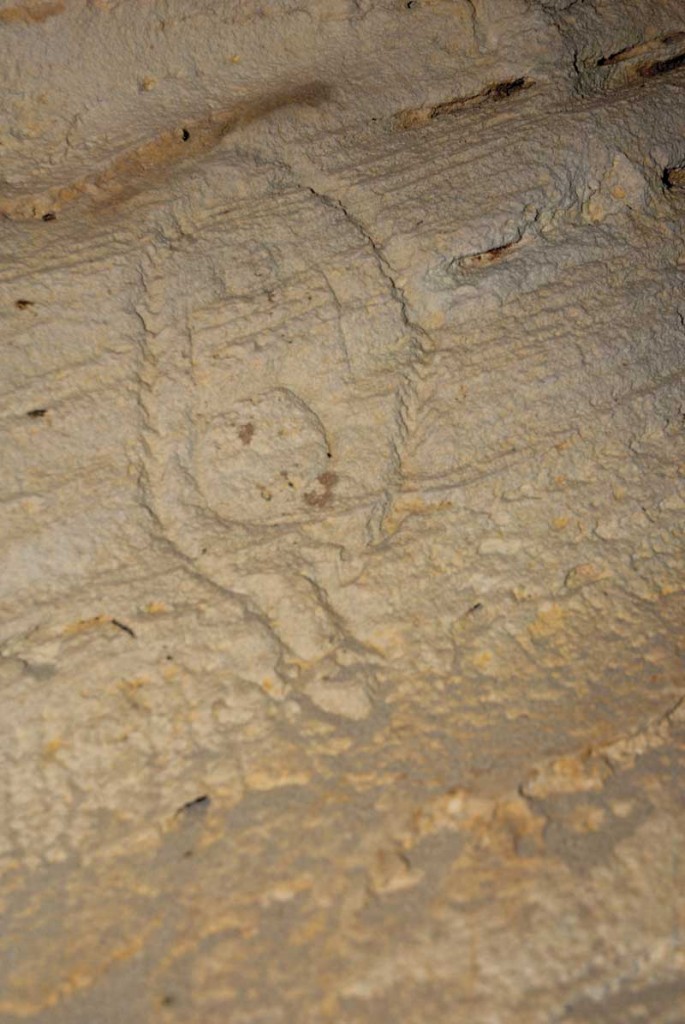
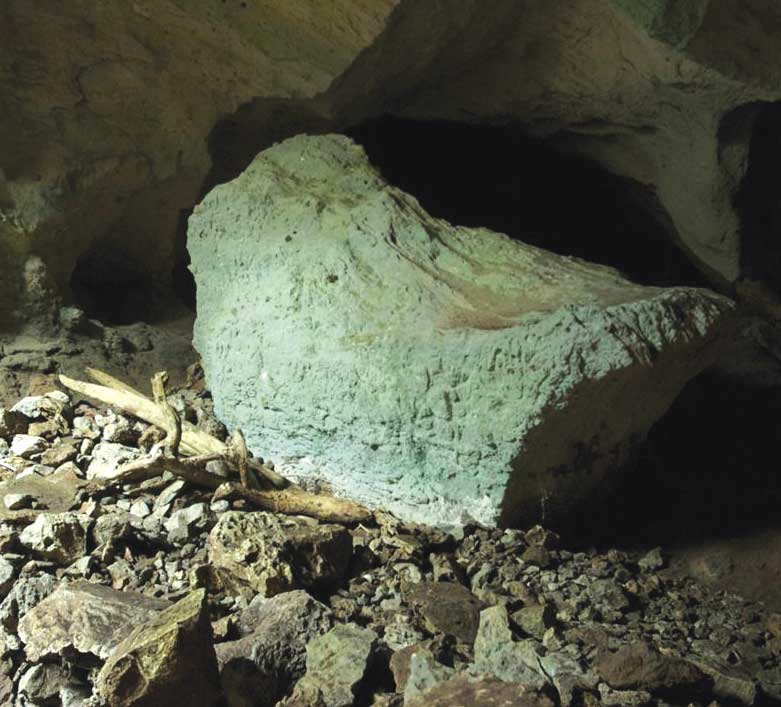 they had a deep spiritual association with the underground. They used blue holes and sinkholes (xawei), inland caves whose vault has collapsed to expose subterranean lakes, for human burial and as sanctuaries for ritual activities. They left petroglyphs (rock art) and strange stone objects such as this pictured right, which could have been some sort of altar.
The Tainos recognized three main divisions of the cosmos: a sky world, the land world of living people, and the world of subterranean waters. Caves were the portals to the subterranean world. They believed they had emerged from the Cacibajagua (Cave of the Jagua), a reference to the jagua tree, whose edible fruit produces a black vegetable dye used for body painting. This black paint was used in conjunction with a red dye derived from the bixa or achiote plant (Bixa orellana) for rituals to reinforce their sense of community among the Tainos. Bixa/achiote is still used today used as the food coloring annatto which to give Red Leicester cheese its lovely orange colour.
 Cottage Pond on North Caicos is a perfectly circular inland blue hole that measures 165 feet across and sits in a beautiful natural depression, supporting rare plant and animal species. It has a 30 foot layer of freshwater that was certainly valued by the ancient inhabitants. As a Nature Reserve, it’s open to the public and is easy to access, so very much worth visiting if you’re on North Caicos.
Many of the other caves are remote, in thick vegetation and waterlogged swamps, with wild donkeys left behind by early European settlers for company, as well as the bats and owls who live in the caves.
 The native peoples of the Turks & Caicos Islands preferred to live very near their primary source of food: the sea. Their villages often sheltered behind the first sand dune, less than 50 meters from a suitable beach upon which they could land their dugout canoes. One such site, and by far the largest, is Middleton Cay near South Caicos, which covers almost the entire island.
Here the conch was king, as seen in the thousands upon thousands of shells encountered throughout the island. This precious resource provided not only their staple protein but also the raw material for manufacturing a wide variety of shell tools, and there’s evidence that the ancient people farmed conch in rock pens in wetter parts of the islands.
It’s known that the Taino people would travel to Turks Islands to gather the naturally accumulating sea salt, as did early European explorers. By the end of the 1600s, the Bermudians began to seriously establish the industry. The system of salt production became more sophisticated over time, with dividing walls in the salinas to split up different levels of brine, gates to control input from the ocean, and windmills to pump water between ponds.
You can explore the remains of these along the coast, and if you like ‘urban exploration’ you can visit Grand Turk's decommissioned NAVFAC 104 US Naval base,that saw action during the Cuban Missile Crisis, primarily as an underwater listening or Sound Surveillance System (SOSUS) facility designed to track Soviet submarines.
The Turks and Caicos has its own national museum,
 which runs entirely on public donations. This is of course a must visit if you’re interested in the early inhabitants. The museum houses important Tainos artifacts: the Lucayan duho seat (found in a cave and probably used by the chief for religious ceremonies), a very rare canoe paddle (pictured left), as well as many smaller artifacts such as pottery and bone tools.
There are also many exhibits on the later history of the islands, including Spanish coins from the 1600s, flags, primitive diving and wreck salvaging equipment, and more. It’s located in Cockburn Town, the capital and oldest established settlement of the Turks and Caicos, and home to many old British-Bermudian colonial architecture buildings which are still in use today.
Some other activities not to miss while you’re on the islands:
Whale Watching: If you’ve never seen a whale in the flesh, then whale watching in Turks and Caicos is a must. You can go on a trip to the island of Salt Cay and get really up close with these gentle giants of the ocean, from the middle of January to about the end of February.
Provo Ponies offer horseback riding in Grace Bay, with riding lessons and trips along the extraordinary beaches there. The ponies are so comfortable here that they don’t mind going deep into the water as you ride them, what an amazing photo opportunity! In fact you can even hire your own professional photographer at very reasonable cost, to capture some of your unforgettable modelling moments.
With many thanks to Pete T. Sinelli, Betsy Carlson and Bill Keegan, Curator of Caribbean Archaeology at the Florida Museum of Natural History in Gainesville, Florida, another place well worth visiting if you’re visiting the area.

 We would like to know more about this location. Please feel free to add a brief description and any relevant information in your own language.
 Wir möchten mehr über diese Stätte erfahren. Bitte zögern Sie nicht, eine kurze Beschreibung und relevante Informationen in Deutsch hinzuzufügen.
 Nous aimerions en savoir encore un peu sur les lieux. S'il vous plaît n'hesitez pas à ajouter une courte description et tous les renseignements pertinents dans votre propre langue.
 Quisieramos informarnos un poco más de las lugares. No dude en añadir una breve descripción y otros datos relevantes en su propio idioma.