
Featured: Stonehenge Tea Towels - Worldwide delivery

 Stonehenge Tea Towels - Worldwide delivery

Random Image

Serpent’s Gold by Sam Osman

Serpent’s Gold by Sam Osman

Login

Register here - as a registered user you get more features and fewer ads.

Who's Online

There are currently, 2946 guests and 5 members online.

Sponsors

<< Our Photo Pages >> Piper's Copse Fort - Hillfort in England in West Sussex

Submitted by Andy B on Thursday, 25 March 2004  Page Views: 9349

Iron Age and Later PrehistorySite Name: Piper's Copse Fort Alternative Name: Piper's Copse Settlement
Country: England
NOTE: This site is 2.26 km away from the location you searched for.

County: West Sussex Type: Hillfort
Nearest Town: Haselmere  Nearest Village: Northchapel
Map Ref: SU978295  Landranger Map Number: 186
Latitude: 51.056524N  Longitude: 0.605926W
Condition:
5Perfect
4Almost Perfect
3Reasonable but with some damage
2Ruined but still recognisable as an ancient site
1Pretty much destroyed, possibly visible as crop marks
0No data.
-1Completely destroyed
3 Ambience:
5Superb
4Good
3Ordinary
2Not Good
1Awful
0No data.
3 Access:
5Can be driven to, probably with disabled access
4Short walk on a footpath
3Requiring a bit more of a walk
2A long walk
1In the middle of nowhere, a nightmare to find
0No data.
4 Accuracy:
5co-ordinates taken by GPS or official recorded co-ordinates
4co-ordinates scaled from a detailed map
3co-ordinates scaled from a bad map
2co-ordinates of the nearest village
1co-ordinates of the nearest town
0no data
3

Internal Links:
External Links:

Piper's Copse Fort
Piper's Copse Fort submitted by Andy B : A section showing the high banks (Vote or comment on this photo)
"Hillfort" in West Sussex. The earliest known human settlement in Northchapel is an iron age camp at Piper's Copse, the only one found on low ground in Sussex.

The rampart is over 8 feet (2.4 m) high in places and almost circular, enclosing an area of just over 1-acre (4,000 m2). Iron Age pottery and iron slag have been found on the site. Roman and medieval pottery have also been found at Pipers Copse.
You may be viewing yesterday's version of this page. To see the most up to date information please register for a free account.


Piper's Copse Fort
Piper's Copse Fort submitted by Andy B : Gnarled trees aplenty on this eerie hillfort. The light was quite poor but you can see the bank to the right of the photo. (Vote or comment on this photo)

Piper's Copse Fort
Piper's Copse Fort submitted by Andy B : The banks are up to 15ft high, very steep and impressive (Vote or comment on this photo)

Piper's Copse Fort
Piper's Copse Fort submitted by Andy B : This hillfort is very unloved and extremely overgrown. Very eerie. (Vote or comment on this photo)

Do not use the above information on other web sites or publications without permission of the contributor.

Nearby Images from Geograph Britain and Ireland:
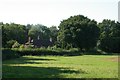
SU9729 : Hammer Cottages by Ben Gamble
by Ben Gamble
©2005(licence)
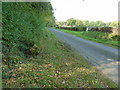
SU9729 : Piper's Lane east to North Chapel by Dave Spicer
by Dave Spicer
©2011(licence)
SU9729 : River Kird by Simon Carey
by Simon Carey
©2024(licence)
SU9729 : Limekiln Plat by Simon Carey
by Simon Carey
©2024(licence)
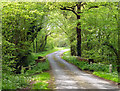
SU9729 : Bridge on Piper's Lane by Robin Webster
by Robin Webster
©2020(licence)

The above images may not be of the site on this page, they are loaded from Geograph.
Please Submit an Image of this site or go out and take one for us!


Click here to see more info for this site

Nearby sites

Click here to view sites on an interactive OS map

Key: Red: member's photo, Blue: 3rd party photo, Yellow: other image, Green: no photo - please go there and take one, Grey: site destroyed

Download sites to:
KML (Google Earth)
GPX (GPS waypoints)
CSV (Garmin/Navman)
CSV (Excel)

To unlock full downloads you need to sign up as a Contributory Member. Otherwise downloads are limited to 50 sites.


Turn off the page maps and other distractions

Nearby sites listing. In the following links * = Image available
 7.1km NNE 17° St Mary the Virgin's Well* Holy Well or Sacred Spring (SU997363)
 8.0km WNW 298° Haslemere Educational Museum* Museum (SU9061833107)
 8.1km SW 216° St. Peter's Well (Lodsworth)* Holy Well or Sacred Spring (SU9313022861)
 8.4km S 177° Virgin Mary Spring* Holy Well or Sacred Spring (SU9838721139)
 9.5km NNE 17° Hascombe Hill* Hillfort (TQ004386)
 9.6km NNE 21° The Dragonstones* Modern Stone Circle etc (TQ0105038489)
 12.6km N 357° Lady Well (Tuesley)* Holy Well or Sacred Spring (SU968421)
 12.9km WNW 292° Wishing Well at Waggoners Wells* Holy Well or Sacred Spring (SU857342)
 13.4km SE 135° Beedings Early Upper Palaeolithic Site Ancient Village or Settlement (TQ075202)
 13.5km NNW 331° Thor's Stone (Thursley Common) Marker Stone (SU910412)
 14.2km WSW 248° Hammer Wood Fort* Hillfort (SU847240)
 14.8km WSW 240° Fitzhall Heath 2* Barrow Cemetery (SU8513721803)
 14.8km SSW 210° Heyshott Down Cross Dyke* Misc. Earthwork (SU9070416492)
 14.9km WSW 246° St Mary's Church (Chithurst) Artificial Mound (SU84252310)
 15.0km WSW 242° Fitzhall Heath 5* Barrow Cemetery (SU8473122134)
 15.1km WSW 238° Minsted Round Barrows* Barrow Cemetery (SU85152125)
 15.1km WSW 240° Fitzhall Heath 1* Barrow Cemetery (SU849216)
 15.3km WSW 242° Fitzhall Heath 4* Barrow Cemetery (SU8441621923)
 15.5km WSW 241° Fitzhall Heath 3* Round Barrow(s) (SU84332180)
 15.8km SSW 199° Oxen Down Tumuli* Barrow Cemetery (SU929145)
 15.9km WSW 242° Goldrings Warren* Round Barrow(s) (SU8392821677)
 16.6km S 183° Stane Street (Chichester section)* Ancient Trackway (SU9713012913)
 16.7km NW 313° Frensham Common Barrows* Barrow Cemetery (SU85334070)
 16.9km S 182° Barkhale* Causewayed Enclosure (SU976126)
 17.1km SW 223° Cocking Down* Round Barrow(s) (SU8629216825)
View more nearby sites and additional images

<< Giant's Grave, Enochdhu

Tingwall Broch >>

Please add your thoughts on this site

Stonehenge Landscapes Book and CD-ROM

Stonehenge Landscapes Book and CD-ROM

Sponsors

Latest Visit Logs

  • The Bargain Stone
    “Sadly when I was there it was covered by a large box. At least the workers renovating the church ha…”
    by cactus_chris · 15 Jun 2026
  • Sigtuna U 389
    “Right next to the museum entrance, this runestone is hard to miss.”
    by CharcoalBurner89 · 15 Jun 2026
  • The Awen Stone
    “Situated in the grounds of West End Campsite, easily visible and accessible as of June 2026.”
    by TimPrevett · 15 Jun 2026
  • Dolmen de la Roc de l'Arca
    “GPS co-ordinates are accurate. Use the same parking as for Dolmen de la Cauna del Moro and walk 200…”
    by Jhalst1 · 14 Jun 2026
  • Dolmen de la Cauna del Moro
    “The GPS co-ordinates are accurate, and you can drive to withing 10m of the dolmen. There is parking …”
    by Jhalst1 · 14 Jun 2026

"Piper's Copse Fort" | Login/Create an Account | 3 News and Comments
  
Go back to top of page    Comments are owned by the poster. We aren't responsible for their content.
Re: Piper's Copse For by Anonymous on Tuesday, 29 July 2025
Did you discover anymore have tou been back since 2016? I have access to the area and would love to know what it was for.
[ Reply to This ]

Re: Piper's Copse For by RogerJeffery on Friday, 10 February 2017
(User Info | Send a Message)
Looking at the google map locations, Pipers Copse seems to follow a line of defensive structures reaching up from the coast to the West of Chichester in a NE,N & then NW direction, terminating around "The Hogs Back" ridge. Interestingly there is a repeated pattern of Holy Wells or clean water source approximately half way between each. Approx average 20 miles max between each defended centre- a days march easily on decent trackway.

Escingum or Eashing as it is now falls into this pattern in the Northerly stretch- maybe could be far earlier than attested Burgh creation under Alfred, i.e. It,s defensive nature is primarily to any threat from the West or North. Probably a Better reason for the abandonment of it as a Burgh in favour of Guildford, whose castle site and the fort site above it dominate both the Wey(in a more Northerly location) and surprisingly the entire Thames valley to the NW toward London outskirts in the NE.( Wembley stadium is visible on a clear day)
I think Pipers predates any Wessex date, or Sussex date, although the little archaeological evidence there is points to continual activity from Bronze Age onwards.
Piper's Westward facing stance, as I suspect mostly in this chain ( still to confirm on the ground but will get there)would fit into the ancient boundaries of the Regni, whose territory stretched pretty much from Western Rother eastwards toward the Eastern Rother, and maybe Lewes in the South-East. The hogs back ridgeway, runnng along the North-Western territorial boundary area East to West dominates, as a continuation of the Ridge at GUildford, terminating west of Farnham,forms a very obvious natural boundary, between the Regni, (of a notoriously industrial scale Hill making cultural reputation ) and the early historical territory of the Attrebates to the North and West.

I didn't even know about the fort at MIDHURST until recently, and this is much bigger,again Westward defence orientated, and on record as being TAKEN OVER by the Romans for a short time during the early conquest, but not apparently under any force of arms. References list it as then being large enough to accommodate half a cohort comfortably.

The view North from Western stretch of the Hogs Back (see A31 Guildford-Farnham) is breathtaking here, 30 miles min NWW thru NEE across the Western Thames valley. The view south was probably Trees & the odd hamlet then as it is now and was most likely even more heavily wooded then, it being on the NW edges of the Andreaswald, which would have been very much intact probably to around until the late 16th century, which saw an explosion in industry resulting in increased deforestation, mostly targeting Wealden oak which was a prized and much plundered material for our Navy predominantly, and its efficient long lasting burning qualities for the rest for charcoal/glass & iron industries which dominated the local economies of the Western Weald for the next three hundred or so years.

How many othe "Hillfort" Sites have such a proven record of continuous activity directly in its immediate area, but so little is known about it? Most other sites seem to have been intermittently occupied, and not over such along span, whilst having far more attention lavished upon them.
Roger Jeffery
[ Reply to This ]

Re: Piper's Copse For by RogerJeffery on Monday, 19 September 2016
(User Info | Send a Message)
The main western rampart, cut into the crest of the valley facing the river is probably more like 20 ft or more from ditch to top. The depth of ditch/rampart height recedes as it circles round to the plateau at the eastern edge of the earthworks to approx 8ft minimum at the extreme NE & SE points of the earthwork. Indeed the rampart and ditch almost disappear completely at the most easterly point for,some 15 yards or so where the forestry track running due south from pipers lane cuts across it. The site may be entered from here by those less physically able or who prefer to keep dry shoes (The ditch retains a substantial amount of water on the North, West and South sides, where the slope westwards is steeper and more deeply cut.) The ditch seems to be so well preserved because this is in a heavily wooded hanger or valley and has not been ploughed out. Mature trees bound the perimeter and have helped to hold the soil and shape of the fort.
The whole orientation and emphasis of defence is to the due West, facing across the River Kird and toward the Rother Valley. Indeed the site would look to be fairly vulnerable if it were approached from any other direction, North, South or especially the East, where the land plateaus immediately to the East of the works.
Why would someone place a fort here? There are no immediately large historic settlements locally and pipers lane is not a Roman road or ancient trackway. Yet the orientation of the site is overwhelmingly pointing to a defence of the East bank of the Kird from attack in the direction of the West. The Western rampart must be no more than 160 metres from the east bank (within easy bow shot, especially from such a high trajectory) but is made especially difficult to approach by (I) The River; which even in living memory took tup to three times the flow it does today. As you cross the river just south of the modern day bridge, three further river channels are evident. This would have made the Kird at least a twenty yard obstacle instead of the twenty feet it is now. The formation of hammer ponds to the North side of the bridge has also lessened its volume and channelled it more narrowly and deeper.
(ii) The steep slope rising from the crossing toward the fort is indeed formidable, rising almost sheer in front of the main Western rampart but less so toward the approaches to the North and South sides which plateau almost halfway along their length as they curve back on themselves to encircle the crest of the hill.
The positioning of such a minor fortification is strange. Was it built in the shifting borderlands between Wessex and Sussex to discourage attacks from the West primarily, or is there another reason?
The whole of the river bed is festooned with iron slag, ancient and modern. I have read previously that iron workings were releatively rare in the South outside of the Weald. Was a fort built to protect those interests? The area was extensively worked up until the mid 19th century, when the reserves to effort ratio obviously ran low (the area between here and Midhurst famously provided iron for the Royal Armouries for a protracted number of years) Was this site rich enough that the Romans protected it with a fort? Back then, more than likely.
a The occupation record for the site is supposedly runs from Bronze Age through to medieval, which would ask the question as to what was it of value here that ensured a continuous occupation of the site. There is much evidence of settlement to the North of the current bridge, running along the East bank of the river heading North and West toward Dares Farm, with terracing and surface mining still obvious to the eye. The size and shape of the site should suggest that this is no Finlandia. The origin of the fort must be pre-Roman as its shape and construction would not lend it to any Roman engineer. At probably most only one acre in area, it would have held no more than 500 defenders at most-too small for a Roman effort? The shape is not circular but not square either- this may point to changes over time.
Best time to visit this place is early spring, before the leaves are in full spate. iT is then much easier to see right across the works and to appreciate the drop off down to the river. Anybody with any more thoughts on why this is sited here?? ANY OTHER IDEAS AT ALL?


Roger Jeffery 18/09/16
[ Reply to This ]

Your Name: Anonymous [ Register Now ]
Subject:


Add your comment or contribution to this page. Spam or offensive posts are deleted immediately, don't even bother

<<< What is five plus one as a number? (Please type the answer to this question in the little box on the left)
You can also embed videos and other things. For Youtube please copy and paste the 'embed code'.
For Google Street View please include Street View in the text.
Create a web link like this: <a href="https://www.megalithic.co.uk">This is a link</a>  

Allowed HTML is:
<p> <b> <i> <a> <img> <em> <br> <strong> <blockquote> <tt> <li> <ol> <ul> <object> <param> <embed> <iframe>

We would like to know more about this location. Please feel free to add a brief description and any relevant information in your own language.
Wir möchten mehr über diese Stätte erfahren. Bitte zögern Sie nicht, eine kurze Beschreibung und relevante Informationen in Deutsch hinzuzufügen.
Nous aimerions en savoir encore un peu sur les lieux. S'il vous plaît n'hesitez pas à ajouter une courte description et tous les renseignements pertinents dans votre propre langue.
Quisieramos informarnos un poco más de las lugares. No dude en añadir una breve descripción y otros datos relevantes en su propio idioma.