Featured: Explore Scotland (and everywhere else) with our Megalithic Portal iPhone app

Explore Scotland (and everywhere else) with our Megalithic Portal iPhone app

Roads and Trackways of North Wales

Roads and Trackways of North Wales

Login

Register here - as a registered user you get more features and fewer ads.

Who's Online

There are currently, 1341 guests and 2 members online.

Sponsors

<< Feature Articles >> Were Henges Stock Pens?

Submitted by Thorgrim on Sunday, 18 December 2005  Page Views: 10756

Neolithic and Bronze AgeCountry: England County: Essex Type: Henge

Internal Links:

Wigborough Henge
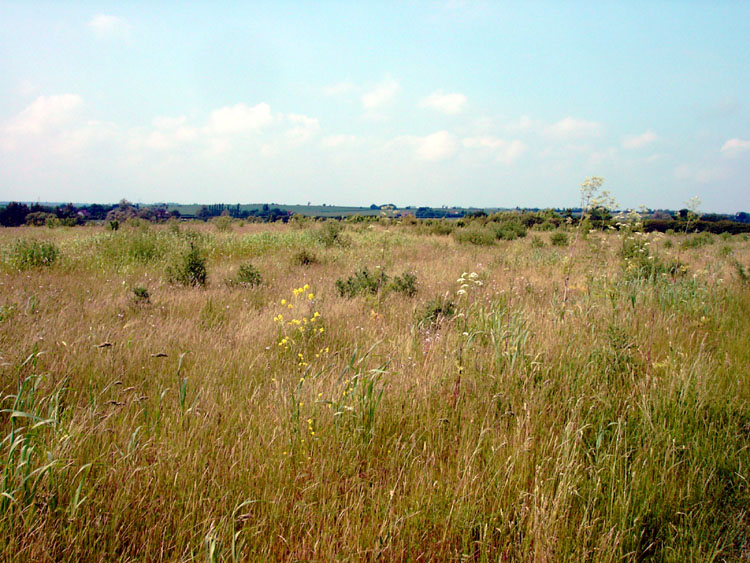
Wigborough Henge submitted by Thorgrim : Wigborough Henge consists of a levelled henge situated on the flood plain of the Salcott Creek to the north-east of Virley church. Although no longer visible at ground level, it survives as a circular ditch that can be clearly seen as a cropmark and on aerial photographs. The ditch is 46m in diameter with two opposed entrances. Access via a permitted footpath from the Visitors' Centre of Abbot's H... (Vote or comment on this photo)
The recent television programme on Durrington Walls showed that the interior of this gigantic "henge" was used as some kind of market type meeting place as well as having "ritual functions". Then there are the other massive "henges" of Avebury and Marden, also in Wessex. I compared them with other much smaller "henges" and asked two simple questions -"Why do we think that they are all the same and served the same purposes? Were they built for ritual use or could they just have been stock pens?"

I have recently been looking at my local henges and am plotting them on the Megalithic Map. So far, I have only looked at the twelve Essex henges and they are only visible as crop marks. I intend to map those throughout East Anglia.

First point that is apparent is that there is no consistent feature regarding entrances. Most have two gaps opposite each other, but some just one. There is no consistent position of the entrance gaps. The only consistent factor is that they all are formed of a roughly circular ditch and bank.

Boxted has entrances at N and S, Corringham at SW and NE, Cressing at E, Felsted at W, Wigborough at SE and possibly NW, Little Baddow at N and S, Little Bromley at NW and SE, Sturmer at NE. The others have no visible gaps.

That suggests to me that these henges do not have a religious/ritual purpose. The entrances are not consistent and are not aligned to sunsets, sunrises or anything else. They are just opposite entrances and that suggests driving stock into a holding pen and out the other side, perhaps afer counting them.

I am not aware of detailed excavation so cannot comment on whether there is evidence of nitrate enrichment which might be expected in a stock pen. There is no local stone and I am unaware of any post holes so can draw no conclusion regarding walls and stock holding capabilities. Finally, the shapes vary from circular to oval and unbalanced circular with the opposite gaps off-centre and to one side.

The value of looking afresh at East Anglian henges is that they are little known and we can leave aside the enormous ones of Wessex. Part of the problem lies in the way that we classify monuments. We say that a circular earthwork with a ditch and bank is a henge. Then we jump to the conclusion that all of the things in our "henge" category were built to serve the same purpose. That cannot be right.

Finally - I am glad to see the term "ring-ditch" being used more outside its more usual Norman time slot. Nothing wrong with that as we don't insist that the term "barrow" only correctly applies to the Bronze Age. Time to re-examine these circular features, abandon the preconceptions that they are all the same and also time to forget the "henge" word where nothing whatsoever "hangs". Clearly, a brief look at just twelve henges in one English county is not conclusive, but as the study widens other factors may be revealed. I would be very interested to learn more about henges in your part of the world.


<< By Tree, Stone and Spring. Part One

The Great Stone Circles – How they Work Part 14 >>

Please add your thoughts on this site

Explore Green Men

Explore Green Men

Sponsors

More Feature Articles

See all Feature Articles →

Latest Visit Logs

  • Neonteikhos
    “This place actually used to be a major Aeolian city state in the region To get to the site, I par…”
    by longhintim · 13 Jul 2026
  • Assos Temple of Athena
    “The temple of Athena is at the acropolis. Apart from the temple of Athena, Assos is a quite large s…”
    by longhintim · 13 Jul 2026
  • Symi Castle
    “Requires a moderately steep climb to the castle. Not much ancient remains are visible, some medieva…”
    by longhintim · 13 Jul 2026
  • Mausoleum of Hecatomnus
    “The site and museum was open but access into the tomb was not when I visited”
    by longhintim · 13 Jul 2026
  • Incirliin Cave
    “Need to walk quite a bit of steps. More of a natural wonder with stalagmites and stalagtites than a…”
    by longhintim · 13 Jul 2026

"Were Henges Stock Pens?" | Login/Create an Account | 14 News and Comments
  
Go back to top of page    Comments are owned by the poster. We aren't responsible for their content.
Re: Henges - Mayburgh by golux on Saturday, 01 March 2014
(User Info | Send a Message)
If ditches and embankments are a practical way of enclosing livestock then why is that when ha-has were fashionable only rich people installed them?
[ Reply to This ]
    Re: Henges - Mayburgh by Runemage on Saturday, 01 March 2014
    (User Info | Send a Message)
    A ha-ha will keep livestock out, by isolating the property, but it doesn't serve as an enclosure.
    [ Reply to This ]
      Re: Henges - Mayburgh by golux on Sunday, 02 March 2014
      (User Info | Send a Message)
      In just the same way as a henge doesn't serve as an enclosure.

      Both structures can enclose livestock, both structures risk livestock falling into an open ditch.
      [ Reply to This ]
      Re: Henges - Mayburgh by Runemage on Sunday, 02 March 2014
      (User Info | Send a Message)
      both structures risk livestock falling into an open ditch.
      Not with a haha, the ditch is much more of a gentle slope on the livestock side, whereas on the house side, it's a case of look before you fall off the sheer drop into the ditch.
      http://www.bbc.co.uk/legacies/heritage/england/teesside/article_1.shtml
      Restoration project http://faculty.bsc.edu/jtatter/haha.html
      [ Reply to This ]
        Re: Henges - Mayburgh by golux on Saturday, 08 March 2014
        (User Info | Send a Message)
        Not so: in an enclosure formed by hahas, the livestock would be on the "house side", facing an open ditch.
        My point is that both hahas and henges offer ways of enclosing livestock with ditches. But just as hahas were not used to form enclosures, because they were not suitable, so one would expect that henges were not used to form enclosures for the same reason.
        [ Reply to This ]
          Re: Henges - Mayburgh by Runemage on Saturday, 08 March 2014
          (User Info | Send a Message)
          Not so: in an enclosure formed by hahas,
          By its structure a haha cannot be an enclosure to keep livestock in. It is a barrier.

          the livestock would be on the "house side"
          No, the people are on the house side which is at a comparatively high level, the livestock are at the lower level consisting of pasture/parkland then a the ditch then the bottom of the haha wall. Please look at the plans I linked to in my previous post.

          My point is that both hahas and henges offer ways of enclosing livestock with ditches.
          Please see above, a haha is not an enclosure in the accepted sense of the word like a fence around a field, a better description of its function in modern English is that it's a barrier to keep livestock away from direct contact with the house and grounds.

          But just as hahas were not used to form enclosures, because they were not suitable,
          Yes, because hahas are barriers.

          so one would expect that henges were not used to form enclosures for the same reason.
          Rhetorically, I'm not sure if you mean henges for keeping livestock in like a circular pen or a bank around a henge to keep livestock out. Either way, a henge type structure can have a ditch inside or outside the banks and there can be several entrances. If ancient man wished to segregate his livestock, there are many more simple solutions than either keeping the livestock in the henge or keeping them out of it.

          I'm pleased that we agree that neither structure is suitable for enclosing livestock :-)
          [ Reply to This ]

Re: Henges by Anonymous on Monday, 26 June 2006
Visit:
New theory about Stonehenge, Henges, Seahenges, standing stones...

http://henges.no.sapo.pt
[ Reply to This ]

Re: Henges by JCAntunes on Thursday, 22 December 2005
(User Info | Send a Message)
: ) I make no comments, for now!
[ Reply to This ]

Re: Henges by JimChampion on Wednesday, 21 December 2005
(User Info | Send a Message)
I was thinking about henges as stock pens today... Most henges have the ditch on the inside of the bank. And cattle don't get on well with ditches (according to the Archers). If I was building a stock pen I'd put the ditch on the outside so there was no chance of my cattle falling and injuring themselves.
[ Reply to This ]
    Re: Henges by Thorgrim on Wednesday, 21 December 2005
    (User Info | Send a Message)
    Point taken, but I think that the theory suggests that the purpose of the internal ditch was to prevent the cattle from crossing it and then strolling over the bank.
    [ Reply to This ]

Henges by JCAntunes on Monday, 19 December 2005
(User Info | Send a Message)
I've been posting several comments in this site because I believe that I can really help.
I have my own concept of henge and I would like to share it with all of you. Maybe in January or February of 2006 I will explain it!
Believe me, there is a reason why there are entrances and exits, as you call them. I will publish an article explaining everything.

João Caeiro Antunes
[ Reply to This ]

Re: Were Henges Stock Pens? by Vicky on Monday, 19 December 2005
(User Info | Send a Message)
I think henges probably had a variety of uses, serving as a communal meeting places where people dispersed over a wide area could come together to meet and trade, perhaps livestock but also other items such as flint, stone axes etc. They could also have been used as gathering places for people to get together to celebrate important events, for feasts, marriages or annual gatherings.

As to the alignment of the entrances I’ve read various theories and the two that I find most interesting are that

1. They are possibly aligned in the same direction as nearby trackways – both Arbor Low and the Bullring in the Peak District have entrances mirroring the alignment of the nearby Roman roads (which although much later are believed to have been built along the line of much earlier trackways). This would make sense if they were used as communal gathering places.

2. The henges were constructed in a particular place with entrance(s) (or entrance and exit) placed to create as much visual...

Read the rest of this post...
[ Reply to This ]

Re: Henges - Mayburgh by nicoladidsbury on Sunday, 18 December 2005
(User Info | Send a Message)
I think the henges may not all have had the same use.
I really do not think Mayburgh was a cattle pen. The people who built Mayburgh expended so much effort, built the walls so high, that I can not believe it was all for cattle. Cattle can be protected with a decent stockade wall or fence, would that not have been easier to construct?
At Mayburgh, the entrances seem to be aligned to significant hills, one looks out towards Blencathra, the other to Cross Fell, on the Pennines.
A stone axe was found in the entrance, which suggests that the site had some sort of spritual significance.
There are two futher henges and a stone circle (now destroyed) in the same area.
I do think that the areas may have been used as a meeting/market area. Mayburgh lies at the confluence of three important rivers, did the rivers act as the motorways of the past, bringing people together, to trade, to meet, to worship?
I love Mayburgh henge, and love thinking about what its all about.
Will we ever really...

Read the rest of this post...
[ Reply to This ]
    Re: Henges - Mayburgh by Thorgrim on Sunday, 18 December 2005
    (User Info | Send a Message)
    I agree Nicola and that is why I feel that they must have had different uses. In Essex there are no hills so its difficult to see how the entrances could align to anything. Be interesting to see how this query shapes up across the country and what different sorts of uses we might come up with.
    [ Reply to This ]

Your Name: Anonymous [ Register Now ]
Subject:


Add your comment or contribution to this page. Spam or offensive posts are deleted immediately, don't even bother

<<< What is five plus one as a number? (Please type the answer to this question in the little box on the left)
You can also embed videos and other things. For Youtube please copy and paste the 'embed code'.
For Google Street View please include Street View in the text.
Create a web link like this: <a href="https://www.megalithic.co.uk">This is a link</a>  

Allowed HTML is:
<p> <b> <i> <a> <img> <em> <br> <strong> <blockquote> <tt> <li> <ol> <ul> <object> <param> <embed> <iframe>

We would like to know more about this location. Please feel free to add a brief description and any relevant information in your own language.
Wir möchten mehr über diese Stätte erfahren. Bitte zögern Sie nicht, eine kurze Beschreibung und relevante Informationen in Deutsch hinzuzufügen.
Nous aimerions en savoir encore un peu sur les lieux. S'il vous plaît n'hesitez pas à ajouter une courte description et tous les renseignements pertinents dans votre propre langue.
Quisieramos informarnos un poco más de las lugares. No dude en añadir una breve descripción y otros datos relevantes en su propio idioma.