

The Tribes of Britain
Submitted by Thorgrim on Saturday, 13 August 2005 Page Views: 10601
Reviews
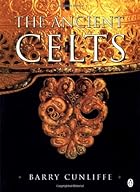
Above all else, this book is about people rather than pots. It is very well written and laced with amusing anecdotes and examples. Beginning with the Palaeolithic “Red Lady of Paviland” who was actually a man who lived about 26,000 years ago, the book comes bang up to date with today’s immigrant New Britons. Along the way he gives a wonderful overview of life in Britain illustrated with specific examples. There will be some readers dismayed to learn of long cherished fallacies being tumbled, but others will enjoy the insight that science is now bringing to uncertain theories.
Older textbooks always explained new technological changes like farming and metalworking by imagining vast hordes of invaders sweeping in from elsewhere. Then those theories were discredited and the new orthodoxy was that populations were static, no folk migrations took place and new skills were learned through trade. Extreme views are never right and this book strikes a good balance. Yes – the indigenous British population contributes 80% of our genetic inheritance and so they were never exterminated by Celts, Romans, Saxons or Vikings. But there has always been significant immigration. The old idea was that farming was brought from the east by a wave of invading Beaker Folk. Then that was ridiculed and it was said that the Britons learned to farm by watching others. The weakness in this idea is clear. None of our domesticated farm animals with the possible exception of the pig are indigenous. So they must have been brought in from elsewhere – Europe. So either our indigenous hunter/gatherers went over to the mainland on a day trip to buy livestock, or mainland farmers brought their animals and know-how in and settled here. Then, of course, the locals soon took up this new way of life.
The author, who is a former Chief Archaeologist of English Heritage, also gives a balanced view of the non arrival of the Celts, shows that the Roman soldiers on Hadrian’s Wall were actually Germans from Batavia and shows how most Icelandic Viking women were not Scandinavian, but descended from Scottish and Irish slaves. Black people were living in Roman Britain too, as were many others from all over the Roman Empire. There is a wonderful story about how an enslaved British woman was first bought by and then married a wealthy Syrian merchant. Just how many Anglo-Saxon immigrants came into the land that was to become England? What happened to the Britons? Were they really all exterminated or exiled to Wales, Cornwall and Brittany? No – of course not and most of us can claim direct descent from them.
Perhaps many visitors to this website may only be interested in the early chapters up to the Roman occupation or the Norman Conquest. It is well worth reading the rest of the book too. It’s all about continuity and change through integration – something we are very good at and are still doing
Published by Weidenfeld & Nicolson, Order from Amazon.co.uk at a substantial discount.


 We would like to know more about this location. Please feel free to add a brief description and any relevant information in your own language.
 Wir möchten mehr über diese Stätte erfahren. Bitte zögern Sie nicht, eine kurze Beschreibung und relevante Informationen in Deutsch hinzuzufügen.
 Nous aimerions en savoir encore un peu sur les lieux. S'il vous plaît n'hesitez pas à ajouter une courte description et tous les renseignements pertinents dans votre propre langue.
 Quisieramos informarnos un poco más de las lugares. No dude en añadir una breve descripción y otros datos relevantes en su propio idioma.