


Silly season I: An animal I call the Haggis
Submitted by jj on Monday, 29 December 2003 Page Views: 4696
Fun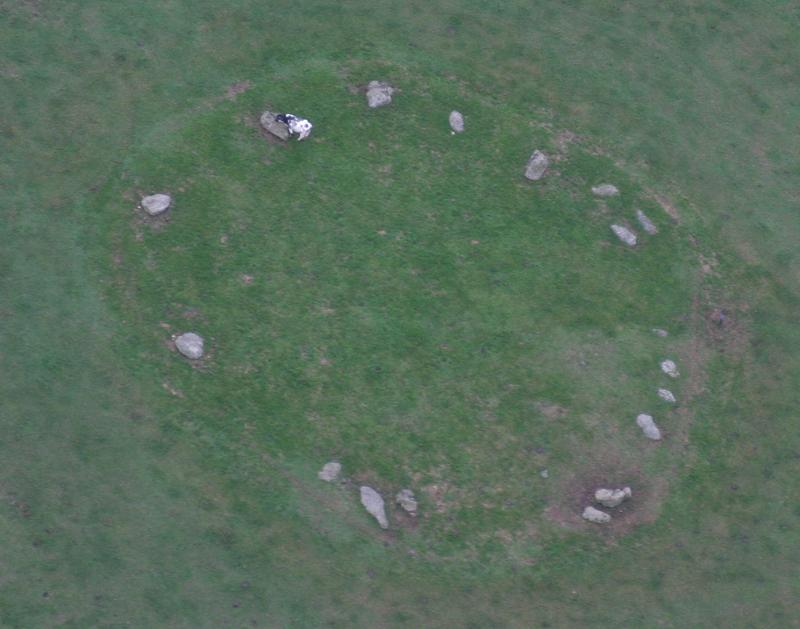
Following a recent publication of his book ‘The Acoustic Archaeology of Ancient Sites’ by Paul Devereaux, in which he reveals that standing stones amplify sound of a given frequency, it is my fanciful belief that these circular enigmas may have been built for more practical reasons other than celestial observations.
Imagine many thousands of years ago that there existed a strange animal, something the size of a pigmy hippopotamus. Unlike other foragers of the night, this nocturnal creature had such bad eyesight that it used ultra-sonics (like that of bats, whales or dolphins) to find its way around. With a large bulbous nose filled with a waxy fluid similar to a sperm whale, it could detect food hidden deep in the ground.
Despite having an incredibly advanced and highly evolved neurological system , it was, nonetheless, a very placid and shy animal which is why they probably became extinct shortly after mankind appeared.
However, because of the ultra high frequency it omitted, any crystalline stone present would resonate at such a high level that the animal would enter a state of confusion or disorientation and ultimately move off in a different direction. When caught, the tribespeople would take the animal to the centre of a stone circle and let it roam free where its movements and behaviour patterns would be observed by shamans.
Standing within the circle, the crystalline stones would form an impenetrable and invisible ‘sound’ barrier which it could neither approach or cross and the animal would become penned in.
What made these animals so special was the way in which the tribespeople treated them with absolute reverence. Having such long reproductive cycles, their numbers soon diminished as they became an integral and crucial part of the circle ceremonies. As their numbers dwindled, more elaborate circles were constructed to demonstrate how highly they were revered and Stonehenge was the last circle in which one of these animals stood.
If such an animal existed, then it is quite plausible that it would have been used as a ‘sacrificial lamb’ initiating the joining of the bodies of heaven and earth goddesses – who knows? What is known is that animal skeletons have been found at a number of sites buried under the stones.
Unless we become travellers of time, the implementation of stone circles will remain an enigma yet to reveal itself.

 We would like to know more about this location. Please feel free to add a brief description and any relevant information in your own language.
 Wir möchten mehr über diese Stätte erfahren. Bitte zögern Sie nicht, eine kurze Beschreibung und relevante Informationen in Deutsch hinzuzufügen.
 Nous aimerions en savoir encore un peu sur les lieux. S'il vous plaît n'hesitez pas à ajouter une courte description et tous les renseignements pertinents dans votre propre langue.
 Quisieramos informarnos un poco más de las lugares. No dude en añadir una breve descripción y otros datos relevantes en su propio idioma.